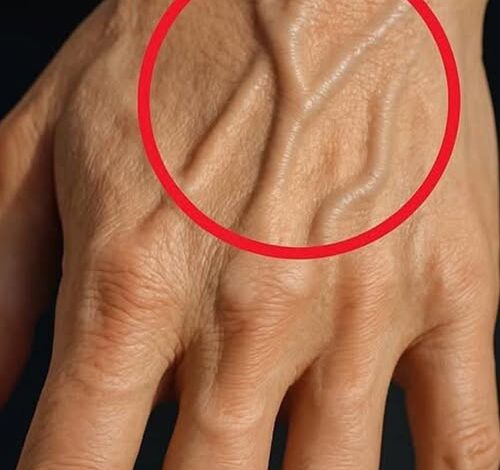
In the quiet moments of a morning routine, perhaps while reaching for a cup of coffee or resting your hands on a steering wheel, you might suddenly notice that the veins on the back of your hands appear more prominent than they did just a few years ago. In an era where digital health misinformation can spread with the speed of a viral headline, it is common to encounter alarming claims that visible hand veins are a secret window into the failure of the body’s internal filtration system. However, understanding the bridge between aesthetic changes and internal physiology requires a departure from internet myths and an embrace of clinical reality.
The appearance of prominent veins is, in the overwhelming majority of cases, a benign reflection of human anatomy rather than a harbinger of systemic disease. To understand why these vessels become more noticeable, one must look at the structural composition of the hand itself. The hands are unique in that they possess very little subcutaneous fat compared to other parts of the anatomy. As we progress through the natural stages of aging, our skin undergoes a predictable thinning process. The body gradually produces less collagen and elastin, the proteins responsible for the skin’s thickness and structural integrity. As the dermal layer thins, the veins that have always existed beneath the surface simply become more visible, much like an object becomes clearer as a veil is lifted.
Beyond aging, several lifestyle and physiological factors dictate vein prominence. Individuals with a lower body fat percentage—often those who are highly active or genetically predisposed to a lean build—will naturally have more “vascular” hands because there is less fatty tissue to obscure the veins. Furthermore, physical exertion can cause a temporary but significant increase in visibility. During exercise, blood flow to the extremities intensifies, and the veins dilate to manage the increased volume. Environmental temperature plays a similar role; heat causes vasodilation, making veins appear engorged after a warm shower or a day spent in the sun. Even hydration levels are a factor; while severe dehydration is a medical concern, mild fluctuations in fluid intake can change the turgor of the skin, occasionally making the underlying vessels stand out in sharp relief. None of these factors, however, have a direct diagnostic link to the health of your internal filtration organs.
To separate fact from fiction, it is essential to understand how the body’s filtration system—primarily the kidneys—actually signals distress. These vital organs are responsible for a complex array of tasks, including the removal of metabolic waste, the regulation of electrolyte balances, and the maintenance of blood pressure. When this system begins to struggle, it does not manifest through the appearance of blue lines on the back of the hand. Instead, it speaks through systemic shifts in fluid retention and chemical balance.
One of the most reliable clinical signs of filtration compromise is edema, or persistent swelling. Because the kidneys regulate fluid output, a decline in function often leads to the body hoarding water. This results in puffiness in the ankles, feet, and face. Critically, when a hand is affected by filtration-related swelling, the veins actually become harder to see. The accumulation of fluid in the interstitial tissues acts as a cushion, pushing the skin outward and burying the veins deep beneath a layer of swelling. Therefore, the very symptom people fear—visible veins—is often the opposite of what one would see in a true filtration crisis.
Genuine warning signs that demand medical attention are often more subtle but more pervasive than a change in hand aesthetics. Chronic, unexplained fatigue is a common hallmark, occurring as waste products accumulate in the bloodstream and affect the body’s energy metabolism. Changes in urinary habits are also significant indicators; this includes a marked increase or decrease in frequency, as well as the presence of persistent foam, which can suggest that protein is leaking through the filtration barriers. Additionally, since the kidneys play a massive role in regulating systemic pressure, a sudden and unexplained rise in blood pressure is often a red flag that the filtration system is under duress.
There is one specific medical context where prominent veins and filtration health intersect, but it is a result of treatment rather than a symptom of the disease itself. Patients in advanced stages of filtration failure who require dialysis often undergo a surgical procedure to create an arteriovenous (AV) fistula. This procedure intentionally connects an artery to a vein, usually in the arm, to create a robust access point for the dialysis machine. This cause the vein to enlarge and thicken significantly over time. While these veins are highly visible, they are a byproduct of a life-saving medical intervention, not a naturally occurring symptom that a healthy individual would find on their hands.
When assessing your overall wellness, the most effective approach is to rely on objective medical data rather than visual self-diagnosis. Medical professionals utilize a battery of standardized tests to determine organ health with precision. A simple blood test can measure levels of creatinine and urea, allowing doctors to calculate a Glomerular Filtration Rate (GFR), which provides a mathematical percentage of how well the organs are performing. Urinalysis can detect microscopic traces of blood or protein that are invisible to the naked eye. These markers, combined with regular blood pressure monitoring and a review of family history, provide a comprehensive picture of health that the appearance of hand veins simply cannot offer.
Ultimately, the human body is a dynamic system, and our skin is the canvas upon which our life’s history is written. Visible veins are often a testament to a life lived—a reflection of years of movement, the legacy of our DNA, and the natural evolution of our physical form. They are indicators of skin transparency and vascular volume, not the silent alarms of internal failure. By focusing on the symptoms that truly matter—such as persistent swelling, significant changes in energy, or fluctuations in blood pressure—we can navigate our health journeys with clarity and confidence.
Maintaining filtration health is best achieved through a balanced diet, consistent hydration, and regular check-ups with a healthcare provider. While it is natural to be curious about the changes we see in our bodies, it is equally important to ground that curiosity in medical fact. The next time you look down at your hands and see the intricate map of your veins, remember that they are a sign of a functioning circulatory system, working exactly as it should to deliver life-sustaining blood to your fingertips.