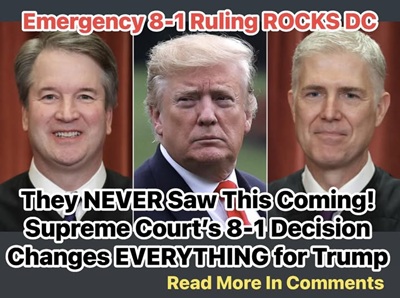
President Donald Trump has achieved a landmark legal victory at the U.S. Supreme Court, a decision that carries far-reaching implications for immigration policy, executive authority, and the lives of hundreds of thousands of migrants residing in the United States.
The ruling, decided by an 8–1 vote, lifted a lower-court injunction that had temporarily prevented the Trump administration from terminating the Temporary Protected Status (TPS) of certain migrant populations.
The sole dissenting opinion came from Justice Ketanji Brown Jackson, appointed by President Joe Biden, reflecting ongoing ideological divisions within the Court while underscoring the nuanced nature of the legal questions at hand.
The Supreme Court’s decision directly empowers the administration to move forward with plans to end TPS for approximately 300,000 Venezuelan migrants currently living in the United States.
TPS was created by Congress in 1990 as a humanitarian program allowing foreign nationals to remain in the U.S. temporarily when conditions in their home countries—such as armed conflict, natural disasters, or other extraordinary circumstances—make it unsafe to return.
Since its inception, TPS has been extended to multiple countries, providing protection to hundreds of thousands of migrants who have built lives in the U.S., contributed to local economies, and established families and communities over years or even decades.
The Supreme Court’s ruling lifts the previous injunction issued by a lower court, which had temporarily blocked the administration’s plan to terminate TPS protections.
While the decision grants the Trump administration legal authority to begin the process of ending TPS for Venezuelan migrants, practical implementation is expected to involve a complex and carefully managed process.
Federal agencies, including the Department of Homeland Security (DHS) and U.S. Immigration and Customs Enforcement (ICE), will need to develop detailed operational plans, including notifying affected individuals, coordinating with immigration courts, and managing potential humanitarian concerns.
Legal experts caution that, although the Court has authorized action, immediate deportations are unlikely, given the administrative and procedural steps required to implement the ruling.
The decision has triggered widespread attention both within the United States and internationally.
Advocates for TPS recipients warn that the ruling could result in significant human, social, and economic consequences.
Many Venezuelan migrants who have lived in the U.S. for years, some for more than a decade, have established homes, businesses, and schools, and their sudden displacement could disrupt local communities and create humanitarian challenges in both the U.S. and their home country.
Organizations supporting migrants have indicated that they may continue to pursue legal challenges or policy measures to mitigate the impact, although the Supreme Court’s decision significantly strengthens the administration’s legal position.
The ruling also represents a rare moment of cross-ideological alignment on the Supreme Court.
justices traditionally associated with the Court’s liberal wing joined in the majority decision, demonstrating the complexity of statutory interpretation and procedural law involved. Analysts have noted that such broad consensus is unusual in cases touching on politically charged topics like immigration policy, highlighting the Court’s emphasis on legal reasoning over purely ideological considerations.
Justice Ketanji Brown Jackson’s dissent focused on concerns regarding procedural fairness and the potential humanitarian impact, emphasizing the human dimension of legal decisions in the immigration context.
For the Trump administration, the ruling is a major affirmation of executive authority in managing immigration policy.
Legal advisers have stated that the decision provides clear constitutional and statutory backing for the administration to end TPS for Venezuelan migrants.
It also underscores the administration’s broader approach to immigration enforcement, emphasizing the executive branch’s discretion in determining the scope and duration of temporary protective programs.
While the decision is legally significant, it remains politically sensitive, as public debate continues regarding the balance between humanitarian protections and government authority.
The broader national conversation around immigration policy and TPS is likely to intensify following this ruling.
Critics argue that ending TPS protections abruptly could have devastating consequences for vulnerable populations, including separating families, forcing migrants into unsafe conditions in their home countries, and destabilizing communities that have integrated these individuals for years.
Supporters contend that TPS, while originally designed as a temporary measure, must be subject to legal and administrative review to ensure alignment with current U.S. immigration laws and national interests.
The Supreme Court’s decision highlights the delicate balance between enforcing the rule of law and addressing complex humanitarian considerations.
The legal history of TPS adds further context to the ruling. Since its creation, TPS has been extended multiple times for countries affected by natural disasters, civil unrest, and armed conflict.
Previous administrations, both Republican and Democratic, have navigated complex political and legal terrain in managing TPS programs.
The Supreme Court’s decision in this case may set a precedent for future administrations regarding the limits and authority of the executive branch in determining eligibility, duration, and termination of TPS designations.
For affected Venezuelan migrants, uncertainty now defines the path forward.
Many have contributed substantially to the U.S. economy, working in sectors such as healthcare, education, and service industries.
Their potential removal raises not only humanitarian concerns but also questions about economic impact and community stability.
Advocates and legal experts are closely monitoring the administration’s next steps, emphasizing the need for careful communication, legal compliance, and consideration of humanitarian implications as deportation or transition plans are implemented.
The Supreme Court’s decision also underscores the judiciary’s critical role in balancing executive authority with statutory protections.
By lifting the injunction, the Court clarified that while lower courts may review the administration’s actions, the executive branch possesses significant discretion in managing temporary immigration programs.
This outcome is expected to influence future legal battles concerning TPS and other temporary immigration protections, shaping policy debates and court decisions for years to come.
In conclusion, the Supreme Court’s 8–1 ruling constitutes a major legal and political development.
It empowers the Trump administration to proceed with plans to terminate TPS for Venezuelan migrants, marking a consequential moment in the ongoing national discussion over immigration policy, executive authority, and humanitarian obligations.
While the legal path is now clear, the human, social, and logistical implications remain complex.
As the affected communities, advocacy groups, policymakers, and federal agencies grapple with the consequences, the ruling is likely to shape immigration policy and legal precedent well into the future.
The decision serves as a reminder of the intricate interplay between law, governance, and human impact, illustrating the enduring importance of careful, considered legal adjudication in matters that touch the lives of hundreds of thousands of people.
President Donald Trump has achieved a landmark legal victory at the U.S. Supreme Court, a decision that carries far-reaching implications for immigration policy, executive authority, and the lives of hundreds of thousands of migrants residing in the United States.
The ruling, decided by an 8–1 vote, lifted a lower-court injunction that had temporarily prevented the Trump administration from terminating the Temporary Protected Status (TPS) of certain migrant populations.
The sole dissenting opinion came from Justice Ketanji Brown Jackson, appointed by President Joe Biden, reflecting ongoing ideological divisions within the Court while underscoring the nuanced nature of the legal questions at hand.
The Supreme Court’s decision directly empowers the administration to move forward with plans to end TPS for approximately 300,000 Venezuelan migrants currently living in the United States.
TPS was created by Congress in 1990 as a humanitarian program allowing foreign nationals to remain in the U.S. temporarily when conditions in their home countries—such as armed conflict, natural disasters, or other extraordinary circumstances—make it unsafe to return.
Since its inception, TPS has been extended to multiple countries, providing protection to hundreds of thousands of migrants who have built lives in the U.S., contributed to local economies, and established families and communities over years or even decades.
The Supreme Court’s ruling lifts the previous injunction issued by a lower court, which had temporarily blocked the administration’s plan to terminate TPS protections.
While the decision grants the Trump administration legal authority to begin the process of ending TPS for Venezuelan migrants, practical implementation is expected to involve a complex and carefully managed process.
Federal agencies, including the Department of Homeland Security (DHS) and U.S. Immigration and Customs Enforcement (ICE), will need to develop detailed operational plans, including notifying affected individuals, coordinating with immigration courts, and managing potential humanitarian concerns.
Legal experts caution that, although the Court has authorized action, immediate deportations are unlikely, given the administrative and procedural steps required to implement the ruling.
The decision has triggered widespread attention both within the United States and internationally.
Advocates for TPS recipients warn that the ruling could result in significant human, social, and economic consequences.
Many Venezuelan migrants who have lived in the U.S. for years, some for more than a decade, have established homes, businesses, and schools, and their sudden displacement could disrupt local communities and create humanitarian challenges in both the U.S. and their home country.
Organizations supporting migrants have indicated that they may continue to pursue legal challenges or policy measures to mitigate the impact, although the Supreme Court’s decision significantly strengthens the administration’s legal position.
The ruling also represents a rare moment of cross-ideological alignment on the Supreme Court.
justices traditionally associated with the Court’s liberal wing joined in the majority decision, demonstrating the complexity of statutory interpretation and procedural law involved. Analysts have noted that such broad consensus is unusual in cases touching on politically charged topics like immigration policy, highlighting the Court’s emphasis on legal reasoning over purely ideological considerations.
Justice Ketanji Brown Jackson’s dissent focused on concerns regarding procedural fairness and the potential humanitarian impact, emphasizing the human dimension of legal decisions in the immigration context.
For the Trump administration, the ruling is a major affirmation of executive authority in managing immigration policy.
Legal advisers have stated that the decision provides clear constitutional and statutory backing for the administration to end TPS for Venezuelan migrants.
It also underscores the administration’s broader approach to immigration enforcement, emphasizing the executive branch’s discretion in determining the scope and duration of temporary protective programs.
While the decision is legally significant, it remains politically sensitive, as public debate continues regarding the balance between humanitarian protections and government authority.
The broader national conversation around immigration policy and TPS is likely to intensify following this ruling.
Critics argue that ending TPS protections abruptly could have devastating consequences for vulnerable populations, including separating families, forcing migrants into unsafe conditions in their home countries, and destabilizing communities that have integrated these individuals for years.
Supporters contend that TPS, while originally designed as a temporary measure, must be subject to legal and administrative review to ensure alignment with current U.S. immigration laws and national interests.
The Supreme Court’s decision highlights the delicate balance between enforcing the rule of law and addressing complex humanitarian considerations.
The legal history of TPS adds further context to the ruling. Since its creation, TPS has been extended multiple times for countries affected by natural disasters, civil unrest, and armed conflict.
Previous administrations, both Republican and Democratic, have navigated complex political and legal terrain in managing TPS programs.
The Supreme Court’s decision in this case may set a precedent for future administrations regarding the limits and authority of the executive branch in determining eligibility, duration, and termination of TPS designations.
For affected Venezuelan migrants, uncertainty now defines the path forward.
Many have contributed substantially to the U.S. economy, working in sectors such as healthcare, education, and service industries.
Their potential removal raises not only humanitarian concerns but also questions about economic impact and community stability.
Advocates and legal experts are closely monitoring the administration’s next steps, emphasizing the need for careful communication, legal compliance, and consideration of humanitarian implications as deportation or transition plans are implemented.
The Supreme Court’s decision also underscores the judiciary’s critical role in balancing executive authority with statutory protections.
By lifting the injunction, the Court clarified that while lower courts may review the administration’s actions, the executive branch possesses significant discretion in managing temporary immigration programs.
This outcome is expected to influence future legal battles concerning TPS and other temporary immigration protections, shaping policy debates and court decisions for years to come.
In conclusion, the Supreme Court’s 8–1 ruling constitutes a major legal and political development.
It empowers the Trump administration to proceed with plans to terminate TPS for Venezuelan migrants, marking a consequential moment in the ongoing national discussion over immigration policy, executive authority, and humanitarian obligations.
While the legal path is now clear, the human, social, and logistical implications remain complex.
As the affected communities, advocacy groups, policymakers, and federal agencies grapple with the consequences, the ruling is likely to shape immigration policy and legal precedent well into the future.
The decision serves as a reminder of the intricate interplay between law, governance, and human impact, illustrating the enduring importance of careful, considered legal adjudication in matters that touch the lives of hundreds of thousands of people.