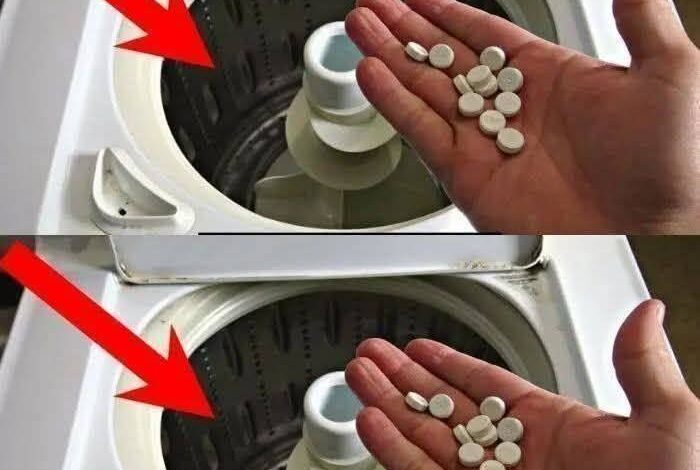
White clothes do not fade because they grow old. They fade because residue builds up quietly, layer by layer, wash after wash, until brightness has nowhere left to shine. Long before commercial stain removers and chemical brighteners crowded store shelves, households relied on simpler solutions grounded in observation and practicality. One of those nearly forgotten methods is the use of aspirin in laundry, a technique that looks odd at first glance but holds up surprisingly well under modern scientific scrutiny.
Everyday wear leaves behind more than visible dirt. Sweat deposits uric acid and body oils deep into fabric fibers. Antiperspirants introduce aluminum salts that cling stubbornly to cotton. Hard water adds mineral scale. Even high-quality detergents can leave microscopic residues that never fully rinse away. Over time, these elements bind together and attach themselves to fabric at a molecular level. Once that happens, ordinary washing cycles are no longer enough. Whites turn gray, collars yellow, and towels lose the crisp feel they once had, even when they smell clean.
This is where aspirin quietly earns its place.
Aspirin contains salicylic acid, a compound widely known in skincare and medical science for its ability to break down organic material. In laundry care, salicylic acid works as a mild but effective cleaning agent. It penetrates fabric fibers and loosens the bond between oils, minerals, and the cloth itself. Instead of masking discoloration the way optical brighteners do, aspirin helps remove the substances causing the problem in the first place. The fabric is not bleached or coated. It is actually cleaner.
Think of it as a deep fiber reset rather than a surface fix.
When used correctly, aspirin emulsifies residue so it can be carried away by water during the rinse cycle. This process restores softness, improves absorbency, and brings back the natural brightness of white fabrics without the harshness associated with chlorine bleach. For households focused on fabric longevity, sustainable cleaning practices, and cost-effective laundry solutions, this method checks all the boxes.
There are several effective ways to use aspirin in laundry, depending on the condition of the fabric and the result you want.
For a standard load of white laundry, crush two or three uncoated aspirin tablets. Both eighty-one milligram and three hundred twenty-five milligram tablets work equally well. Sprinkle the powder directly into the washing machine drum before adding clothes. Add your regular detergent and run a normal wash cycle. Warm water is ideal because it helps dissolve the aspirin fully and activates the salicylic acid. This method works especially well for everyday items like T-shirts, pillowcases, baby clothes, workout gear, and towels that have slowly dulled over time.
For deeper discoloration or stubborn yellowing, soaking delivers more dramatic results. Crush four aspirin tablets and dissolve them in one gallon of warm water. Submerge the fabric completely and let it soak for two to six hours. For severe stains, overnight soaking is safe and often very effective. After soaking, wash the items as usual. This technique is particularly useful for armpit stains, collar rings, vintage linens, and garments that have been stored for years and emerged looking tired and yellowed.
Aspirin can also be used as a detergent booster. Crushed tablets can be mixed into powdered detergent before washing, or whole uncoated tablets can be placed directly into the detergent dispenser. This approach is especially helpful in hard water areas, where mineral buildup interferes with detergent performance and accelerates fabric dulling. By breaking down residue more efficiently, aspirin allows detergent to do its job properly again.
There are a few important care and safety guidelines to follow. Always use uncoated aspirin so it dissolves fully and evenly. Avoid using aspirin on delicate fabrics like silk or wool, as the mild acidity can damage protein-based fibers. Never combine aspirin with bleach, since the chemical reaction can release irritating fumes. If you plan to use aspirin on colored fabrics, test a small hidden area first, as prolonged exposure may affect certain dyes over time.
Expired aspirin should never be taken for medical use, but it remains perfectly effective for laundry purposes, making it an excellent way to reduce household waste while saving money.
What makes this method especially appealing in today’s world is how well it aligns with modern priorities. It supports eco-friendly laundry habits, reduces reliance on harsh chemicals, extends the lifespan of clothing, and lowers long-term household costs. In an era where consumers search for natural cleaning hacks, sustainable home care tips, and proven traditional methods, aspirin in laundry stands out as both practical and science-backed.
This is not about nostalgia for its own sake. It is about recognizing that many older household practices were developed through careful observation and repeated success. They endured because they worked. The fact that this technique is now being rediscovered through online home care guides, minimalist living blogs, and frugal lifestyle communities speaks to its effectiveness.
There is something deeply satisfying about pulling a once-dull white shirt from the wash and seeing it bright again, not because it was coated in chemicals, but because it was truly cleaned. That satisfaction goes beyond laundry. It reflects a mindset that values intention over excess and knowledge over marketing.
You do not need expensive stain removers, industrial whiteners, or heavily fragranced additives to care for your clothes properly. Sometimes all it takes is a few forgotten tablets, warm water, and the willingness to trust a method that has quietly proven itself over generations.
Real wisdom is rarely loud. It is passed down in everyday routines, in folded laundry, in the quiet confidence of someone who learned through experience rather than advertising. When you hold up a garment that looks refreshed after decades of use, you are not just seeing clean fabric. You are seeing care, patience, and respect for the things that serve us daily.
In that moment, it becomes clear that this is not just a laundry trick. It is a reminder that simple solutions, used thoughtfully, often outperform the most complicated ones.