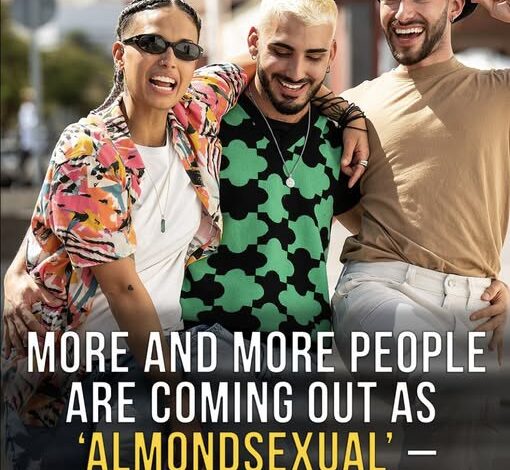
Keeping up with cultural language can feel like chasing a moving target. Just when one set of terms starts to make sense, another wave appears, reflecting how people continue refining the ways they describe identity, attraction, and self-understanding. Nowhere is this more visible than in discussions around sexual orientation, where new labels emerge not to replace older ones, but to give individuals more precision in describing how they experience attraction.
In recent years, terms like abrosexual and graysexual have entered broader conversations, helping people articulate fluid or low-intensity patterns of attraction. A newer microlabel gaining attention is almondsexuality. At first glance, the word may sound strange or even playful, but for those who use it, the term serves a very specific purpose: clarity.
Almondsexuality is a microlabel used within the multisexual spectrum. According to commonly cited definitions, including those summarized on Wikipedia and community-driven platforms, almondsexual individuals experience primary and consistent attraction toward male-aligned and androgynous-aligned genders. Attraction to female-aligned genders may still exist, but it is generally less frequent, less intense, or more situational. This pattern is what distinguishes almondsexuality from broader identities such as bisexuality or pansexuality.
To understand why such a term exists, it helps to look at how people experience attraction differently. For some, attraction feels evenly distributed across genders. For others, it follows a clear hierarchy or pattern. While someone might technically be attracted to multiple genders, the intensity, consistency, or emotional resonance of that attraction can vary significantly. Almondsexuality provides language for people who notice that variation and want a label that reflects it accurately.
The term sits under the multisexual umbrella, which includes identities such as bisexual, pansexual, omnisexual, and polysexual. What differentiates these identities often comes down to how attraction is experienced rather than who it is directed toward. Almondsexuality focuses less on the number of genders involved and more on the structure of attraction itself.
Community explanations often describe almondsexual attraction as steady and predictable toward masculine and neutral presentations, while attraction toward feminine presentations may occur less often or feel secondary. This does not mean almondsexual individuals exclude women or feminine genders entirely, nor does it suggest strict rules. Instead, it highlights a personal pattern that feels stable enough to name.
The inverse of almondsexuality is sometimes referred to as berrisexuality, a microlabel describing primary attraction to feminine and androgynous genders, with lesser or occasional attraction to masculine genders. Together, these labels illustrate how nuanced sexual orientation language has become, offering tools for people who feel partially represented by broader terms but not fully understood by them.
Almondsexuality entered wider awareness around 2023, when it was coined by a Tumblr user known as genderstarbucks. Like many microlabels, it originated in online queer communities, where individuals frequently share personal reflections, definitions, and experiences. These spaces often function as testing grounds for new language, allowing people to see whether a term resonates with others who share similar feelings.
Critics sometimes question why so many labels exist, arguing that they complicate conversations or fragment communities. Supporters counter that language evolves because human experience is complex. For many people, discovering a term like almondsexual can feel validating rather than limiting. It offers reassurance that their experience is shared, recognized, and legitimate.
Importantly, identifying as almondsexual is optional and personal. Many people who could fit the definition may continue to identify as bisexual, pansexual, or queer, and that choice is equally valid. Sexual orientation labels are not diagnostic tools or obligations; they are descriptors people adopt because they feel useful, comfortable, or affirming.
Another key aspect of almondsexuality is that it does not dictate behavior. Attraction and action are not the same. An almondsexual individual may date, love, or commit to partners of any gender. The label simply describes how attraction tends to present itself internally over time.
The rise of microlabels like almondsexuality also reflects a broader cultural shift toward self-definition. Rather than forcing experiences into rigid categories, many people now approach identity as something descriptive rather than prescriptive. This allows for flexibility, honesty, and personal nuance, especially for those whose experiences don’t align neatly with older frameworks.
For some, discovering almondsexuality brings a sense of relief. Feelings that once seemed contradictory or confusing suddenly have context. Patterns that were hard to explain to others become easier to articulate, even if only for personal understanding. For others, the term may simply be interesting, offering insight into how diverse attraction can be across individuals.
Whether almondsexuality becomes widely recognized or remains a niche microlabel, its existence highlights an important truth: people experience attraction in many different ways, and language continues to evolve to reflect that diversity. As society becomes more comfortable discussing identity openly, it’s likely that more terms will emerge, each serving someone who felt unseen before.
In the end, almondsexuality is less about novelty and more about accuracy. It represents one of many ways people are learning to name their experiences, not to stand apart, but to understand themselves more clearly.


