 During your daily commutes, you may have come across black cables stretched across the road, resembling discreet sentinels monitoring the traffic.
  But what are these cables really, and why are they there? Their role is crucial in traffic management and data collection.
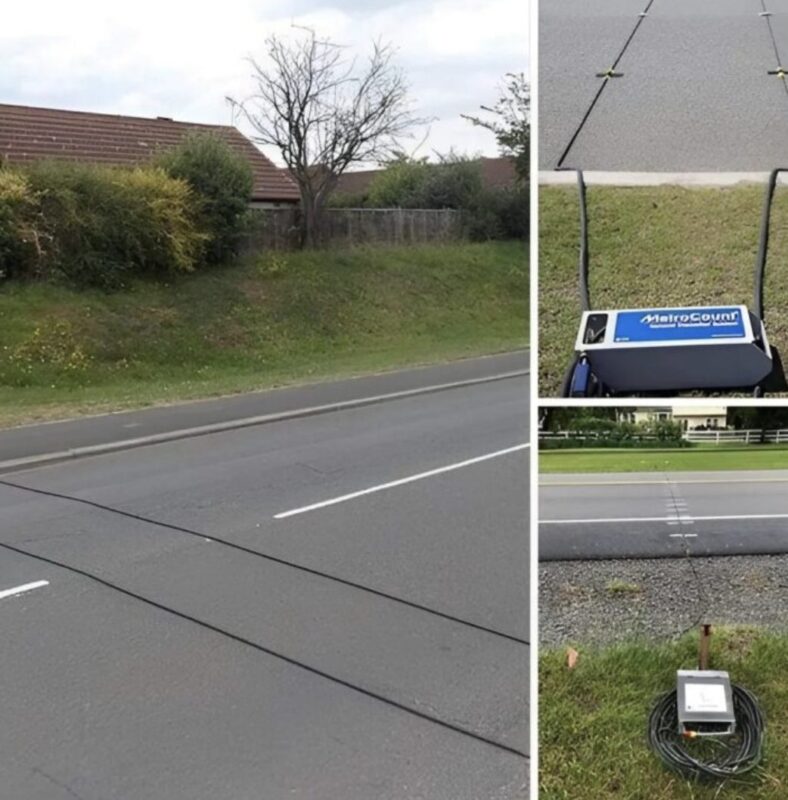
If you ever see black cables stretched across the road, here’s why they’re there and what you need to know.
These black cables are actually temporary traffic sensors placed by authorities to collect valuable data. Mostly used by local administrations, these devices gather essential information about road usage and traffic patterns.
With over 12,000 of these sensors active across the state, they play a key role in planning and improving road infrastructure.
The operation of these rubber tubes is simple but highly effective. Each time a vehicle passes over the tube, a burst of air is triggered, sending an electrical signal that’s recorded by a counting device. This system tracks the number of vehicles crossing a section of road over a given period.

By analyzing the intervals between the bursts of air, authorities can determine peak traffic times. When placed in pairs, these tubes can also gather more detailed information, such as the type of vehicle, its speed, and direction.
The data collected by these sensors is crucial for making informed decisions about road signage, speed limits, and funding for infrastructure. It helps cities optimize traffic flow and ensure the safety and efficiency of our roads.
Therefore, these cables not only count vehicles but also play a major role in data collection, contributing to the improvement of infrastructure and smoother traffic flow. They are used to address specific needs, such as analyzing speed or shortcuts, and help verify claims and guide appropriate solutions.
The next time you see black cables stretched across the road, remember they’re not there by chance. They are silent observers tracking the pulse of our roads and influencing the development of our transportation systems.


