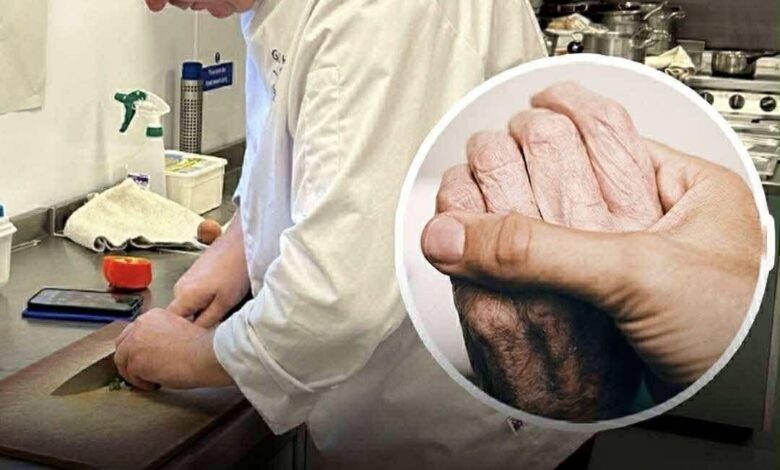
At an Oxfordshire hospice, where time is measured not in years but in moments, food becomes far more than nourishment. It becomes memory, comfort, dignity, and connection. For Spencer Richards, the chef behind the kitchen at Sobell House Hospice, cooking for terminally ill patients is not simply a profession—it is a calling shaped by empathy, patience, and a deep understanding of what matters most at the end of life.
Richards has spent years preparing meals for people in palliative care, individuals whose bodies are failing but whose emotional worlds remain vividly alive. In interviews, he has described his role as one of the greatest privileges a chef can hold: preparing what may be someone’s final meal. In a world obsessed with Michelin stars, viral recipes, and luxury dining experiences, his kitchen operates on a different metric entirely—human impact.
Every day, Richards and his team adapt menus to suit patients whose appetites, taste buds, and physical abilities are constantly changing. Many are unable to swallow properly. Others struggle with nausea caused by medication or treatment. Some lose their sense of taste altogether, while others develop intense cravings. Cooking in this environment requires technical skill, but more importantly, emotional intelligence.
One story Richards shared illustrates this better than any statistic. A 21-year-old patient, nearing the end of his life, found nothing appealing on the standard hospice menu. Traditional meals held no interest. Instead of forcing a compromise, Richards sat down with him and listened. The young man loved street food. So the kitchen changed course. Burgers, bold flavors, familiar comfort—made possible not because it was easy, but because it mattered. In that moment, the food was not about nutrition charts or protocols. It was about being seen.
Another memory stands out just as clearly. A 93-year-old woman who had lived her entire life in a strict, traditional household had never experienced a birthday celebration. No cake. No candles. No song. When Richards and the hospice team surprised her with a birthday cake, she cried. Not quietly. Not politely. She was overwhelmed with joy. That cake, simple by culinary standards, carried more emotional weight than the most elaborate dish ever could.
Over time, Richards noticed a pattern. When people are nearing the end of life, one request comes up again and again: birthday cake. Not gourmet entrees. Not exotic flavors. Cake. Sweet, soft, familiar. It represents celebration, childhood, family, and moments that feel safe. For many patients—especially those who are isolated or lonely—it symbolizes recognition. Proof that their life still matters, right up to the final days.
From a clinical perspective, the requests make sense. Richards explains that many cancer patients develop a strong preference for sweet flavors. Medications alter taste perception. Salt becomes overwhelming. Savory foods lose appeal. Sweetness cuts through the fog. It comforts without demanding effort. That insight has reshaped how meals are prepared, ensuring patients can enjoy food rather than endure it.
But what happens in that kitchen goes beyond dietary adaptation. Food, Richards says, is one of the most emotionally powerful mediums humans have. A smell can unlock childhood memories. A taste can bring back a lost person. A familiar dish can momentarily dissolve fear. In hospice care, where control over life is slipping away, choosing what to eat becomes a rare form of agency.
This is why the work resonates so deeply with readers searching for stories about hospice care compassion, end-of-life dignity, comfort food psychology, and human-centered healthcare. In an age where medical discussions often focus on treatments and outcomes, Richards’ approach reminds us that quality of life matters just as much as longevity.
The hospice kitchen is not glamorous. There are no cameras, no applause, no reviews. Yet the emotional return is immense. Richards speaks openly about the impact patients have on him—the lessons in gratitude, resilience, and presence. Cooking in this setting strips the profession down to its core purpose: caring for people.
Experts in palliative medicine often emphasize that comfort is multidimensional. Pain management is critical, but so is emotional well-being. Food sits at the intersection of both. A meal can soothe anxiety. A dessert can spark conversation. A shared bite can restore a sense of normalcy in an otherwise unfamiliar, frightening environment.
The stories emerging from Sobell House Hospice have struck a chord precisely because they challenge modern assumptions about value and success. In a culture driven by productivity and optimization, this kitchen operates on compassion and attention. Every dish is a quiet act of respect.
Richards’ work also highlights a broader truth about aging, illness, and care: small things are not small. A slice of cake. A familiar flavor. A meal made with intention. These gestures carry immense weight when time is limited. They remind patients that they are not defined by their diagnosis, but by their humanity.
As conversations around hospice care, end-of-life planning, and compassionate healthcare continue to grow, stories like this resonate deeply. They cut through fear with warmth. They replace abstraction with faces, names, and moments. And they remind us that even at the very end, joy can still exist.
In that Oxfordshire kitchen, food is not just prepared—it is offered with love, memory, and meaning. And for many, that final taste becomes something they carry with them, right until the very last moment.


