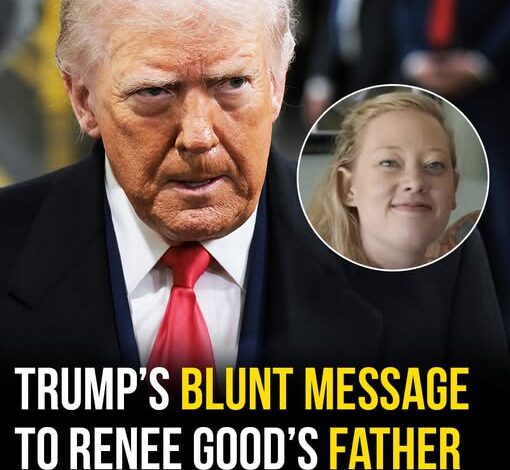
The fatal shooting of 37-year-old Renee Nicole Good on January 7 has left the city of Minneapolis reeling, transforming a local tragedy into a flashpoint for a fractured national discourse. A mother of three, Renee was killed during an Immigration and Customs Enforcement (ICE) protest, an event that has since ignited a firestorm of conflicting narratives, political posturing, and profound personal grief.1 As the dust settles from the initial confrontation, the investigation into her death has become a complex tapestry of video evidence, administrative rhetoric, and the heartbreaking reality of a family caught in the crosshairs of a deeply divided America.
The incident occurred in full view of Renee’s wife, Becca Good, as a confrontation with law enforcement escalated rapidly.2 In the immediate aftermath, the Trump administration, supported by figures such as South Dakota Governor Kristi Noem, moved swiftly to categorize Renee as a “domestic terrorist.”3 The official stance asserted that Renee had attempted to use her vehicle as a weapon against an ICE officer, Jonathan Ross. However, this definitive narrative was quickly met with scrutiny as video footage surfaced. To many observers, the recordings appear to show a different sequence of events: Renee seemingly attempting to maneuver her vehicle away from the officer rather than toward him as Ross discharged three fatal shots.+1
The political reaction to the shooting has been swift and uncompromising. President Donald Trump and Vice President JD Vance have both publicly placed the weight of responsibility on Renee’s shoulders.4 Vance, in particular, drew sharp criticism for suggesting that Renee had been “brainwashed” by left-wing extremist networks, though no concrete evidence was provided to support such an assertion. This rhetorical escalation has served to further polarize a public already grappling with questions of police conduct and the right to protest. While the administration focused on the threat posed to law enforcement, Renee’s family and supporters were left to navigate a landscape where their loved one was being vilified even as they prepared for her funeral.
Amidst this national debate, the voice of Tim Macklin Sr., Renee’s former father-in-law, has emerged as a poignant reminder of the human lives behind the headlines. A preacher from Knoxville and a Republican supporter of Donald Trump, Macklin Sr. finds himself in an agonizing position. He shared a close, positive relationship with Renee, who had been married to his son, Tim Macklin Jr., for five years. Following the death of Macklin Jr. in 2023, Renee remained a constant in Macklin Sr.’s life, frequently bringing his six-year-old grandson to visit. Describing her as an outgoing, kind, and “great person,” Macklin Sr. has openly shared the difficulty his family faces in reconciling the woman they knew with the “terrorist” label applied by the leaders he supports.
The tension between political loyalty and personal loss reached a crescendo during an interview on CBS Evening News. When anchor Tony Dokoupil informed Donald Trump that Renee’s father—also a Republican—was devastated by the administration’s harsh characterization of his daughter, the former president’s response was a study in political navigation. Trump expressed a general sentiment of “love for all our people,” acknowledging that even those on the “other side” deserve consideration. He conceded that under normal circumstances, Renee might have been a “solid, wonderful person,” yet he did not retreat from his critique of her actions on the day of the shooting, describing them as “pretty tough.”
When pressed on the morality of using deadly force in that specific moment, Trump pivoted his focus to the conduct of those present at the scene. He criticized Renee’s wife and their companions, alleging they were “highly disrespectful” toward law enforcement. His argument centered on the premise that officers should not be subjected to such high-pressure “stuff,” ultimately labeling the actions of the protesters as “outrageous.” This shift in focus from the shooting itself to the perceived attitude of the victims has become a central point of contention for those seeking accountability and a more nuanced investigation into the necessity of the use of force.
For Tim Macklin Sr., the path forward is not paved with easy blame. In an appearance on CNN’s Erin Burnett OutFront, he displayed a remarkable degree of empathy for everyone involved in the tragedy. He noted that while he initially had doubts, he later saw footage suggesting the car’s bumper may have made contact with the officer’s legs. “In a flash like that, it’s hard to say how you would react,” he admitted, acknowledging the split-second decisions law enforcement officers must make. His perspective highlights the “emotional and situational complexity” of the event—a middle ground that is often lost in the shouting matches of cable news and social media.
As the formal investigations proceed, the community in Minneapolis and the broader American public are left to grapple with unresolved questions. The case of Renee Nicole Good is no longer just about a single shooting; it has become a symbol of the struggle over who gets to define the truth in a digital age. On one side is a narrative of law and order, where the actions of an officer are defended as a necessary response to a perceived threat. On the other is a narrative of civil rights and the sanctity of life, where video evidence is seen as proof of an unnecessary escalation that cost a mother her life.
Beyond the legal and political battles, there are three children who have lost their mother and a family that is grieving under a national spotlight.5 The labels of “terrorist” or “victim” do little to fill the void left in their lives. The story of Renee Good serves as a sobering reminder of the high stakes of political rhetoric and the human cost of social unrest. It challenges a society to look past partisan labels and see the intricate, often messy reality of human behavior and the permanent consequences of a single moment of violence. As the nation watches, the memory of Renee Good remains at the heart of a painful conversation about force, accountability, and the search for justice in an era where the truth is often as divided as the people seeking it.