Like so many hopeful parents, Stacy and Babajide—an everyday couple from Lagos, Nigeria—dreamed of expanding their family in the simplest and most beautiful way possible.
They imagined giving their daughter, Demilade, a younger sibling, someone she could laugh with, grow up beside, and hold close throughout her life. Their wish was modest: one more child to complete their home.
But life had a greater surprise in store—one that no doctor, ultrasound, or medical scan could have prepared them for.
On the morning of February 26th, 2019, Stacy arrived at the hospital for her scheduled C-section. She was calm, steady, and excited.
At 31 years old, she already understood what it meant to bring life into the world—its joys, its challenges, and its miracles.
She knew she was expecting twins, two boys she had already named Daniel and David. Everything about the pregnancy seemed normal. Every appointment went smoothly. Every scan suggested two healthy babies developing side by side.
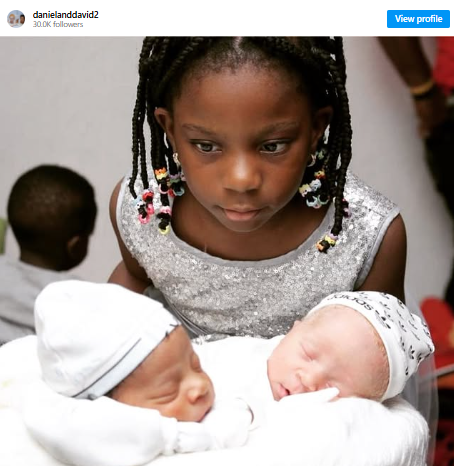
The hospital atmosphere was routine: nurses adjusting monitors, doctors preparing instruments, soft conversations drifting through the room. S
tacy pictured holding her babies for the first time, imagining their tiny hands wrapped around her fingers, imagining the smiles she would treasure forever.
But within minutes, the delivery room would fall silent—and then erupt into astonishment.
Two Brothers, Minutes Apart… Worlds Apart in Appearance
Daniel arrived first. His warm brown skin and soft dark curls resembled his parents and sister. The nurses smiled, the doctor nodded with satisfaction, and Stacy felt her heart swell as she held him close.
Then came David.
His birth froze the room.
The baby who emerged just moments after Daniel had skin as fair as ivory and delicate golden curls that glowed beneath the hospital lights.
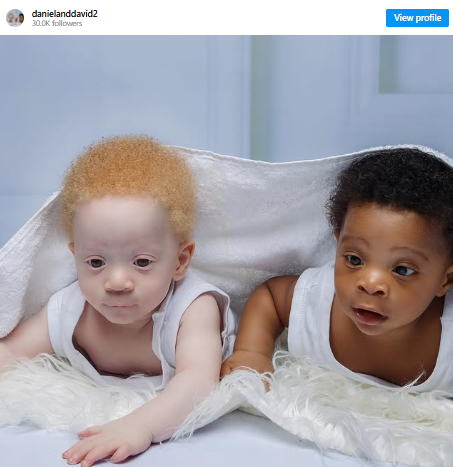
Nurses exchanged surprise-filled glances. The doctor paused, stunned.
One joked—half nervously—“I think I’m delivering completely unidentical twins today,” a comment meant to lighten the tension but one that reflected the sheer shock of the moment.
Stacy couldn’t see him yet, but she heard whispers, footsteps gathering, and the unmistakable hush of disbelief. When the nurse finally placed David in her arms, she could hardly find the words.
“I looked down and saw this beautiful baby with fair skin and golden hair,” she later told the Daily Mail. “It didn’t feel real. Nothing from my scans prepared me for that moment.”
A Father’s Reaction That Melted Every Heart
While Stacy processed the surprise, she wondered what her husband would think. Would he be shocked? Confused? Worried?
Instead, something beautiful happened.
As soon as Babajide saw both boys, he became emotional. He gently touched their tiny faces with awe, completely forgetting the world around him.
He smiled through tears, calling David “Golden,” and later nicknaming him “Mr. Golden,” a name filled with affection, pride, and joy.
For more than ten minutes, he stood in quiet admiration, overwhelmed by gratitude. To him, there was no confusion—only love.

His sons were perfect. His family was whole. And he later told Stacy, “These are the greatest gifts God has ever given me.”
A Rare Genetic Condition… and a Beautiful Difference
Though the boys looked like they came from different corners of the world, science offered a simple explanation.
David was born with a rare genetic condition called oculocutaneous albinism, which affects melanin production—the pigment responsible for skin, hair, and eye color.
Babies with this condition are often born with very light features and may experience sensitivity to sunlight or certain vision challenges.
At first, Stacy worried—not just about David’s health, but also about how society might treat him.
In Nigeria and across parts of Sub-Saharan Africa, albinism is more common than in many other regions, yet social stigma still exists.
The World Health Organization estimates that the condition affects between 1 in 5,000 and 1 in 15,000 people in the region—significantly higher than in Europe or North America.
Thankfully, David has been growing strong and healthy. Stacy says he has not faced serious medical complications, and he continues to thrive just like his twin brother.
“I was so worried at first,” she admitted. “But he is healthy and happy—and that’s what matters most