
Washington, D.C. — The White House on Thursday introduced what officials described as one of the most sweeping tax-reform packages in years.
Designed to deliver substantial financial relief to middle-class Americans while eliminating several high-profile tax benefits long criticized for primarily assisting the ultra-wealthy.
Press Secretary Karoline Leavitt presented the proposal as a major pillar of President Trump’s economic agenda, emphasizing that the plan is built on principles of “middle-class relief, fairness, and economic revitalization.”
According to administration officials, the package focuses on helping workers in tip-dependent sectors, Americans working overtime, and seniors relying on fixed incomes.
At the same time, it seeks to rein in tax advantages historically enjoyed by hedge fund managers, private-equity executives, and owners of major U.S. sports franchises — groups that, critics argue, have disproportionately benefited from loopholes unavailable to ordinary wage earners.
The unveiling of the proposal followed months of internal discussions and pressure from economic advisers urging the President to deliver tangible tax relief for working families before the end of the fiscal year.
Analysts note that although many broad tax-cut promises were previously outlined, Thursday’s announcement marks the most detailed and comprehensive version to date.
Key Provisions of the New Tax Plan
1. Eliminating Federal Taxes on Tips
One of the most widely discussed features of the proposal is the complete elimination of federal income tax on tips, a move expected to significantly increase take-home pay for workers in hospitality, restaurant, transportation, beauty services, and other tip-driven industries.
The measure would allow employees to deduct all tip income, a change economists say could benefit millions of Americans whose wages depend heavily on customer gratuities.
Supporters argue that tip workers have historically faced inconsistent income and should not be penalized for extra effort or performance-based bonuses.
Industry associations estimate that this single provision could raise take-home pay by thousands of dollars annually for full-time tipped workers.
2. No Federal Tax on Overtime Pay
The plan also proposes exempting overtime wages from federal income tax, meaning that employees working beyond standard hours would effectively receive the full value of their overtime compensation.

The deduction would apply to the portion of income paid above regular hourly rates under federal overtime rules.
The administration says this change rewards hard work and incentivizes higher productivity, especially at a time when many Americans are taking on extra shifts to manage the rising cost of living.
Labor policy experts predict that the measure could have a transformative effect on lower- and middle-income households.
3. Relief for Seniors, Including Social Security Benefits
The tax reform package introduces substantial relief for retirees by proposing the elimination of federal taxes on Social Security benefits.
Officials argue that seniors who have contributed to the system throughout their working lives should not face additional taxation on their retirement income.
While some lawmakers have raised questions about the fiscal impact of eliminating this tax category, the White House maintains that reducing the financial burden on seniors is a moral and economic priority.
Policy analysts say this change could help millions of older Americans facing high medical costs, housing expenses, and inflationary pressures.
4. Closing Wealth-Focused Loopholes
A central theme of the proposal is closing loopholes often used by the highest-income Americans — particularly the carried interest loophole, which allows hedge fund and private-equity managers to pay lower tax rates on certain earnings by classifying them as capital gains instead of ordinary income.
For years, both Republican and Democratic lawmakers have criticized the loophole, though previous attempts to eliminate it have stalled.
The White House argues that closing the provision will level the tax playing field and demonstrate a commitment to fairness.
Additionally, the administration plans to end several specialized deductions and accounting benefits used by sports-team owners, especially within major league franchises.
These include tax strategies related to depreciation of player contracts and franchise assets — practices that critics say artificially reduce taxable income for some of the wealthiest individuals in the country.
5. Encouraging Domestic Manufacturing Through Immediate Expensing
Although earlier campaign promises proposed lowering the corporate tax rate for domestic manufacturers to 15%, the final draft replaces this commitment with a different but highly impactful incentive.
Under the proposal, companies investing in new U.S. manufacturing facilities would be allowed to immediately expense (fully deduct) the cost of new plants, machinery, and production equipment instead of writing them off slowly over several years.
Tax specialists say this could effectively lower companies’ taxes for years while stimulating new investment and job creation across the country.
The measure is widely viewed as a boost for industries looking to expand operations domestically rather than abroad.
6. Extension of Previous Tax Cuts and Additional Adjustments
The plan also includes:
-
Extension of individual tax cuts originally introduced in 2017
-
Adjustments to the State and Local Tax (SALT) deduction cap
-
Preservation of an expanded standard deduction to keep filing simple for middle-income families
Officials say these measures will help stabilize the tax landscape and provide predictability for households managing long-term financial planning.
Impact on Workers, Families, and Retirees
Higher Take-Home Pay
Economic modeling suggests the changes — particularly the elimination of taxes on tips and overtime — could result in thousands of dollars in additional annual earnings for many workers.

Families relying on dual incomes or multiple part-time jobs stand to benefit significantly, especially those in urban centers where tipping is deeply embedded in the service economy.
Increased Financial Security for Seniors
Seniors living on Social Security and modest retirement savings could see immediate financial relief from the elimination of federal taxation on Social Security benefits.
Advocates have praised the move as a step toward ensuring dignity and stability for older Americans.
Boost for U.S. Manufacturing and Job Creation
The expensing incentives are expected to encourage domestic investment, with analysts predicting new factory construction, re-shoring of production lines, and job creation in manufacturing hubs across the country.
Political and Fiscal Challenges Ahead
Despite broad public interest, the plan faces substantial political challenges.
Some measures — particularly the tax exemptions for Social Security and the expanded deductions — may conflict with congressional budget rules, including restrictions on deficit-increasing legislation under reconciliation procedures.
Additionally, initial proposals for a 15% manufacturing tax rate did not secure enough support to pass. Instead, lawmakers approved the immediate-expensing alternative as a compromise.
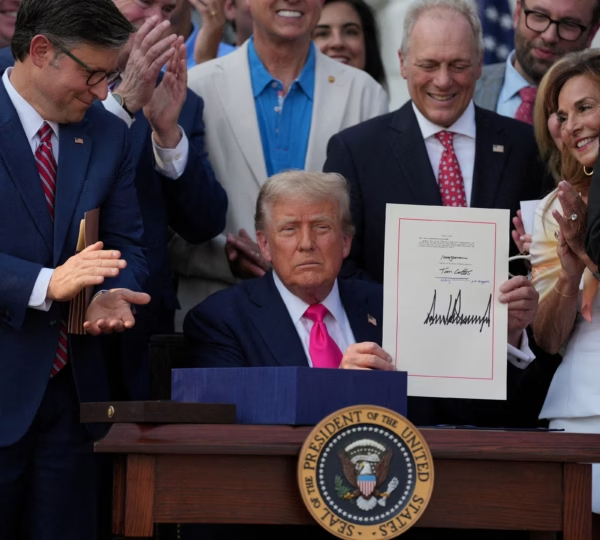
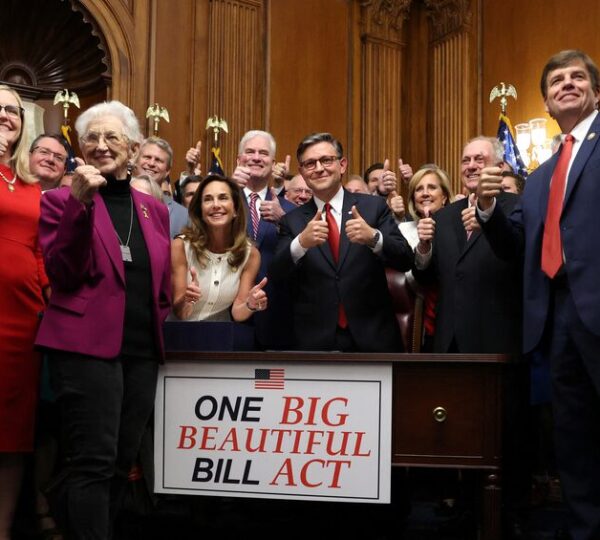
These provisions were eventually incorporated into the One Big Beautiful Bill Act (OBBBA), a multi-sector reform package passed by Congress and signed into law on July 4, 2025.
However, not all proposed tax cuts made it into the final version, reflecting ongoing negotiations and fiscal limitations.
Why the Proposal Matters
For Workers
Workers in service, retail, hospitality, and food industries stand to benefit most, potentially seeing the largest real increase in disposable income in decades.
For Seniors
Retirees could face dramatically lower tax burdens, easing pressures associated with rising healthcare and living costs.
For the Economy
The incentives for manufacturing could strengthen domestic industry, reduce reliance on foreign production, and bolster long-term economic stability.
For Fairness in the Tax Code
By targeting loopholes used by wealthy financiers and sports-team owners, the plan aims to realign the tax system with principles of fairness and equal treatment — a point the administration has repeatedly emphasized.
Conclusion
The tax plan unveiled by the Trump administration represents one of its most ambitious economic efforts, combining immediate financial relief for millions of Americans with structural reforms targeting long-criticized tax disparities.
Although not every proposal survived the legislative process intact, the core components — including relief for tip workers, overtime earners, and seniors, along with incentives for U.S. manufacturing — are expected to have a significant national impact.
Supporters call it a historic step toward empowering working families, while critics warn of potential long-term fiscal consequences.
As implementation begins, the plan’s full economic effect will become clearer — but its introduction marks a major moment in the administration’s broader push for tax reform and economic restructuring.
Washington, D.C. — The White House on Thursday introduced what officials described as one of the most sweeping tax-reform packages in years.
Designed to deliver substantial financial relief to middle-class Americans while eliminating several high-profile tax benefits long criticized for primarily assisting the ultra-wealthy.
Press Secretary Karoline Leavitt presented the proposal as a major pillar of President Trump’s economic agenda, emphasizing that the plan is built on principles of “middle-class relief, fairness, and economic revitalization.”
According to administration officials, the package focuses on helping workers in tip-dependent sectors, Americans working overtime, and seniors relying on fixed incomes.
At the same time, it seeks to rein in tax advantages historically enjoyed by hedge fund managers, private-equity executives, and owners of major U.S. sports franchises — groups that, critics argue, have disproportionately benefited from loopholes unavailable to ordinary wage earners.
The unveiling of the proposal followed months of internal discussions and pressure from economic advisers urging the President to deliver tangible tax relief for working families before the end of the fiscal year.
Analysts note that although many broad tax-cut promises were previously outlined, Thursday’s announcement marks the most detailed and comprehensive version to date.
Key Provisions of the New Tax Plan
1. Eliminating Federal Taxes on Tips
One of the most widely discussed features of the proposal is the complete elimination of federal income tax on tips, a move expected to significantly increase take-home pay for workers in hospitality, restaurant, transportation, beauty services, and other tip-driven industries.
The measure would allow employees to deduct all tip income, a change economists say could benefit millions of Americans whose wages depend heavily on customer gratuities.
Supporters argue that tip workers have historically faced inconsistent income and should not be penalized for extra effort or performance-based bonuses.
Industry associations estimate that this single provision could raise take-home pay by thousands of dollars annually for full-time tipped workers.
2. No Federal Tax on Overtime Pay
The plan also proposes exempting overtime wages from federal income tax, meaning that employees working beyond standard hours would effectively receive the full value of their overtime compensation.
The deduction would apply to the portion of income paid above regular hourly rates under federal overtime rules.
The administration says this change rewards hard work and incentivizes higher productivity, especially at a time when many Americans are taking on extra shifts to manage the rising cost of living.
Labor policy experts predict that the measure could have a transformative effect on lower- and middle-income households.
3. Relief for Seniors, Including Social Security Benefits
The tax reform package introduces substantial relief for retirees by proposing the elimination of federal taxes on Social Security benefits.
Officials argue that seniors who have contributed to the system throughout their working lives should not face additional taxation on their retirement income.
While some lawmakers have raised questions about the fiscal impact of eliminating this tax category, the White House maintains that reducing the financial burden on seniors is a moral and economic priority.
Policy analysts say this change could help millions of older Americans facing high medical costs, housing expenses, and inflationary pressures.
4. Closing Wealth-Focused Loopholes
A central theme of the proposal is closing loopholes often used by the highest-income Americans — particularly the carried interest loophole, which allows hedge fund and private-equity managers to pay lower tax rates on certain earnings by classifying them as capital gains instead of ordinary income.
For years, both Republican and Democratic lawmakers have criticized the loophole, though previous attempts to eliminate it have stalled.
The White House argues that closing the provision will level the tax playing field and demonstrate a commitment to fairness.
Additionally, the administration plans to end several specialized deductions and accounting benefits used by sports-team owners, especially within major league franchises.
These include tax strategies related to depreciation of player contracts and franchise assets — practices that critics say artificially reduce taxable income for some of the wealthiest individuals in the country.
5. Encouraging Domestic Manufacturing Through Immediate Expensing
Although earlier campaign promises proposed lowering the corporate tax rate for domestic manufacturers to 15%, the final draft replaces this commitment with a different but highly impactful incentive.
Under the proposal, companies investing in new U.S. manufacturing facilities would be allowed to immediately expense (fully deduct) the cost of new plants, machinery, and production equipment instead of writing them off slowly over several years.
Tax specialists say this could effectively lower companies’ taxes for years while stimulating new investment and job creation across the country.
The measure is widely viewed as a boost for industries looking to expand operations domestically rather than abroad.
6. Extension of Previous Tax Cuts and Additional Adjustments
The plan also includes:
-
Extension of individual tax cuts originally introduced in 2017
-
Adjustments to the State and Local Tax (SALT) deduction cap
-
Preservation of an expanded standard deduction to keep filing simple for middle-income families
Officials say these measures will help stabilize the tax landscape and provide predictability for households managing long-term financial planning.
Impact on Workers, Families, and Retirees
Higher Take-Home Pay
Economic modeling suggests the changes — particularly the elimination of taxes on tips and overtime — could result in thousands of dollars in additional annual earnings for many workers.
Families relying on dual incomes or multiple part-time jobs stand to benefit significantly, especially those in urban centers where tipping is deeply embedded in the service economy.
Increased Financial Security for Seniors
Seniors living on Social Security and modest retirement savings could see immediate financial relief from the elimination of federal taxation on Social Security benefits.
Advocates have praised the move as a step toward ensuring dignity and stability for older Americans.
Boost for U.S. Manufacturing and Job Creation
The expensing incentives are expected to encourage domestic investment, with analysts predicting new factory construction, re-shoring of production lines, and job creation in manufacturing hubs across the country.
Political and Fiscal Challenges Ahead
Despite broad public interest, the plan faces substantial political challenges.
Some measures — particularly the tax exemptions for Social Security and the expanded deductions — may conflict with congressional budget rules, including restrictions on deficit-increasing legislation under reconciliation procedures.
Additionally, initial proposals for a 15% manufacturing tax rate did not secure enough support to pass. Instead, lawmakers approved the immediate-expensing alternative as a compromise.
These provisions were eventually incorporated into the One Big Beautiful Bill Act (OBBBA), a multi-sector reform package passed by Congress and signed into law on July 4, 2025.
However, not all proposed tax cuts made it into the final version, reflecting ongoing negotiations and fiscal limitations.
Why the Proposal Matters
For Workers
Workers in service, retail, hospitality, and food industries stand to benefit most, potentially seeing the largest real increase in disposable income in decades.
For Seniors
Retirees could face dramatically lower tax burdens, easing pressures associated with rising healthcare and living costs.
For the Economy
The incentives for manufacturing could strengthen domestic industry, reduce reliance on foreign production, and bolster long-term economic stability.
For Fairness in the Tax Code
By targeting loopholes used by wealthy financiers and sports-team owners, the plan aims to realign the tax system with principles of fairness and equal treatment — a point the administration has repeatedly emphasized.
Conclusion
The tax plan unveiled by the Trump administration represents one of its most ambitious economic efforts, combining immediate financial relief for millions of Americans with structural reforms targeting long-criticized tax disparities.
Although not every proposal survived the legislative process intact, the core components — including relief for tip workers, overtime earners, and seniors, along with incentives for U.S. manufacturing — are expected to have a significant national impact.
Supporters call it a historic step toward empowering working families, while critics warn of potential long-term fiscal consequences.
As implementation begins, the plan’s full economic effect will become clearer — but its introduction marks a major moment in the administration’s broader push for tax reform and economic restructuring.