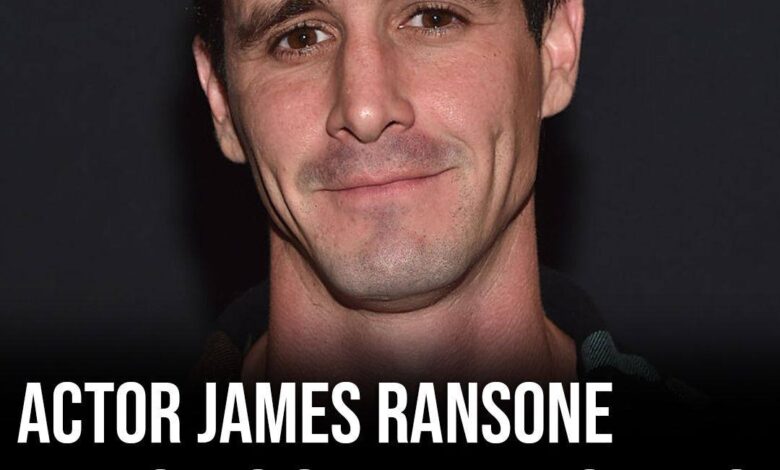
The news landed with a sudden, numbing weight. Actor James Ransone, best known for embodying some of television’s most wounded and unforgettable characters, has died at the age of 46. Authorities confirmed his death was ruled a suicide, a conclusion that left friends, colleagues, and fans grappling with grief and a silence that feels especially cruel for a performer whose voice once cut straight through the noise.
Ransone was never a decorative presence. He was an actor who carried rawness into every frame, a performer whose intensity felt lived-in rather than rehearsed. To audiences, he will forever be remembered as Ziggy Sobotka in The Wire—a character defined by desperation, bravado, and heartbreak. Ziggy was reckless, tragic, and painfully human, and Ransone made him impossible to forget. That performance alone secured his place in the canon of modern television, but it was only one chapter in a career shaped by pain, honesty, and relentless commitment to truth.
His life story was never simple. Ransone grew up under the long shadow of war, the son of a wounded Green Beret who returned home carrying injuries that were not always visible. The psychological residue of that experience permeated the household, shaping a childhood marked by instability and trauma. For Ransone, those early years forged a restless inner world that would later fuel his art. Acting wasn’t an extracurricular interest; it was a lifeline.
At the Carver Center for Arts and Technology, he found a place where intensity wasn’t something to be suppressed. It was something to be shaped. There, the jagged edges that made him feel out of place elsewhere became assets. Teachers recognized his ability to channel inner chaos into performance, and Ransone began to understand that what hurt him could also power him. That realization would define his career.
From the start, he gravitated toward characters living on the margins. Beyond The Wire, he delivered haunting performances in films like Sinister and It: Chapter Two, bringing depth and vulnerability to genres that often rely on surface-level fear. In Generation Kill, he portrayed a wired, volatile Marine—an echo, perhaps, of the young soldier his father once was. That role allowed him, if only briefly, to inhabit a perspective that felt painfully close to home.
Off screen, Ransone refused to curate a false image of redemption. In an industry that often rewards polished narratives, he spoke plainly about his struggles. He talked openly about heroin addiction, about getting sober at 27, about the ongoing work required to stay that way. He also shared his experience of sexual abuse as a child, naming a trauma many never speak aloud. He did not frame survival as a clean arc with a triumphant ending. He presented it as it is: uneven, exhausting, and ongoing.
That honesty earned him respect. Colleagues knew him as fiercely intelligent, emotionally present, and uncompromising in his craft. Fans recognized something of themselves in his performances—the anxiety, the anger, the longing to be seen. In an era dominated by celebrity branding and algorithmic visibility, Ransone stood out for refusing to sand down the rough parts. He understood that authenticity has a cost, and he paid it willingly.
His death, ruled a suicide, does not negate that courage. It underscores a harder truth: mental illness can be relentless, even for those who fight with everything they have. The idea that openness alone guarantees safety is a comforting myth. Ransone’s life reminds us that awareness and vulnerability are necessary but not always sufficient, and that the struggle can persist even amid success, love, and purpose.
He leaves behind his wife, Jamie, and their two children. For them, the loss is immeasurable. In the wake of tragedy, the family has expressed a desire to channel grief into something that might help others—support for mental health initiatives, resources for those still battling the darkness that ultimately claimed him. It is a gesture rooted in compassion rather than spectacle, a continuation of the honesty Ransone practiced in life.
Within the entertainment industry, tributes have focused less on accolades and more on impact. Directors recall his instinctive understanding of character. Fellow actors remember scenes elevated simply by his presence. Viewers return to his work and see it differently now—not as foreshadowing, but as evidence of a man willing to sit with discomfort and show it to the world without apology.
The conversation that follows a loss like this is always fraught. There is a risk of turning a human life into a cautionary tale or a headline optimized for clicks. That would be a disservice to Ransone’s legacy. His story is not about inevitability. It is about complexity. About a person who transformed pain into art, who spoke the truth even when it made him vulnerable, and who mattered deeply to the people who knew him.
If his performances endure—and they will—it is because they were grounded in empathy. He understood the wounded parts of people and portrayed them without condescension. He gave dignity to characters who rarely receive it, and in doing so, offered audiences something rare: recognition.
James Ransone’s life cannot be reduced to its ending. He was a husband, a father, a colleague, an artist, and a survivor who kept showing up. His death asks us not for voyeurism or judgment, but for seriousness—about mental health, about support, about the limits of resilience. Remembering him means holding all of that at once: the brilliance, the struggle, the love he leaves behind.
For those who are struggling, help is available. Reach out to trusted people in your life or to professional resources in your community. Asking for support is not weakness; it is an act of courage. And it is one worth choosing, again and again.