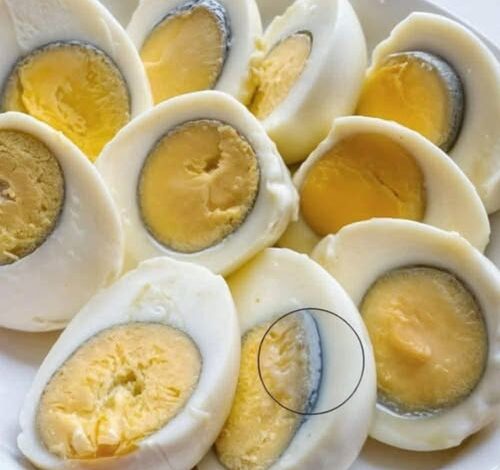
The appearance of a mysterious, dusty green ring encircling the yolk of a hard-boiled egg is a phenomenon that has puzzled home cooks for generations. For many, this discolored halo is a source of immediate concern, sparking worries of spoilage, bacterial growth, or chemical contamination. However, the reality behind the green ring is far more benign, though no less fascinating. It is not a sign of rot or danger; rather, it is a definitive lesson in the fundamental chemistry of food. This “green halo” is the physical manifestation of a specific chemical reaction that occurs when an egg is subjected to excessive heat or prolonged cooking times. To understand how to achieve the perfect, sun-bright yellow yolk, one must first dive into the molecular drama that unfolds inside the shell.
At its core, the green ring is a compound known as iron sulfide.1 This substance forms through a precise interaction between the two primary components of the egg: the yolk and the white.2 The egg white is naturally rich in sulfur-containing proteins.3 When these proteins are heated, they begin to break down, releasing hydrogen sulfide gas ($H_{2}S$). Simultaneously, the egg yolk contains a significant amount of iron. As the egg continues to cook beyond its ideal window, the hydrogen sulfide gas from the white migrates inward toward the center of the egg. When this gas meets the iron present in the yolk’s outer surface, a chemical reaction occurs, resulting in the formation of iron sulfide (4$FeS$).5 This compound possesses a distinct greenish-gray hue, creating that unappetizing “tired” look that can ruin the presentation of a fresh salad or a plate of deviled eggs.+3
While the presence of iron sulfide is entirely harmless to ingest, it serves as a visual indicator of “overworked” proteins. An egg with a green ring is almost always accompanied by a rubbery, tough white and a dry, chalky yolk. In the culinary world, where texture and aesthetics are as important as flavor, the green ring is the hallmark of a lack of temperature control. Achieving a professional-grade hard-boiled egg does not require an advanced degree in chemistry, but it does require a disciplined approach to the variables of heat and time.
The journey to a perfect egg begins with the water. One of the most common mistakes in home kitchens is starting eggs in cold water and bringing them to a boil together. While this method is traditional, it offers very little control over the exact duration the egg spends at high temperatures, as every stove reaches a boil at a different speed. A more precise method—often referred to as the “hot start”—involves bringing a pot of water to a rolling boil first. Once the water is boiling, you gently lower the eggs into the pot using a slotted spoon. This immediate exposure to heat allows for a much more accurate timing process.
Immediately after adding the eggs, it is crucial to turn the heat down to a gentle simmer.6 Boiling water is turbulent and can cause the eggs to bounce against the bottom of the pot, leading to cracked shells and “weeping” whites. A steady, gentle simmer provides the consistent heat necessary to coagulate the proteins without triggering the aggressive release of hydrogen sulfide gas that leads to discoloration. For a standard large egg, the sweet spot for a firm but creamy hard-boiled result is typically between 9 and 12 minutes. At the 9-minute mark, the yolk is set but remains slightly jammy in the center; at 12 minutes, it is fully opaque and pale yellow throughout.
However, the cooking process does not end when the timer goes off. Residual heat is the silent enemy of the perfect yolk. Even after being removed from the hot water, the internal temperature of an egg remains high enough to continue the chemical reaction that forms iron sulfide. This is why the “ice bath” is an essential, non-negotiable step in the process. Moving the eggs immediately from the simmering water into a bowl filled with ice and cold water serves two vital purposes. First, it “shocks” the egg, instantly halting the cooking process and locking in that vibrant, sun-kissed yellow color. Second, the rapid temperature change causes the egg to contract slightly within the shell, which can make the peeling process significantly easier.
The ease of peeling is another area where kitchen lore and science intersect. There is a persistent belief that the freshest eggs are the best for boiling, but chemistry suggests otherwise. As an egg ages, the pH of the white increases, and the protective membrane between the white and the shell becomes less prone to sticking.7 Therefore, eggs that have been in the refrigerator for a week or two are actually the ideal candidates for hard-boiling. When you combine older eggs with a “hot start” and an “ice bath,” the shell often slides off in just two or three large pieces, leaving behind a smooth, unblemished surface.
Beyond the aesthetics, the quest for the perfect hard-boiled egg reflects a broader philosophy of mindful cooking. It is a reminder that even the most humble ingredients deserve respect and attention to detail. A plate of deviled eggs with clean, bright centers signals to your guests that you care about the nuances of preparation. It transforms a simple snack into a refined culinary component. By understanding the iron-sulfur reaction, you move from being a passive observer of kitchen mishaps to a proactive manager of culinary chemistry.
In the fast-paced environment of 2026, where food photography and presentation have become a global language, avoiding the “green halo” is more relevant than ever. Whether you are prepping protein for a week of healthy lunches or creating an elaborate centerpiece for a holiday brunch, the difference between a mediocre egg and a masterpiece is simply a matter of a few degrees and a few minutes. With the right technique—controlling the simmer, timing the cook, and respecting the power of the ice bath—you can ensure that every egg you crack open reveals a center as bright and inviting as a summer morning. The green ring may be a fascinating bit of science, but in the kitchen, it is a relic of the past that you now have the knowledge to outsmart every single time.