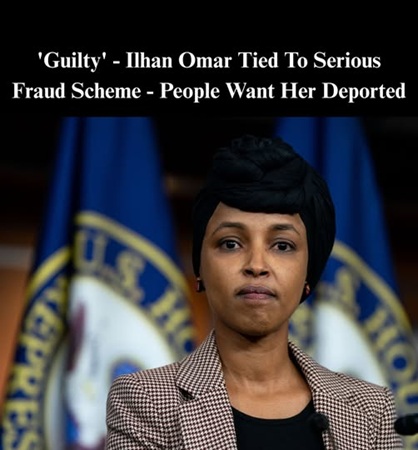
Democratic Representative Ilhan Omar of Minnesota is currently facing intensified scrutiny following allegations from the American Accountability Foundation (AAF), a conservative watchdog group, that she has defaulted on federally backed student loans.
The claims have emerged in a politically sensitive context, as Omar has long been a vocal advocate for nationwide student debt cancellation.
This combination of personal financial allegations and policy advocacy has prompted debate over whether her own finances could constitute a perceived conflict of interest with her legislative priorities.
According to a letter sent by AAF President Thomas Jones to House Speaker Mike Johnson, Omar, who earns a $174,000 annual congressional salary, is allegedly in collection proceedings for student loans totaling between $15,001 and $50,000, as documented in her financial disclosure forms.
Jones characterized Omar’s alleged default as “unconscionable and embarrassing,” emphasizing that if the loans remain unpaid, the ultimate responsibility could fall on U.S. taxpayers.
The letter suggests that Omar might be using her position as a member of Congress to influence the Department of Education’s enforcement of collection actions, though AAF has not provided public evidence supporting this claim.
To investigate further, AAF stated that it has submitted a Freedom of Information Act (FOIA) request seeking communications between Omar and the Department of Education regarding her student loans or related enforcement actions.
AAF’s letter goes further, urging Speaker Johnson to consider an unprecedented step: withholding Omar’s congressional salary and redirecting the payments directly to her loan servicer, Nelnet, until her debt is brought current.
The organization argued that such a measure would hold Omar accountable and prevent any federal funds, including taxpayer dollars, from indirectly covering her loan obligations.
As of now, Omar’s office has not publicly responded to these allegations or the proposed garnishment plan.
The controversy has reignited conversations about Omar’s credibility as one of Congress’s most outspoken proponents of student debt forgiveness.
Critics have argued that if Omar is in default, it could undermine her advocacy for debt cancellation by suggesting a double standard: advocating forgiveness for millions of Americans while allegedly failing to meet her own obligations.
Opponents also claim that this situation raises ethical questions regarding the transparency and accountability expected of elected officials, particularly when their legislative work intersects with personal financial interests.
Supporters of Omar, however, have urged caution in drawing conclusions before the allegations are independently verified.
Many observers have noted that AAF filings are often politically motivated, highlighting that the organization has historically targeted Democratic lawmakers with similar complaints.
Analysts have pointed out that federal student loans are subject to complex repayment structures, including options for deferment, forbearance, income-driven repayment, and temporary hardship accommodations.
These mechanisms can complicate assessments of default status, making it essential to verify the details before assigning blame or drawing political conclusions.
Beyond the political implications, the situation has sparked broader discussions regarding financial oversight of members of Congress.
Federal law requires lawmakers to disclose certain assets, debts, and financial interests, but enforcement mechanisms are limited, particularly regarding personal loans such as student debt.
Observers have raised questions about whether existing regulations are sufficient to ensure accountability and whether additional oversight mechanisms are necessary to prevent potential conflicts of interest between personal finances and public policy positions.
The debate also extends to public perceptions and trust in government.
Many citizens expect elected officials to adhere to high ethical standards and to manage their personal finances responsibly, particularly when advocating for legislation with direct financial implications for the public.
Allegations such as those leveled by AAF against Omar can influence public opinion, shape media coverage, and potentially impact her political influence within Congress.
From a legal perspective, while AAF has suggested garnishing Omar’s congressional salary, experts note that such a step would be unprecedented.
Federal law allows certain types of wage garnishment under specific conditions, primarily for federal debts or court-ordered judgments, but the application of these provisions to a sitting member of Congress raises complex constitutional and statutory questions.
Legal analysts have observed that implementing salary garnishment could require significant legal review and might face challenges regarding separation of powers and legislative immunity.
In the political arena, the allegations have created a clear divide. Critics see the situation as evidence of a lack of accountability, while supporters caution against accepting partisan accusations at face value.
The case has also renewed debate over the role and influence of watchdog organizations in U.S. politics.
While such groups can play an important role in monitoring elected officials and ensuring transparency, questions remain about the balance between legitimate oversight and politically motivated targeting.
AAF, as a conservative organization, has previously filed complaints and released reports aimed at Democratic lawmakers, raising scrutiny over its motives and methodology.
The allegations against Omar also highlight ongoing national conversations about student debt policy, financial responsibility, and equity.
Millions of Americans hold federally backed student loans, and discussions around forgiveness, repayment, and default status are central to public policy debates.
Omar’s position as both a policymaker and an alleged debtor has intensified scrutiny, illustrating the complex intersection of personal experience, public advocacy, and legislative authority.
In summary, Representative Ilhan Omar faces multifaceted scrutiny as allegations of student loan default intersect with her advocacy for debt cancellation, financial disclosures, congressional ethics, and broader questions of political accountability.
While the American Accountability Foundation has urged unprecedented action, including potential garnishment of her congressional salary, Omar has yet to publicly respond.
The situation continues to prompt debate over personal responsibility, transparency, and the appropriate oversight mechanisms for lawmakers, while also underscoring the challenges of navigating highly partisan political environments.
Analysts emphasize that the resolution of these allegations will have implications not only for Omar’s political career but also for public trust in Congress and the effectiveness of financial oversight of elected officials.
The case remains ongoing, and observers from both political and legal spheres are watching closely.
As additional information becomes publicly available through FOIA requests or official responses from Omar’s office, the debate is expected to evolve, with potential implications for congressional rules, financial accountability standards, and the broader discussion on student debt policy in the United States.
Ultimately, the controversy serves as a focal point for broader conversations about ethics, governance, and personal responsibility in public office, illustrating the complex dynamics that arise when individual financial matters intersect with high-profile policy advocacy.
Democratic Representative Ilhan Omar of Minnesota is currently facing intensified scrutiny following allegations from the American Accountability Foundation (AAF), a conservative watchdog group, that she has defaulted on federally backed student loans.
The claims have emerged in a politically sensitive context, as Omar has long been a vocal advocate for nationwide student debt cancellation.
This combination of personal financial allegations and policy advocacy has prompted debate over whether her own finances could constitute a perceived conflict of interest with her legislative priorities.
According to a letter sent by AAF President Thomas Jones to House Speaker Mike Johnson, Omar, who earns a $174,000 annual congressional salary, is allegedly in collection proceedings for student loans totaling between $15,001 and $50,000, as documented in her financial disclosure forms.
Jones characterized Omar’s alleged default as “unconscionable and embarrassing,” emphasizing that if the loans remain unpaid, the ultimate responsibility could fall on U.S. taxpayers.
The letter suggests that Omar might be using her position as a member of Congress to influence the Department of Education’s enforcement of collection actions, though AAF has not provided public evidence supporting this claim.
To investigate further, AAF stated that it has submitted a Freedom of Information Act (FOIA) request seeking communications between Omar and the Department of Education regarding her student loans or related enforcement actions.
AAF’s letter goes further, urging Speaker Johnson to consider an unprecedented step: withholding Omar’s congressional salary and redirecting the payments directly to her loan servicer, Nelnet, until her debt is brought current.
The organization argued that such a measure would hold Omar accountable and prevent any federal funds, including taxpayer dollars, from indirectly covering her loan obligations.
As of now, Omar’s office has not publicly responded to these allegations or the proposed garnishment plan.
The controversy has reignited conversations about Omar’s credibility as one of Congress’s most outspoken proponents of student debt forgiveness.
Critics have argued that if Omar is in default, it could undermine her advocacy for debt cancellation by suggesting a double standard: advocating forgiveness for millions of Americans while allegedly failing to meet her own obligations.
Opponents also claim that this situation raises ethical questions regarding the transparency and accountability expected of elected officials, particularly when their legislative work intersects with personal financial interests.
Supporters of Omar, however, have urged caution in drawing conclusions before the allegations are independently verified.
Many observers have noted that AAF filings are often politically motivated, highlighting that the organization has historically targeted Democratic lawmakers with similar complaints.
Analysts have pointed out that federal student loans are subject to complex repayment structures, including options for deferment, forbearance, income-driven repayment, and temporary hardship accommodations.
These mechanisms can complicate assessments of default status, making it essential to verify the details before assigning blame or drawing political conclusions.
Beyond the political implications, the situation has sparked broader discussions regarding financial oversight of members of Congress.
Federal law requires lawmakers to disclose certain assets, debts, and financial interests, but enforcement mechanisms are limited, particularly regarding personal loans such as student debt.
Observers have raised questions about whether existing regulations are sufficient to ensure accountability and whether additional oversight mechanisms are necessary to prevent potential conflicts of interest between personal finances and public policy positions.
The debate also extends to public perceptions and trust in government.
Many citizens expect elected officials to adhere to high ethical standards and to manage their personal finances responsibly, particularly when advocating for legislation with direct financial implications for the public.
Allegations such as those leveled by AAF against Omar can influence public opinion, shape media coverage, and potentially impact her political influence within Congress.
From a legal perspective, while AAF has suggested garnishing Omar’s congressional salary, experts note that such a step would be unprecedented.
Federal law allows certain types of wage garnishment under specific conditions, primarily for federal debts or court-ordered judgments, but the application of these provisions to a sitting member of Congress raises complex constitutional and statutory questions.
Legal analysts have observed that implementing salary garnishment could require significant legal review and might face challenges regarding separation of powers and legislative immunity.
In the political arena, the allegations have created a clear divide. Critics see the situation as evidence of a lack of accountability, while supporters caution against accepting partisan accusations at face value.
The case has also renewed debate over the role and influence of watchdog organizations in U.S. politics.
While such groups can play an important role in monitoring elected officials and ensuring transparency, questions remain about the balance between legitimate oversight and politically motivated targeting.
AAF, as a conservative organization, has previously filed complaints and released reports aimed at Democratic lawmakers, raising scrutiny over its motives and methodology.
The allegations against Omar also highlight ongoing national conversations about student debt policy, financial responsibility, and equity.
Millions of Americans hold federally backed student loans, and discussions around forgiveness, repayment, and default status are central to public policy debates.
Omar’s position as both a policymaker and an alleged debtor has intensified scrutiny, illustrating the complex intersection of personal experience, public advocacy, and legislative authority.
In summary, Representative Ilhan Omar faces multifaceted scrutiny as allegations of student loan default intersect with her advocacy for debt cancellation, financial disclosures, congressional ethics, and broader questions of political accountability.
While the American Accountability Foundation has urged unprecedented action, including potential garnishment of her congressional salary, Omar has yet to publicly respond.
The situation continues to prompt debate over personal responsibility, transparency, and the appropriate oversight mechanisms for lawmakers, while also underscoring the challenges of navigating highly partisan political environments.
Analysts emphasize that the resolution of these allegations will have implications not only for Omar’s political career but also for public trust in Congress and the effectiveness of financial oversight of elected officials.
The case remains ongoing, and observers from both political and legal spheres are watching closely.
As additional information becomes publicly available through FOIA requests or official responses from Omar’s office, the debate is expected to evolve, with potential implications for congressional rules, financial accountability standards, and the broader discussion on student debt policy in the United States.
Ultimately, the controversy serves as a focal point for broader conversations about ethics, governance, and personal responsibility in public office, illustrating the complex dynamics that arise when individual financial matters intersect with high-profile policy advocacy.


