It started as an ordinary Saturday afternoon in Richmond, Virginia — one of those slow, forgettable days that drift by without purpose. The sun was high, the parking lot shimmered with heat, and the hum of suburban routine filled the air. My wife, Danielle, was in the produce aisle, quietly humming to herself as she picked out peaches — always the ripest ones, always patient enough to check each one for perfection. I leaned against the cart, watching her with the same affection I’d felt for over thirty years. To me, she’s still the woman who taught me what grace looks like — steady, kind, and unshakable.
But in a single moment, that calm began to unravel. I felt it before I saw it — that subtle shift in the air, the heavy, alert stillness that soldiers and Marines learn to recognize long before anyone else does. Nearby, a group of young men had stopped laughing among themselves and turned their attention toward us. Their voices lowered to mocking tones, their laughter sharper now, cruel in its rhythm. I could feel the energy turn. At first, I tried to ignore it. Danielle did too. We’ve both learned that sometimes silence is the only shield that works — that walking away takes more courage than confronting ignorance head-on. But their words grew louder, uglier.
They mocked her skin color, using slurs meant to wound, meant to draw blood without leaving a mark. She didn’t react. She never does. Over the years, she’s learned how to meet hatred with quiet dignity — a kind of strength that doesn’t make headlines but changes hearts. But then, as we were walking out to the parking lot, one of them followed us. He called out another insult, crueler than the last, and before I could even turn around, he threw his drink at her. The sound of ice hitting the pavement was louder than I expected. I saw the shock on Danielle’s face — and then the sadness.
Not fear, not anger — just the deep, familiar exhaustion of someone who has had to carry the weight of other people’s hate for far too long. That was the moment everything slowed down. In the Marines, they teach you that control is power — not fists, not shouting, but composure. You learn to move when it’s time and to wait when it’s wiser. My body remembered what my mind didn’t have to tell it. I didn’t yell, I didn’t posture. I turned around slowly and looked at them — not with rage, but with a calm they couldn’t understand.
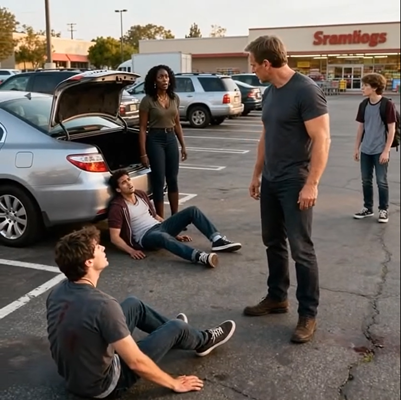
They saw a middle-aged man with gray at his temples, wearing a worn leather jacket. What they didn’t see was the Marine who had spent two decades learning how to read danger, how to disarm chaos, how to move with precision and restraint. When one of them stepped forward, puffing up his chest, I took a single step toward him — not fast, just steady. He reached out as if to shove me, but his movement betrayed him. I redirected it, using his own momentum to take him off balance, and before he knew it, he was on the ground — not hurt, just stunned. His friends froze. Another tried to intervene, but tripped in his rush, colliding with a shopping cart.
I never raised my voice. I never threw a punch. I didn’t need to. The point had been made long before that — not by force, but by control. Within seconds, the same parking lot that had echoed with laughter fell silent. The arrogance, the cruelty, the false bravado — all of it drained away, replaced by something else: recognition. Store security rushed over, ready to intervene, but before I could say a word, one of the young men — the quiet one who hadn’t joined in the taunts — stepped forward. His voice shook as he explained what had really happened:
how his friends had mocked an innocent woman, how I hadn’t struck anyone, how I’d simply stopped them. His truth cut through the tension like sunlight breaking through cloud. That moment — his courage to speak — mattered more than anything else that day. It reminded me that even in the worst acts of cruelty, there’s always a small chance for redemption — if someone chooses conscience over comfort. Two days later, there was a knock at our front door. When I opened it, that same young man stood there, eyes downcast, holding an envelope. His hands trembled as he spoke: “Sir, I came to apologize — not for them, but for me. I didn’t stop it when I should have.”
He handed me a letter — a handwritten essay he’d written for a college assignment titled “What I Learned About Strength.” In it, he described what he’d seen that day: not violence, not rage, but restraint. He wrote that he had expected a fight, and instead witnessed something harder — a man who could destroy, but chose not to. I read the letter beside Danielle that evening. She was quiet for a long time, her fingers tracing the edges of the page. Then she looked at me, tears glinting in her eyes, and said softly, “Your calm taught him more than your fists ever could.” She was right.
There are moments in life when silence feels impossible — when anger burns hotter than reason, and every instinct screams to strike back. But true strength isn’t about domination or vengeance. It’s about discipline — the ability to choose peace when you’ve been trained for war. That day didn’t end with applause or headlines. It ended with understanding — fragile, imperfect, but real. A lesson passed from one generation to another, from one stranger to the next.
Because sometimes the greatest battles aren’t fought overseas, or with weapons. They happen in grocery store parking lots, in ordinary moments that test who we really are. And sometimes, the strongest thing a Marine — or any man — can do is stand tall, stay calm, and remind the world that honor isn’t something you say; it’s something you show.
It started as an ordinary Saturday afternoon in Richmond, Virginia — one of those slow, forgettable days that drift by without purpose. The sun was high, the parking lot shimmered with heat, and the hum of suburban routine filled the air. My wife, Danielle, was in the produce aisle, quietly humming to herself as she picked out peaches — always the ripest ones, always patient enough to check each one for perfection. I leaned against the cart, watching her with the same affection I’d felt for over thirty years. To me, she’s still the woman who taught me what grace looks like — steady, kind, and unshakable.
But in a single moment, that calm began to unravel. I felt it before I saw it — that subtle shift in the air, the heavy, alert stillness that soldiers and Marines learn to recognize long before anyone else does. Nearby, a group of young men had stopped laughing among themselves and turned their attention toward us. Their voices lowered to mocking tones, their laughter sharper now, cruel in its rhythm. I could feel the energy turn. At first, I tried to ignore it. Danielle did too. We’ve both learned that sometimes silence is the only shield that works — that walking away takes more courage than confronting ignorance head-on. But their words grew louder, uglier.
They mocked her skin color, using slurs meant to wound, meant to draw blood without leaving a mark. She didn’t react. She never does. Over the years, she’s learned how to meet hatred with quiet dignity — a kind of strength that doesn’t make headlines but changes hearts. But then, as we were walking out to the parking lot, one of them followed us. He called out another insult, crueler than the last, and before I could even turn around, he threw his drink at her. The sound of ice hitting the pavement was louder than I expected. I saw the shock on Danielle’s face — and then the sadness.
Not fear, not anger — just the deep, familiar exhaustion of someone who has had to carry the weight of other people’s hate for far too long. That was the moment everything slowed down. In the Marines, they teach you that control is power — not fists, not shouting, but composure. You learn to move when it’s time and to wait when it’s wiser. My body remembered what my mind didn’t have to tell it. I didn’t yell, I didn’t posture. I turned around slowly and looked at them — not with rage, but with a calm they couldn’t understand.
They saw a middle-aged man with gray at his temples, wearing a worn leather jacket. What they didn’t see was the Marine who had spent two decades learning how to read danger, how to disarm chaos, how to move with precision and restraint. When one of them stepped forward, puffing up his chest, I took a single step toward him — not fast, just steady. He reached out as if to shove me, but his movement betrayed him. I redirected it, using his own momentum to take him off balance, and before he knew it, he was on the ground — not hurt, just stunned. His friends froze. Another tried to intervene, but tripped in his rush, colliding with a shopping cart.
I never raised my voice. I never threw a punch. I didn’t need to. The point had been made long before that — not by force, but by control. Within seconds, the same parking lot that had echoed with laughter fell silent. The arrogance, the cruelty, the false bravado — all of it drained away, replaced by something else: recognition. Store security rushed over, ready to intervene, but before I could say a word, one of the young men — the quiet one who hadn’t joined in the taunts — stepped forward. His voice shook as he explained what had really happened:
how his friends had mocked an innocent woman, how I hadn’t struck anyone, how I’d simply stopped them. His truth cut through the tension like sunlight breaking through cloud. That moment — his courage to speak — mattered more than anything else that day. It reminded me that even in the worst acts of cruelty, there’s always a small chance for redemption — if someone chooses conscience over comfort. Two days later, there was a knock at our front door. When I opened it, that same young man stood there, eyes downcast, holding an envelope. His hands trembled as he spoke: “Sir, I came to apologize — not for them, but for me. I didn’t stop it when I should have.”
He handed me a letter — a handwritten essay he’d written for a college assignment titled “What I Learned About Strength.” In it, he described what he’d seen that day: not violence, not rage, but restraint. He wrote that he had expected a fight, and instead witnessed something harder — a man who could destroy, but chose not to. I read the letter beside Danielle that evening. She was quiet for a long time, her fingers tracing the edges of the page. Then she looked at me, tears glinting in her eyes, and said softly, “Your calm taught him more than your fists ever could.” She was right.
There are moments in life when silence feels impossible — when anger burns hotter than reason, and every instinct screams to strike back. But true strength isn’t about domination or vengeance. It’s about discipline — the ability to choose peace when you’ve been trained for war. That day didn’t end with applause or headlines. It ended with understanding — fragile, imperfect, but real. A lesson passed from one generation to another, from one stranger to the next.
Because sometimes the greatest battles aren’t fought overseas, or with weapons. They happen in grocery store parking lots, in ordinary moments that test who we really are. And sometimes, the strongest thing a Marine — or any man — can do is stand tall, stay calm, and remind the world that honor isn’t something you say; it’s something you show.