In the heart of British Columbia’s Great Bear Rainforest, where morning fog lingers in the high canopy and the scent of cedar hangs heavy in the air, nature speaks in whispers — if one knows how to listen. Amidst this vast wilderness of ancient trees and untamed life, one man — an ordinary logger — made a decision that echoed far beyond the moss-covered forest floor. He was not an activist. Not a biologist. Just a new worker, trained in safety, protocol, and how to respect protected habitats.
Logging in the Great Bear Rainforest meant walking a tightrope between economic need and environmental responsibility. For this man, it was honest work — the kind that put food on the table. But one day, that balance between duty and conscience was tested in a way he never expected. A Discovery Beneath the Trees. While surveying a tract for selective logging, the man noticed signs in the undergrowth — a slight depression near a tree base, fresh claw marks, and tufts of fur. Crouching down, he realized he had come upon a bear den, nestled in a tangle of roots and moss. Inside were a mother bear and her cub, dozing in the dim quiet.
He didn’t panic. He didn’t approach. Instead, he did what his training — and his conscience — told him to do. He marked the coordinates, recorded the sighting, and reported the den to his supervisors.
“We shouldn’t cut here,” he told them. “She’s nesting. It’s not safe for her — or for us.”
At first, his report was respected. The crew adjusted the cut lines. The den area was flagged, temporarily spared from disruption — a small untouched circle in an ever-growing grid of clear-cut. For a while, it looked as though caution and compassion could coexist.
The Pressure to Push Forward
But deadlines don’t bend for wildlife. When production targets tightened and pressure from upper management increased, the instruction came down: continue the operation. Move forward — even if that meant violating the perimeter near the den.
The logger objected.
“She’s still there,” he insisted. “It’s too soon.”
But profits, as they often do, spoke louder than empathy. The machines rolled in. The noise grew. Within days, the mother bear vanished — possibly driven off by the disturbance, or worse. The logger, hoping for a different outcome, had set up a trail camera to monitor the site. What he saw broke his heart.
The final footage of the mother was just a shadow moving into the trees — her last recorded presence. Then came silence. Days later, the cub appeared alone. Wandering. Crying. Sniffing the air and the empty earth, waiting for a mother who would never return.
The logger watched the footage again and again. His hands trembled. Every part of him told him to act. Every policy told him not to.
The Choice to Care
He waited a day. Then another. Still, no sign of the mother. One gray morning, unable to stand by any longer, he packed a small bag: berries, fish scraps, and bread from the logging camp. Avoiding the active work zone, he hiked back to the den. Quietly, carefully, he left the food a safe distance away. Then he stepped back.
The cub emerged slowly, hesitant but hungry. It sniffed the food, paused, and began to eat. He didn’t go near. He didn’t try to touch it. But he returned the next day. And the next. Each time, bringing just enough food to sustain the cub — not to tame it, but to keep it alive.
A Moment Captured, A Message Shared
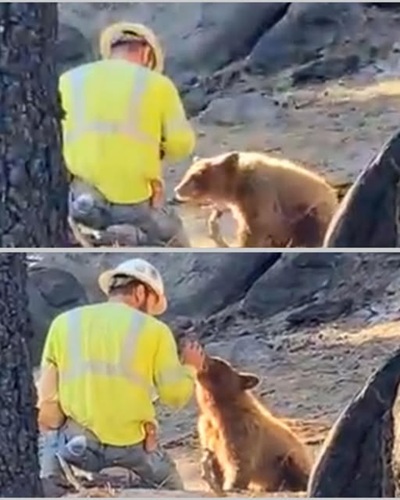
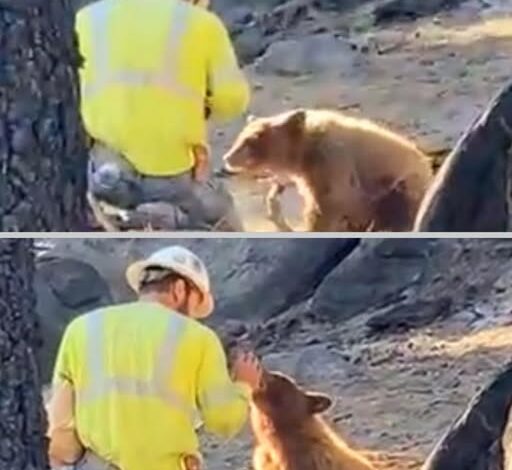
One afternoon, a wildlife photographer, working in the region, happened upon the scene. From a distance, he captured an image: the logger kneeling quietly a few yards from the den, his eyes fixed on the cub. The expression on his face told the story better than words ever could — grief, empathy, exhaustion, and fierce love without expectation.
The photo made its way online. It spread rapidly. Thousands shared it, then millions. Captions flowed in:
“The man who fed a starving bear.”
“The logger who remembered his heart.”
The story touched people across the globe. In a time when stories of conflict and cruelty filled headlines, this simple act of compassion offered something rare — hope.
But not everyone saw it that way.
The Cost of Kindness
Shortly after the photo went viral, the logger was called into a meeting. There was no praise. No discussion. Just a notice: termination for violating wildlife interference protocols. No severance. No recognition. Just silence.
Asked later if he regretted his actions, his response was brief — but unforgettable:
“I’d rather lose my job than watch a baby starve.”
That single sentence rippled across social media, fueling support and public outrage. Environmental organizations, animal lovers, and everyday citizens launched petitions. Letters poured into the company’s offices. Donations were offered. Job offers, too. But none of it changed what mattered most to him: the cub had survived.
A Life Saved, A Legacy Born
Weeks later, wildlife officials confirmed that the young bear had been safely rescued and relocated to a licensed rehabilitation center. There, it received the care it needed — with the hope of being released back into the wild once it matured.
It had been given a second chance — because one man refused to turn his back.
He never gave interviews. Never asked for credit. He returned to the forest — not to cut, but to walk, to heal. He took a job as a trail guide, far from the machines, closer to the rhythms of nature.
To the world, he became a quiet symbol — not of rebellion, but of moral courage in a world that too often forgets the cost of silence.
And somewhere, deep in that same rainforest where mist still lingers and cedar trees still breathe, a young bear roams free — because one human being made a choice that many wouldn’t.
A choice to care.
In the heart of British Columbia’s Great Bear Rainforest, where morning fog lingers in the high canopy and the scent of cedar hangs heavy in the air, nature speaks in whispers — if one knows how to listen. Amidst this vast wilderness of ancient trees and untamed life, one man — an ordinary logger — made a decision that echoed far beyond the moss-covered forest floor. He was not an activist. Not a biologist. Just a new worker, trained in safety, protocol, and how to respect protected habitats.
Logging in the Great Bear Rainforest meant walking a tightrope between economic need and environmental responsibility. For this man, it was honest work — the kind that put food on the table. But one day, that balance between duty and conscience was tested in a way he never expected. A Discovery Beneath the Trees. While surveying a tract for selective logging, the man noticed signs in the undergrowth — a slight depression near a tree base, fresh claw marks, and tufts of fur. Crouching down, he realized he had come upon a bear den, nestled in a tangle of roots and moss. Inside were a mother bear and her cub, dozing in the dim quiet.
He didn’t panic. He didn’t approach. Instead, he did what his training — and his conscience — told him to do. He marked the coordinates, recorded the sighting, and reported the den to his supervisors.
“We shouldn’t cut here,” he told them. “She’s nesting. It’s not safe for her — or for us.”
At first, his report was respected. The crew adjusted the cut lines. The den area was flagged, temporarily spared from disruption — a small untouched circle in an ever-growing grid of clear-cut. For a while, it looked as though caution and compassion could coexist.
The Pressure to Push Forward
But deadlines don’t bend for wildlife. When production targets tightened and pressure from upper management increased, the instruction came down: continue the operation. Move forward — even if that meant violating the perimeter near the den.
The logger objected.
“She’s still there,” he insisted. “It’s too soon.”
But profits, as they often do, spoke louder than empathy. The machines rolled in. The noise grew. Within days, the mother bear vanished — possibly driven off by the disturbance, or worse. The logger, hoping for a different outcome, had set up a trail camera to monitor the site. What he saw broke his heart.
The final footage of the mother was just a shadow moving into the trees — her last recorded presence. Then came silence. Days later, the cub appeared alone. Wandering. Crying. Sniffing the air and the empty earth, waiting for a mother who would never return.
The logger watched the footage again and again. His hands trembled. Every part of him told him to act. Every policy told him not to.
The Choice to Care
He waited a day. Then another. Still, no sign of the mother. One gray morning, unable to stand by any longer, he packed a small bag: berries, fish scraps, and bread from the logging camp. Avoiding the active work zone, he hiked back to the den. Quietly, carefully, he left the food a safe distance away. Then he stepped back.
The cub emerged slowly, hesitant but hungry. It sniffed the food, paused, and began to eat. He didn’t go near. He didn’t try to touch it. But he returned the next day. And the next. Each time, bringing just enough food to sustain the cub — not to tame it, but to keep it alive.
A Moment Captured, A Message Shared
One afternoon, a wildlife photographer, working in the region, happened upon the scene. From a distance, he captured an image: the logger kneeling quietly a few yards from the den, his eyes fixed on the cub. The expression on his face told the story better than words ever could — grief, empathy, exhaustion, and fierce love without expectation.
The photo made its way online. It spread rapidly. Thousands shared it, then millions. Captions flowed in:
“The man who fed a starving bear.”
“The logger who remembered his heart.”
The story touched people across the globe. In a time when stories of conflict and cruelty filled headlines, this simple act of compassion offered something rare — hope.
But not everyone saw it that way.
The Cost of Kindness
Shortly after the photo went viral, the logger was called into a meeting. There was no praise. No discussion. Just a notice: termination for violating wildlife interference protocols. No severance. No recognition. Just silence.
Asked later if he regretted his actions, his response was brief — but unforgettable:
“I’d rather lose my job than watch a baby starve.”
That single sentence rippled across social media, fueling support and public outrage. Environmental organizations, animal lovers, and everyday citizens launched petitions. Letters poured into the company’s offices. Donations were offered. Job offers, too. But none of it changed what mattered most to him: the cub had survived.
A Life Saved, A Legacy Born
Weeks later, wildlife officials confirmed that the young bear had been safely rescued and relocated to a licensed rehabilitation center. There, it received the care it needed — with the hope of being released back into the wild once it matured.
It had been given a second chance — because one man refused to turn his back.
He never gave interviews. Never asked for credit. He returned to the forest — not to cut, but to walk, to heal. He took a job as a trail guide, far from the machines, closer to the rhythms of nature.
To the world, he became a quiet symbol — not of rebellion, but of moral courage in a world that too often forgets the cost of silence.
And somewhere, deep in that same rainforest where mist still lingers and cedar trees still breathe, a young bear roams free — because one human being made a choice that many wouldn’t.
A choice to care.
