In a historic and rapidly evolving shift in the Middle East, the Iranian government issued a solemn and defiant vow on Sunday, March 1, 2026, promising a “devastating” retaliation for the joint U.S.-Israeli strikes that claimed the life of Ayatollah Ali Khamenei. The Supreme Leader, an enduring symbol of the Islamic Revolution and an unyielding adversary of both Washington and Jerusalem for over three decades, was confirmed killed in what has been described as a “decapitation strike” during a weekend of unprecedented military intensity. As the conflict entered its second day, the regional “light of truth” regarding the future of the Islamic Republic was clouded by a mixture of state-mandated mourning, sporadic domestic celebration, and the mounting drumbeat of a wider war.
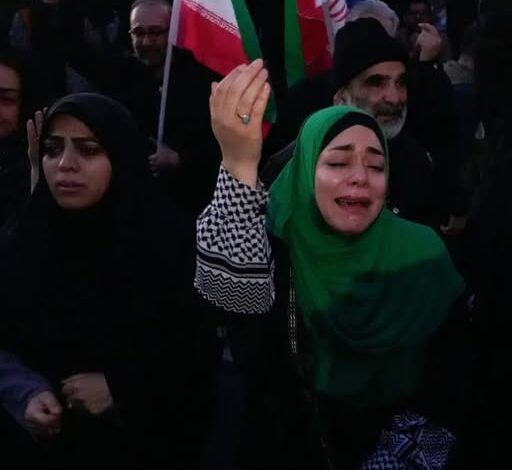
The operation, which began in the early hours of February 28, 2026, was a coordinated effort between the Israeli Air Force and the United States, reportedly involving highly sophisticated tracking systems to pinpoint Khamenei’s residence in Tehran. The confirmation of his death, along with several high-ranking members of his family and top military officials—including Defense Minister Aziz Nasirzadeh and IRGC Commander-in-Chief Mohammad Pakpour—marks the most significant blow to the Iranian leadership since the 1979 revolution. The Iranian government, now operating under a temporary Interim Leadership Council led by President Masoud Pezeshkian, has declared forty days of mourning. However, the mood across the country remains complex; while supporters of the regime gathered at the Imam Reza shrine in Mashhad to wail in grief, videos surfaced from Isfahan and Shiraz showing citizens celebrating what they perceive as the end of a long-standing theocratic era.
The immediate tactical response from Tehran has been swift and expansive, aimed at imposing a “high price” on those it holds responsible. In a series of retaliatory volleys known as “Operation True Promise 4,” the Islamic Revolutionary Guard Corps (IRGC) launched hundreds of ballistic missiles and loitering munitions not only toward Israel but at U.S. military assets throughout the Persian Gulf. Reports from March 2026 indicate strikes or attempted interceptions over Oman, Bahrain, Kuwait, Qatar, and the United Arab Emirates. In particular, the Al Udeid Air Base in Qatar and Al Dhafra in the UAE have been central targets in this “saturation doctrine,” which seeks to overwhelm sophisticated air defense batteries through sheer volume. The symbolic raising of the red “flag of revenge” over the Jamkaran Mosque has signaled to the world that Iran views this not as a localized conflict, but as a total war of attrition.
Beyond the immediate kinetic exchanges, the economic shockwaves of the conflict have been “historic” in their scale. As of March 5, 2026, the global financial system has begun to reel from Iran’s decision to effectively blockade the Strait of Hormuz. With approximately 20% of the world’s traded oil and liquefied natural gas passing through this vital waterway, the closure has triggered a surge in Brent crude prices, with markets bracing for costs to exceed $100 per barrel. The “absolute” speed of the digital markets reflected a $3.2 trillion loss in global equity value within the first 96 hours of hostilities. For the global merchant fleet, the cessation of war risk coverage has forced a logistical nightmare, with tankers anchoring in place or beginning the long, inflationary journey around the Cape of Good Hope.
The joint U.S.-Israeli campaign, according to statements from Mar-a-Lago and Jerusalem, was planned for months with the explicit goal of “regime change” and the permanent neutralization of Iran’s nuclear capabilities. President Donald Trump described the operation as the “single greatest chance for the Iranian people to take back their country,” while Israeli Prime Minister Benjamin Netanyahu emphasized that the strikes had successfully targeted “several leaders” involved in the nuclear program. The coalition has utilized a “division of labor” strategy, with U.S. forces focusing on destroying missile launch sites in southern and central Iran, while Israeli air power concentrated on the northern command-and-control centers. This “broad wave” of strikes has not been limited to military targets; infrastructure such as the Azadi indoor stadium in Tehran has reportedly sustained damage, fueling a narrative of total war.
As the transitional government in Tehran prepares for the election of a new Supreme Leader by the Assembly of Experts, the role of the IRGC remains a critical variable. Analysts suggest that the ultraconservative paramilitary organization may attempt to consolidate power during the 40-day mourning period, potentially elevating Mojtaba Khamenei, the son of the late Ayatollah, to the leadership position. However, this potential succession faces intense external opposition and internal friction. The “active awareness” of the Iranian populace, combined with the presence of two U.S. aircraft carrier strike groups—centered on the USS Abraham Lincoln and the USS Gerald R. Ford—creates an environment where any attempt to maintain the status quo is met with immediate, high-stakes resistance.
The humanitarian cost of the first week of conflict has been devastating. Iranian media reports hundreds of casualties, including over a hundred children, while Lebanon’s Health Ministry reports over 123 deaths following Israeli strikes on Hezbollah strongholds in Beirut’s southern suburbs. The displacement of nearly 100,000 people in Lebanon and the mobilization of security forces in Iranian cities to suppress uprisings reflect a region that has “ticked backward” toward an era of acute tensions and open military confrontation. In Karachi and other international hubs, protests have turned violent, reflecting the global resonance of a conflict that has “crossed a red line” for many in the Muslim world.
In the midst of this “startling flex of military might,” the international community remains deeply divided. While European and Asian markets record massive losses, powers like China and Russia have maintained a restrained but watchful bind, caught between their economic ties to the region and the shifting security architecture. The “light of truth” in 2026 is that the Middle East has entered a new regional conflict with no certain timeline or outcome. The vow of retaliation from the Iranian government is more than a rhetorical flourish; it is a declaration that the “pure blood” of their fallen leader will serve as a catalyst for a prolonged and extensive struggle.
The death of Ali Khamenei has not ended the conflict; it has merely opened a stunning and dangerous new chapter in the history of the 21st century. As the world watches with bated breath, the question is no longer whether there will be a response, but how far the flames of this “great crime” will spread across the globe.
