The hospital waiting room buzzed with low murmurs, coughs, the rustling of paper coffee cups, and the occasional flicker of fluorescent lights. People came and went, families huddled together, some pacing anxiously while others stared blankly at the walls or scrolled on their phones.
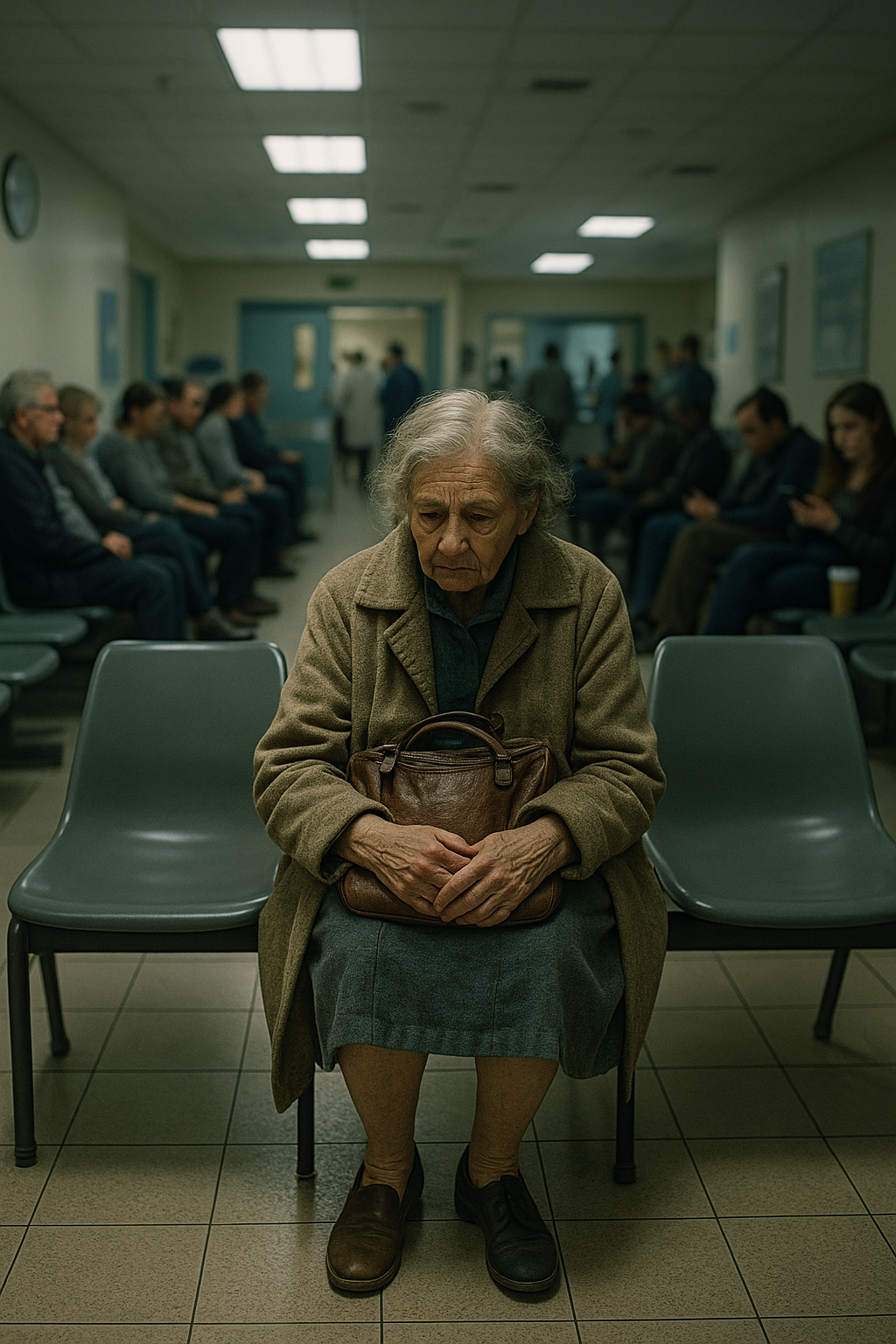
In the far corner, hunched in a hard plastic chair, sat an old woman. Her coat was frayed at the cuffs and threadbare around the collar. The color had long since faded, and her shoes were mismatched—one brown loafer, the other black. A battered leather purse rested on her lap, and she gripped it tightly with both hands as if it carried something precious.
No one sat near her.
Some avoided her out of discomfort, unsure if she belonged there at all. Others simply dismissed her presence as one of those odd occurrences you sometimes see in public places—someone who must have lost their way or come in from the cold.
A middle-aged woman with salon-perfect curls leaned toward her husband and whispered, “She must be lost. Probably wandered in from the street.”
Her husband chuckled. “She’s probably just here for the free coffee.”
A pair of teenage girls, dressed in expensive jeans and brand-name jackets, giggled and mimicked the old woman’s slow movements whenever she shifted in her seat or reached into her purse.
Even the staff seemed unsure of her. A young nurse, clearly new on the job, approached with an awkward smile and a clipboard clutched to her chest.
“Ma’am,” she said gently, bending down to her level. “Are you sure you’re in the right place? Do you need help finding someone?”
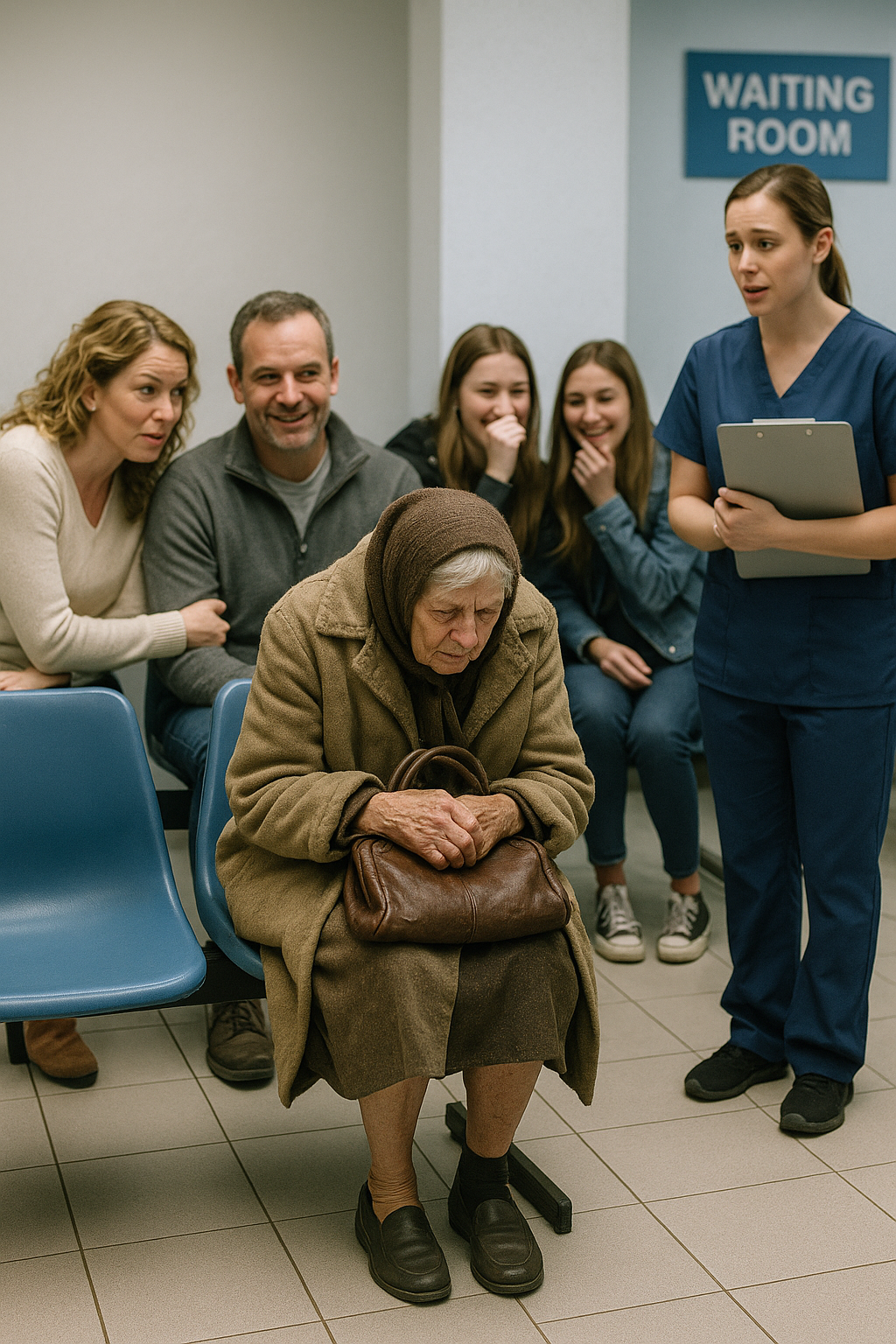
The woman looked up at her with pale blue eyes that had seen decades of life. She smiled kindly and patted the nurse’s hand.
“Yes, dear,” she said in a voice barely louder than a whisper. “I’m exactly where I need to be.”
The nurse gave her a puzzled look but nodded politely before moving on.
Two hours passed.
The crowd shifted but the old woman remained seated, calm and still, as if she had all the time in the world. From time to time, she would glance toward the double doors leading to the operating wing. Her expression remained patient, hopeful.
Then, just as the clock hit 3:12 p.m., the double doors burst open.
A surgeon emerged, still in his green scrubs and surgical cap, his mask hanging loosely from one ear. He looked drained—dark circles under his eyes, his hair slightly tousled with sweat. But his eyes were focused, and his pace purposeful.
He walked right past the huddled families, past the anxious fathers and grieving sons, until he stood directly in front of the old woman.
Everyone watched, eyebrows raised, curious.
He smiled and bent slightly, placing a gloved hand gently on her shoulder.
“Are you ready to tell them who you are now?” he asked, loud enough for everyone to hear.
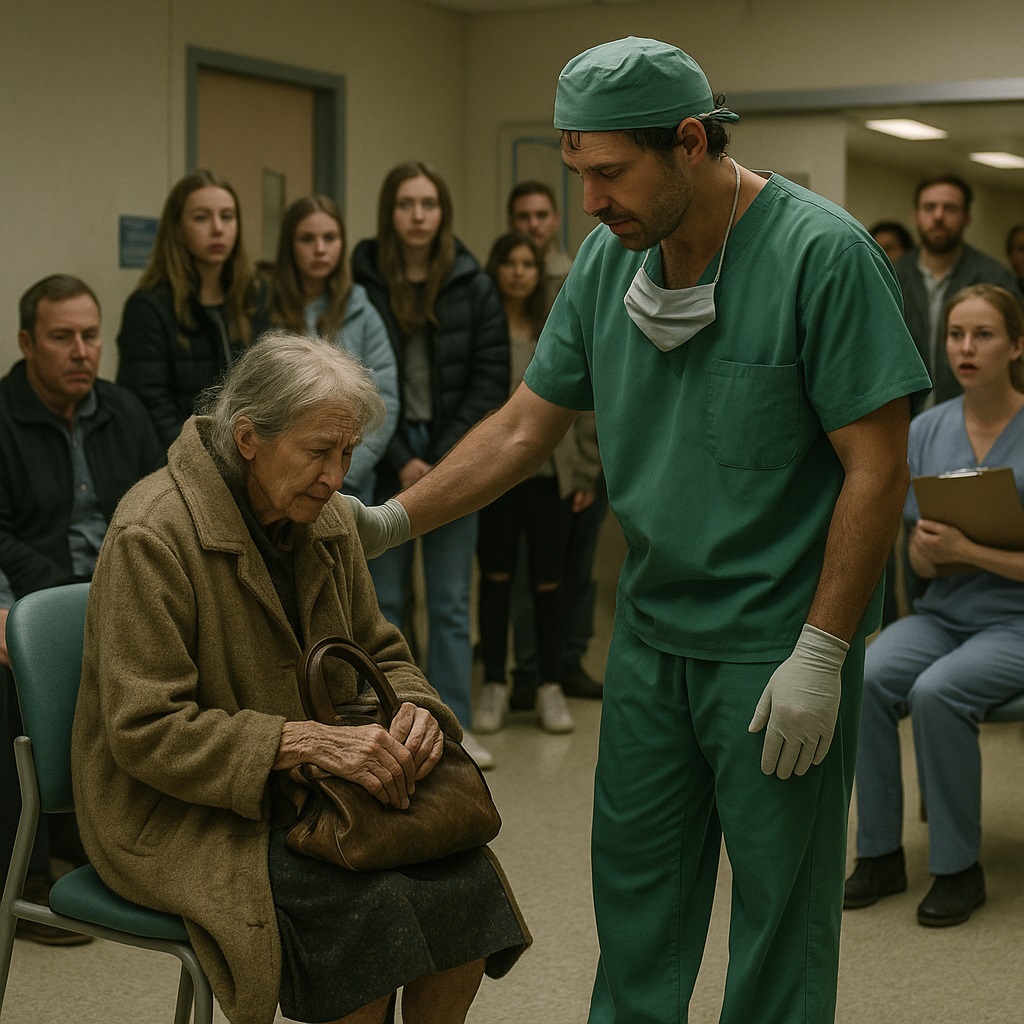
The room fell into stunned silence.
The old woman’s eyes glistened. She stood slowly, with the surgeon offering her his arm to steady her. Then she looked around at the sea of confused, surprised, and even embarrassed faces.
She cleared her throat and began to speak.
“My name is Margaret Greene,” she said softly. “You might not recognize it. Most people don’t anymore. But I once owned the bakery two blocks down from this hospital.”
There were a few faint nods. Some of the older folks seemed to remember.
“I never married. I never had children of my own,” she continued. “But I did have a little boy I took in—a boy who lived in the apartment upstairs from my bakery. He had no father and a mother who worked two jobs and still couldn’t afford to keep the heat on in the winter.”
She paused and glanced up at the surgeon beside her. He gave a small smile.
“He was hungry all the time. So I started giving him leftover pastries. Then I let him wash dishes to earn a little extra. When I learned he had trouble reading, I helped him every night after closing. When his mother fell ill, I helped care for her, too. And when she passed, I made sure he stayed in school.”
The surgeon stepped forward then.
“I was that boy,” he said, voice full of emotion. “And I wouldn’t be here—none of this would exist—without her.”
He gestured around him.
“I’m Dr. Nathaniel Lewis, Chief of Cardiothoracic Surgery here. And the woman you all ignored, mocked, and judged… she’s the reason I became a doctor.”
He turned to her, gently took her hand, and continued, “Today, I completed my 1000th heart surgery. A milestone. I told the team there was only one person I wanted to share it with. The person who gave me my first chance, who taught me what kindness means.”
The room was silent.
No one moved. No one dared.
Margaret looked around, her eyes kind but steady. “I didn’t come here for coffee,” she said with a faint smile. “I came here for my boy.”
It took a moment before the clapping started. One nurse began to applaud slowly, then another. Soon, the whole room was filled with the sound of heartfelt applause.
The woman who had whispered cruelly to her husband now looked down at her lap in shame. The teenagers stopped giggling and looked stunned. Even the nurse who had asked her if she was lost had tears brimming in her eyes.
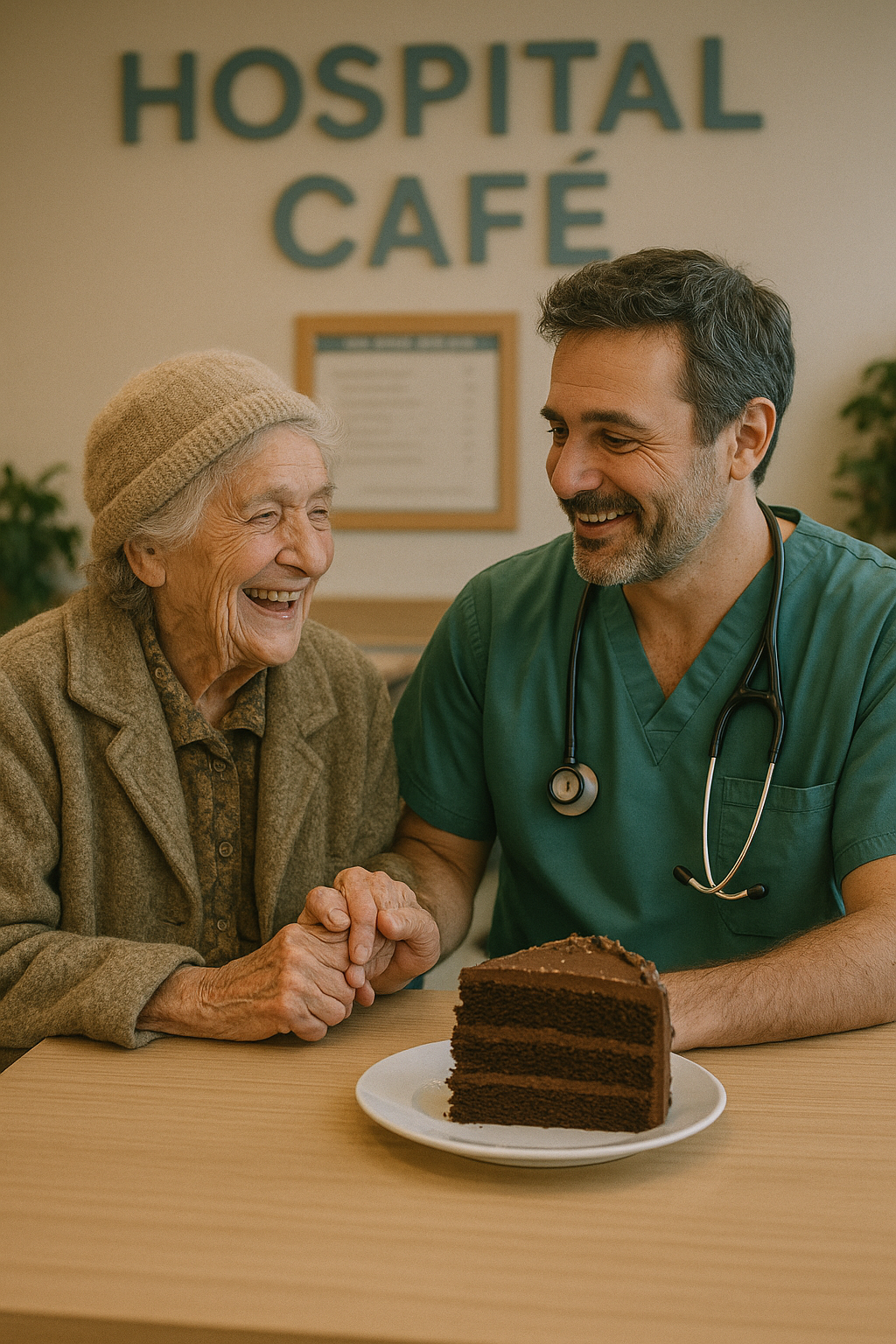
Nathaniel took Margaret’s hand and said, “I reserved a table at the hospital café. Will you join me for a celebration slice of cake, Miss Margaret?”
She chuckled. “Only if it’s chocolate.”
They walked out together, arm in arm, as the whole room stood to their feet—not out of obligation, but out of reverence.
Later that day, the hospital posted a picture on their official social media page. It showed Dr. Lewis and Margaret sitting in the café, a chocolate cake between them, her smile wide, his eyes warm.
The caption read:
“Behind every great doctor is someone who believed in them first. Today we honor Miss Margaret Greene—teacher, mentor, and the heart behind a thousand healed hearts.”
The post went viral.
People shared stories of their own mentors, of unexpected kindness, of the importance of not judging others by their appearance.
And perhaps, for a while, people looked a little closer at the strangers around them—especially the quiet ones sitting alone.
Because as Dr. Lewis said in a follow-up interview:
“We all have someone who carried us when we couldn’t walk. Mine just happened to make the best blueberry scones in town.”