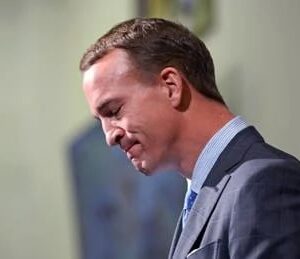
In the early 1990s, Michael J. Fox seemed to embody momentum itself. He was fast-talking, physically precise, and relentlessly energetic, a performer whose timing depended on every muscle firing exactly when it should. Audiences saw confidence and control. What they could not see was the quiet disruption beginning inside his body.
In 1991, when Fox was just 29 years old, a subtle twitch in his finger led to a diagnosis that would alter the course of his life: young-onset Parkinson’s disease. For most people, Parkinson’s appears later in life. For someone still building a career defined by movement and physical comedy, the news was devastating. The condition, caused by the gradual loss of dopamine-producing neurons in the brain, brings tremors, muscle rigidity, slowed movement, and problems with balance. It is progressive and incurable. For Fox, it meant confronting a future radically different from the one he had imagined.
At first, he chose silence. For nearly seven years, Fox kept his diagnosis private while continuing to work at a demanding pace. On set, he learned to hide tremors, to adapt blocking and camera angles, to mask symptoms with medication and discipline. It was exhausting, both physically and emotionally. He has since described those years as a constant calculation: how much energy he had left, how visible his symptoms were, and how long he could maintain the illusion of normalcy.
By the late 1990s, that balancing act became impossible to sustain. In 1998, Fox publicly disclosed his diagnosis, a decision that marked a turning point not only in his own life but also in how Parkinson’s was discussed in the public sphere. Two years later, he founded the Michael J. Fox Foundation for Parkinson’s Research, transforming his personal struggle into a focused, global effort to accelerate research and improve patient outcomes.
The foundation quickly distinguished itself by refusing to accept incremental progress as enough. Instead of spreading funds thinly, it concentrated resources on high-impact science, clinical trials, and collaborations across academia and industry. Fox pushed for measurable results, open data sharing, and urgency. Under his leadership, the foundation became one of the most influential funders of Parkinson’s research in the world, reshaping how studies are designed and how quickly discoveries move from labs to patients.
As the years passed, Fox’s symptoms progressed. He has spoken openly about the realities many patients face but rarely see reflected honestly: frequent falls, broken bones, chronic pain, and the sheer effort required for basic movement. In recent interviews, he has described moments when standing still is harder than walking, and when his body feels unreliable in ways that demand constant adjustment. These admissions are not framed as defeat, but as facts—conditions to be acknowledged rather than denied.
Fox often describes his outlook as “realistic optimism.” It is not blind hope or false cheerfulness. It is the decision to accept limitations without allowing them to erase meaning. He acknowledges that Parkinson’s has taken much from him, including aspects of his acting career he once loved. At the same time, he insists it has given him something unexpected: clarity about what matters, and a purpose that extends far beyond fame.
That perspective has resonated deeply with patients and families around the world. By choosing visibility instead of withdrawal, Fox helped dismantle stigma around neurological disease. He showed that Parkinson’s is not a personal failure, not a reason for shame, and not a condition that strips people of dignity. His openness offered language and representation to millions who had previously felt invisible.
Fox’s influence also changed how society talks about disability more broadly. He challenged the idea that worth is measured by physical capability or productivity. His life became an example of how impact can grow even as physical abilities decline. Advocacy, leadership, humor, and honesty replaced the roles that his body could no longer perform on screen.
Now in his mid-60s, Fox continues to speak candidly about the future. He does not romanticize his condition or promise outcomes he cannot control. He talks about planning, adaptation, and the importance of community. He acknowledges fear while refusing to let it dominate his choices. When he discusses hope, it is grounded in action: funding research, supporting caregivers, and pushing for better treatments and quality of life.
His legacy today is no longer defined primarily by the characters he played, but by the doors he opened. The foundation he built has funded billions of dollars in research, supported countless scientists, and brought patients into the center of the scientific process. Clinical trials that once took decades to organize now move faster because of the systems his advocacy helped create.
Fox has often said that Parkinson’s did not give him purpose, but it clarified it. The disease forced him to choose how he would live with uncertainty, loss, and limitation. He chose engagement. He chose service. He chose to turn personal adversity into collective progress.
In a culture obsessed with control and perfection, his story stands apart. It is not about overcoming illness or defeating a disease. It is about living fully alongside it. Fox’s journey shows that meaning does not disappear when circumstances change—it evolves. And sometimes, the life you never planned becomes the one that matters most.