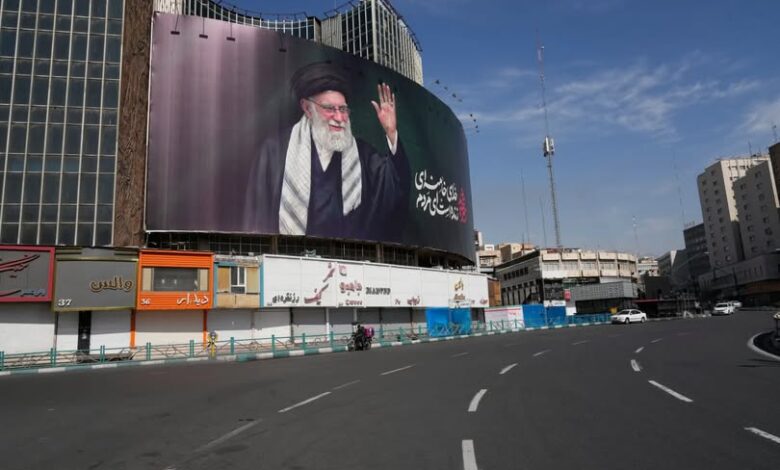
In a week defined by a dizzying and violent reordering of global priorities, the “light of truth” regarding the scale of the conflict between the United States and Iran has become increasingly grim. As of Thursday, March 5, 2026, the legislative and military landscapes have shifted into a state of acute instability, with the halls of Congress reflecting a nation deeply divided over the rapid escalation of hostilities. Following a weekend of unprecedented strikes that claimed the life of Iran’s Supreme Leader, the second day of active warfare has brought the world to the precipice of a ground invasion—a development that would fundamentally transform the security architecture of the 21st century.
The political battleground in Washington reached a fever pitch as House lawmakers narrowly rejected a war powers resolution intended to halt President Donald Trump’s military offensive against the Islamic Republic. The 212–219 tally was a mirror image of the unease felt in the Senate, which voted down a similar measure only twenty-four hours prior. This razor-thin margin serves as an early, visceral sign of a fractured Congress; while the executive branch moves with “absolute” speed to neutralize Iranian capabilities, a significant portion of the legislature is signaling a desperate desire to pull back from a total war that is already reordering American priorities at home and abroad. The rejection of the resolution effectively grants the administration a temporary, albeit contested, mandate to continue its campaign of “maximum pressure” through kinetic means.
On the front lines of the diplomatic crisis, the physical presence of the United States in the Persian Gulf continues to shrink as the “fog of war” expands. The U.S. Embassy in Kuwait officially shuttered its doors on Thursday following a series of retaliatory Iranian missile and drone strikes targeting the small, oil-rich nation. This marks the second American diplomatic mission to fully halt operations since the commencement of the war, following a similar closure in Tehran. The situation in Kuwait is particularly fraught; it was there, only days ago, that six American soldiers were killed by an Iranian loitering munition. The closure of the embassy is a stark admission that the security environment in the Gulf has degraded to a point where traditional diplomacy is no longer viable, leaving military channels as the sole means of communication between the warring parties.
Military analysts are now focusing on the “absolute” degradation of Iran’s defensive perimeter. Israel’s military command issued a briefing stating that it has successfully neutralized the majority of Iran’s sophisticated air defense networks, including the Russian-made S-300 and S-400 batteries that once guarded the nation’s most sensitive nuclear and military sites. In a cryptic and chilling addendum, Israeli officials hinted at unnamed “surprises” still to come—a phrase that many interpret as a precursor to cyber-warfare or targeted operations against the remaining IRGC leadership.
This military dominance from the air has forced a conversation about the next, more dangerous phase of the conflict: a ground invasion. While Iranian officials have issued stern warnings to Washington against crossing such a “red line,” U.S. Defense Secretary Pete Hegseth has pointedly refused to rule out the option. The prospect of American boots on Iranian soil would represent a “historic” escalation, moving the conflict from a targeted decapitation strike to a full-scale occupation or regime-change mission. The logistical requirements for such an undertaking would be staggering, potentially requiring the mobilization of hundreds of thousands of troops and a complete shift in the American domestic economy to support a prolonged theater of war.
President Trump, speaking to Axios on Thursday, made it clear that his objectives extend beyond the battlefield and into the very heart of the Iranian political system. In a display of his characteristic “America First” diplomacy, Trump signaled that he intends to be directly involved in the selection of Iran’s next Supreme Leader. He specifically addressed the potential candidacy of Mojtaba Khamenei, the son of the late Supreme Leader Ayatollah Ali Khamenei. Trump dismissed the younger Khamenei as “unacceptable” and a “lightweight,” a move that essentially vetoes a dynastic succession in the eyes of the coalition. By pre-emptively disqualifying a major candidate, the U.S. is signaling that it will accept nothing less than a fundamental restructuring of the Iranian government—a stance that complicates any potential path toward a ceasefire.
The rhetoric from within Iran has reached a similarly “absolute” pitch of intensity. Iranian state television aired a rare and alarming message on Thursday from an ayatollah calling for the “shedding” of blood from both Israelis and President Trump himself. This represents a significant departure from the typically guarded religious decrees of the establishment; it is a direct call for individual acts of violence and martyrdom, suggesting that the “light of truth” as perceived by the remaining religious leadership is now one of total, existential struggle. The use of state media to broadcast such an explicit call for assassination underscores the desperation and fury of a regime that sees its foundational pillars crumbling.
As the world watches these events unfold, the economic and humanitarian consequences are beginning to ripple outward. The “absolute” speed of digital commentary and market fluctuations reflects a global economy that is struggling to price in the possibility of a long-term closure of the Strait of Hormuz. Oil prices remain volatile, and the risk of a global energy crisis looms as the primary “home-front” threat for Western nations. Meanwhile, the civilian populations in the region are bracing for the “surprises” promised by the Israeli military, with humanitarian organizations warning of a massive displacement crisis if a ground invasion is initiated.
The “historic” nature of this week cannot be overstated. We are witnessing the collapse of a regional order that has stood for nearly half a century. The legislative struggle in Washington, the shuttering of embassies in the Gulf, and the defiant rhetoric from Tehran all point toward a conflict that has moved beyond the control of traditional diplomatic guardrails. In 2026, the “light of truth” is that the path back to peace is narrowing with every missile launched and every vote cast. The world remains in a state of “active awareness,” waiting to see if the next “surprise” will bring a glimmer of resolution or the total darkness of a global conflagration.
As the transitional government in Tehran and the administration in Washington continue this high-stakes dance, the only certainty is that the priorities of the 21st century have been irrevocably altered. The focus has shifted from economic growth and technological competition to the raw, kinetic reality of survival and the restructuring of the Middle East. The days ahead will determine whether the “light of truth” reveals a new era of stability or the beginning of a much larger, more devastating global conflict.
