I am forty-one years old, and I have come to realize that I have lived two distinct lifetimes. The first was built alongside Peter, a man of creaky floors, botched home repairs, and a quiet, steadfast kind of love that spanned two decades. The second life is the one I am building now with the man who stood as the pillar of our world for just as long. I never imagined these two realities would collide, let alone intertwine so deeply, but grief is a force that ignores the boundaries of logic. And as I’ve learned, love possesses that same stubborn disregard for the rules.
For twenty years, Peter and I inhabited a marriage that wasn’t defined by grand gestures or flashy displays. It was real, messy, and lived-in. We raised two children in a house that always seemed to have a leaky faucet or a backyard project that remained stubbornly unfinished. Peter was famously incompetent with a toolbox, and he burned dinner at least once a week, yet he provided a sense of security that I didn’t truly appreciate until it was ripped away.
Six years ago, a split-second decision by a drunk driver at a red light ended that life. The memory is a series of jagged fragments: the knock on the door, the officer’s somber expression, and the way the world seemed to tilt and liquefy beneath my feet. The months that followed were a gray blur of survival. I remember my daughter’s muffled sobs behind a locked bathroom door and my son’s retreat into a cavernous, terrifying silence. I spent my nights in the kitchen, staring at Peter’s favorite coffee mug as if it were a holy relic that might suddenly grant me one more conversation.
Through the fog of that devastation, there was Dan.
Dan wasn’t merely Peter’s best friend; they were two halves of the same history. They had grown up three houses apart, survived the lean years of college on instant ramen, and crossed the country in a beat-up car that should have died in the Nevada desert. As adults, they remained bonded by bills, responsibilities, and a shared language of inside jokes. Dan had his own scars—a difficult divorce and a co-parenting arrangement that required the patience of a saint—but he never made his burdens a spectacle.
When Peter died, Dan didn’t ask what he could do; he simply did it. He appeared with groceries when the fridge was empty, fixed the lightbulbs I couldn’t reach, and brought tools to mend the things Peter had never gotten around to. He was a master of invisible service. He spent hours in the garage with my son, allowing the boy to hammer scrap wood into splinters just to release the rage of fatherless adolescence. He helped my daughter assemble furniture when she was too angry to speak to me but found comfort in his quiet presence. He filled the cracks in our lives without ever demanding to be seen.
Months after the funeral, I tried to release him from the burden of our grief, telling him he had done enough. He just looked at me, a wrench in one hand, and said, “Pete would’ve done it for me.” That was the end of the discussion. He was loyal to a fault, a man whose honor was rooted in the memory of the brother he had lost.
It took three full years before the air between us changed. It happened on a random Tuesday at 11:00 p.m. when my kitchen sink began to fountain water across the floor. In a moment of reflexive habit, I called him. He arrived half-asleep in sweatpants, knelt in the puddle under the cabinets, and made a dry, self-deprecating joke about his plumbing skills. I laughed—a genuine, chest-deep sound that felt like the first breath of oxygen after a long period of drowning.
From there, our relationship shifted with the subtlety of a tide. Sunday coffees turned into movie nights when the house felt too cavernous. Conversations became easier than breathing. My children, with the sharp intuition of the young, saw it before I was willing to admit it to myself. My daughter finally rolled her eyes and told me bluntly, “Mom, he’s in love with you.” I denied it until the evidence was undeniable.
Eventually, Dan confessed his feelings on the porch at sunset. He couldn’t even look at me; his eyes were fixed on the horizon as he admitted the truth. “I’m in love with you,” he said. “And I know how complicated this is. He was my brother. If you tell me to walk away, I’ll go and never look back.” But I didn’t let him go. I loved him too—at first with a quiet gratitude, and then with a fierce, necessary passion. It didn’t feel like a betrayal of Peter; it felt like Peter’s final gift to me.
We took every step with agonizing care. We told the kids only when we were certain. My daughter embraced him immediately; my son, ever the sentinel of the family, shook his hand and told him he knew Peter would want me to be happy. The final hurdle was Peter’s mother. I walked into her house braced for judgment, but she merely smiled sadly and took my hands. “You’re with Daniel,” she said. “Peter would be so grateful that you found someone who knows exactly what you lost. You aren’t betraying him, Isabel. You’re living.”
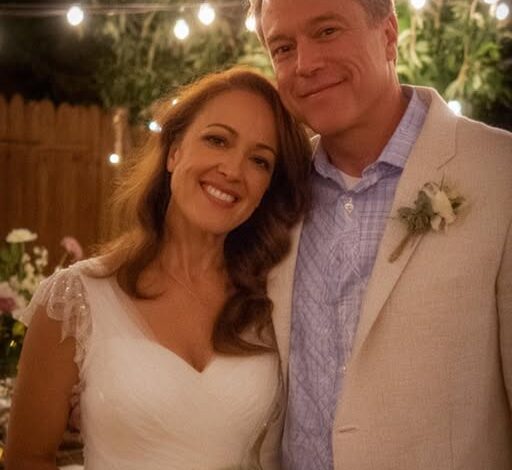
When Dan proposed in that same kitchen where he had once fixed the sink, the circle felt complete. We married in the backyard under a canopy of string lights. My daughter’s toast moved the guests to tears, and Dan’s teenage daughter shyly admitted she was glad her father had found a reason to smile again. For the first time in six years, I felt whole.
However, our wedding night took an unexpected turn. I walked into our bedroom to find Dan standing by the closet, his posture rigid and his hands trembling as he stared at the small floor safe.
“Dan? What is it?” I asked, my heart beginning to race.
He didn’t speak. He simply keyed in the code and pulled out an old, discarded cell phone with a cracked screen. He powered it on and handed it to me, the screen displaying a text thread from seven years ago—a year before Peter’s death. It began with the usual banter, but then I saw a message Dan had sent during the height of his divorce: Sometimes I look at what you have and wonder if I’ll ever get that lucky. You and Isabel just work.
Peter’s reply was a gut-punch of protective jealousy: Don’t. Promise me you’ll never try anything with her. Ever.
Dan looked shattered, as if the ghost of his best friend had just walked into the room. “I was in a dark place back then,” he whispered. “I was jealous of the stability you two had. I forgot this even existed until I found this old phone a few weeks ago. I’ve been terrified that I’ve spent the last few years breaking a promise I made to a dead man.”
He looked at me with an agonizing vulnerability. “Do you think I used your grief? Do you think I’m the villain in this story?”
I sat beside him and took the phone from his shaking hands. “You didn’t break a promise, Dan,” I said firmly. “Life broke all of us. Peter didn’t know the future. He couldn’t have known he wouldn’t be here to protect us. If he could see how you’ve cared for his children, how you’ve held me together when I was falling apart, he wouldn’t be angry. He would be relieved.”
The weight that lifted off his shoulders was visible. We sat there in the quiet of our new life, two people who had finally decided to let go of a guilt that was heavy enough to crush the living. We chose to believe that love isn’t a zero-sum game—that loving Dan doesn’t mean I love Peter any less.
Today, our life is steady. It isn’t the flashy romance of a movie, but it is honest and gentle. Peter is a cherished chapter of my history, a man whose memory is woven into the very fabric of my being. But Dan is the author of my present. Both things can be true, and in that truth, I have finally found the courage to be happy. I am living, I am healing, and I am no longer afraid of the light.