When Holden moves his family to a quiet town in Maine, he hopes for a brand-new beginning. But a discovery deep in the woods, a headstone carrying his own childhood picture, drags him straight into a mystery thirty years in the making…
We had only been in Maine for three weeks when everything happened.
My wife Maren, our eight-year-old son Eli, and our Doberman Brandy were still getting used to the cold a little slower than I was. After sixteen years of Texas heat, I loved the sharp bite of the morning air in my lungs, the soft crunch of pine needles under my boots, and the quiet of a town that had never heard our names.
“This place smells like Christmas,” Maren had whispered that first morning, standing barefoot at the back door in my old flannel shirt.
I remember smiling at her. I remember smiling at the way peace looked on her face.
That Saturday we went looking for mushrooms behind the cottage. Nothing rare or risky, just the ordinary kind Maren could cook in butter and garlic while Eli bragged about his hunting skills.
Brandy barked at every squirrel. Eli raced ahead with his plastic bucket, swinging at ferns like they were monster tails.
It was the kind of day that feels perfect before it’s even over.
Until everything turned strange.
Suddenly Brandy’s bark dropped low and serious. A growl followed, deep and warning.
I looked up. Eli had vanished.
“Eli?” I shouted. “Buddy, answer me! This isn’t a game!”
Brandy’s barking grew sharper somewhere ahead, bouncing between the trees.
“Keep him safe, Brandy,” I whispered under my breath. “I’m coming.”
I pushed through the undergrowth, watching for the roots that crossed the path like traps. The trail narrowed fast, twisting between tall pines that swallowed most of the afternoon light.
My boots sank into wet moss. The air turned colder, too still.
“Maren, hurry!”
“Coming, honey,” she called, breathless and frightened. “Coming!”
“Eli!” I shouted again.
A knot of worry tightened in my chest.
Then I heard him, not his voice, but his laugh. And Brandy was barking again, excited, not angry.
I ran faster.
I stepped into a clearing I had never seen before and stopped dead.
“Guys?” I called back just as Maren reached me. She stood beside me, eyes sweeping the space. Her forehead creased.
“What is this place?” she asked quietly. “Holden… those are headstones, aren’t they?”
She walked a few steps farther and paused. She was right. A handful of old stones stood scattered across the clearing. Strange, yet peaceful.
“And flowers. Look, honey. So many dried bouquets, everywhere.”
She pointed at one grave. A dozen brittle stems lay across it, tied with faded ribbon.
“Someone has been coming here,” I said. “For a very long time.”
Maren opened her mouth to speak, but Eli’s voice cut in first.
“Daddy! Mommy! Come quick! I found a picture of Dad!”
He was crouched in front of a small headstone hidden between two elm trees, his finger tracing something on the front.
“I found a picture of Dad!”
“What do you mean, my picture?” I asked, walking carefully through the weeds. My chest felt tight. The world was starting to spin.
“It’s you, Daddy,” Eli said without turning. “Baby you! We have the same picture over the fireplace at home!”
I stepped beside him and looked down.
My breath stopped.
Set into the stone was a ceramic photograph, worn by weather and chipped at one corner, but still perfectly clear.
It was me.
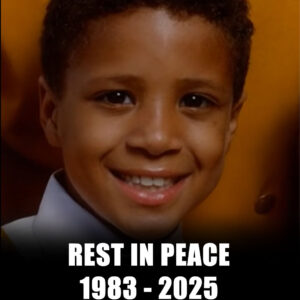
Four years old. Dark hair a little longer than Eli’s now. Eyes wide and unsure. Wearing the yellow shirt I only half-remembered from an old torn Polaroid back in Texas.
Under the photo, carved deep into the stone:
January 29, 1984.
My birthday.
Maren grabbed my arm. I hadn’t noticed her move so close. Her voice was low but steady.
“Holden, this is too strange. I want to go home. Eli, come here.”
“No. Wait. Just one minute, Maren,” I said, shaking my head. “I need to see.”
I knelt and touched the edge of the ceramic frame. It was ice-cold. For a moment everything around me went quiet. Something moved inside me, not just fear, but something older.
It felt like a memory I wasn’t ready to claim.
That night, after Eli was asleep, I sat at the kitchen table staring at the photo on my phone.
“What is going on?” I muttered. “That’s definitely me. No question. But I’ve never been here. I would remember.”
Maren sat across from me, face unreadable.
“Any chance your adoptive mom ever mentioned Maine?”
“Never,” I said. “I asked when I was little. She said she didn’t know much. A firefighter named Ed handed me over. I was found outside a burning house at four years old. Only thing with me was a note pinned to my shirt.”
“What did the note say, Holden?”
We had talked about it before, but tonight it felt heavier.
“‘Please take care of this boy. His name is Holden.’ That’s all. I think Mom still has it in a scrapbook somewhere.”
Maren reached across and squeezed my hand.
“Maybe someone here remembers the fire. Maybe your real parents. Maybe we moved here for a reason.”
I nodded slowly. I had always felt a piece of me was missing.
The next day I went to the town library and asked about the land behind our cottage.
The librarian frowned. “Family lived back there off-grid years ago. House burned down. Spark from the fireplace caught a curtain. People don’t bring it up anymore.”
I asked who might still remember.
“Try Clara M.,” she said. “Sells apples at the market. Almost ninety. Been here her whole life. That’s your best chance.”
Clara’s little house sat under thick pines, lace curtains fluttering, mailbox shaped like an old bus.
When she opened the door her face changed from polite to stunned.
“You… you’re Holden?” she whispered, cloudy eyes wide.
I nodded.
“You’ve come home. You’d better come in.”
Her living room smelled of cedar and warm apple tea, like a library that still believed in stories.
I showed her the picture from the headstone. She held the phone close, hands thin and trembling.
She stared far longer than I expected.
“That picture,” she said at last, “was taken by your father. Your real father. Declan. The day after you and your brother turned four. I baked your birthday cake myself. Vanilla sponge, strawberry jam, fresh cream.”
I couldn’t breathe.
“I had a brother?”
“Luca,” she said gently. “Your twin. Identical. You two were never apart.”
The room tilted.
“Nobody ever told me.”
“Maybe they never knew,” she said, folding her hands. “The fire came one bitter night. Your parents were young, didn’t have much, but they loved you boys with everything they had.”
She paused, choosing her words.
“By morning the cabin was gone. They found three bodies.”
“My parents and Luca?”
“That’s what everyone thought.”
“But I wasn’t there.”
“No, sweetheart. You weren’t.”
“So how did I end up in Texas?”
“That part no one ever figured out,” she said sadly. “I always wondered if they simply missed one tiny body in the ashes.”
She pulled out an old album. Inside was a newspaper clipping:
Fire Destroys Family Cabin — Three Dead, One Unaccounted.
Underneath, two identical little boys smiling in a field.
“Your uncle Tate came back afterward,” she went on. “He set the memorial stones, including yours. He never believed both boys were lost.”
“Where is he now?”
“Edge of town. Keeps to himself.”
The next morning Maren came with me.
Tate’s yard was overgrown but alive, bird feeders full, wind chimes singing.
When he opened the door he stared at me for a long time, then blinked like he’d seen the dead walk.
“I’m Holden,” I said. “I think I’m your nephew.”
His face softened. He stepped aside.
Inside smelled of woodsmoke and something simmering.
“You look exactly like Declan,” he whispered.
“I came back after the fire,” he said later. “Everyone else gave up, but I kept thinking maybe Brynn got one of you out. She would’ve died trying.”
My eyes stung.
“I put that stone there hoping,” he said. “Hoping wherever you were, you were safe.”
We spent the afternoon opening smoke-stained boxes: scorched drawings, a birthday card addressed to “Our boys,” and at the bottom, a tiny yellow shirt, one sleeve burned black.
I took the shirt home.
A week later we returned to the clearing. Tate walked with us.
I knelt at the headstone and set the birthday card at its base.
“Daddy, are we visiting your brother?” Eli asked.
“Yes, buddy. His name was Luca.”
“I wish I could’ve met him.”
“Me too, son. Me too.”
The wind moved through the pines.
I looked at Tate and wondered, just for a second, if he had been the one who carried me from the flames that night, pinned the note to my shirt, and gave me a life instead of a grave.
Maybe that was the only way he knew how to keep us alive.