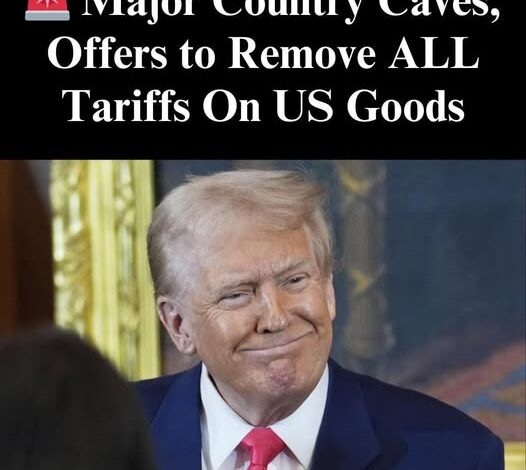
In a transformative development for global trade, the geopolitical landscape shifted significantly on Friday morning as a major manufacturing powerhouse signaled a willingness to capitulate to the burgeoning American tariff regime. President Donald Trump announced that Vietnam’s top leader, To Lam, has expressed a groundbreaking readiness to eliminate all tariffs on United States goods. This overture, characterized by the President as the result of a “very productive” phone conversation, suggests that Vietnam is moving to preemptively neutralize the economic impact of aggressive new duties imposed on its exports to the American market. For economists and policymakers, the “blink” from Hanoi represents a pivotal moment in the administration’s strategy of leverage-based diplomacy, potentially setting a precedent for other nations navigating the new era of American protectionism.
The strategic pivot came just days after the United States administration shocked the Southeast Asian trade corridor by imposing a steep 46 percent tariff on Vietnamese imports. These duties had initially sent a chill through the boardrooms of multinational corporations that have increasingly relied on Vietnam as a secondary manufacturing hub to bypass trade tensions with China. However, the tone of the communication between Trump and To Lam was surprisingly collaborative. Through a social media announcement, the President thanked the Vietnamese leader on behalf of the American people and expressed a desire for a high-level summit in the near future to formalize a zero-tariff agreement. This rapid transition from escalation to negotiation underscores the administration’s belief that punitive tariffs are not an end-state, but a catalyst for securing lopsidedly favorable trade concessions.
Financial markets, which usually recoil at the mention of trade volatility, reacted with a sharp surge of optimism. The prospect of a zero-tariff environment between the U.S. and one of its fastest-growing trade partners acted as a powerful stimulant for retail and manufacturing stocks. Multinational giants like Nike, which maintains a vast manufacturing footprint in Vietnam, saw their shares climb by more than four percent in the wake of the announcement. Investors, who had been bracing for a period of margin compression and supply chain disruption, suddenly found themselves eyeing a potential windfall: the removal of Vietnamese barriers to American agricultural and technological exports, paired with a path toward stabilizing the flow of consumer goods back to the United States.
While the trade breakthrough dominated the headlines, the broader economic context was bolstered by a blockbuster employment report from the Labor Department. New data revealed that the American labor market remains remarkably resilient, defying the gravity of global uncertainty. In March, U.S. employers added a staggering 228,000 jobs, a figure that blew past the 135,000 predicted by Wall Street economists. While the unemployment rate ticked up slightly to 4.2 percent—largely due to an increase in the number of people entering the workforce—the underlying momentum of the economy appeared robust. Despite downward revisions to January and February figures, the March surge provided a clear signal that the domestic engine of growth is still firing on all cylinders.
The job gains were notably broad-based, suggesting a holistic expansion rather than a localized spike. The private sector was the primary driver of this growth, contributing 209,000 new positions. Healthcare continued its decade-long expansion, serving as a pillar of stability for the workforce, while the retail, transportation, and social assistance sectors also posted significant gains. Interestingly, while federal employment saw a slight decline for the second consecutive month, the manufacturing sector remained in a state of flux, adding fewer jobs than some analysts had hoped. This mixed performance in manufacturing further emphasizes why the trade deal with Vietnam is so critical; it provides a potential relief valve for American manufacturers who require both stable supply chains and expanded export markets to maintain their footing.
However, the intersection of booming labor data and aggressive trade policy has created a complex puzzle for the Federal Reserve. Economists were quick to point out that while the jobs report reflects a period of strength, it does not yet account for the inflationary pressures that often follow the imposition of massive tariffs. Nancy Vanden Houten, an economist at Oxford Finance, warned that the current trade environment could potentially push inflation back toward the four percent mark this year. This leaves the Fed in a delicate position: the strength of the labor market gives them the freedom to keep interest rates steady, but the looming shadow of “tariff-flation” may eventually force their hand if consumer prices begin to climb in response to the 46 percent duties on non-compliant nations.
Within the halls of the administration, the March jobs report and the Vietnamese trade overture were hailed as a dual triumph of “America First” economics. Labor Secretary Lori Chavez-Deremer was vocal in her praise, suggesting that the data serves as a definitive validation of the administration’s policy mix of deregulation and assertive trade negotiation. From the perspective of the White House, the resilience of the labor market provides the necessary “economic armor” to weather any short-term volatility caused by trade disputes, essentially daring other nations to test American resolve.
As the dust settles on this week’s developments, the narrative of the 2026 economy is becoming increasingly clear. It is a world where the U.S. presidency utilizes the massive American consumer market as both a shield and a sword. Vietnam’s offer to move to a zero-tariff model suggests that the strategy of “maximum pressure” is yielding tangible diplomatic results far faster than many skeptics anticipated. If a formal agreement is reached, it could signal a new era of bilateral trade where countries are forced to choose between total market access or total exclusion.
For the American consumer, the stakes remain high. The success of the “Vietnam Blink” could lead to lower prices for shoes, electronics, and apparel, provided the 46 percent tariffs are indeed removed in exchange for the zero-tariff deal. For the American worker, the strong jobs report offers a sense of security even as the global order is reshuffled. The coming months will determine if this “very productive” phone call was merely a temporary reprieve or the beginning of a fundamental realignment in how the United States interacts with the global economy. One thing is certain: the margin for error in Washington is thin, and the world is watching to see who blinks next.