My name is Laura Méndez, and when everything changed, I was eight months pregnant.
We lived in a quiet residential neighborhood in Valencia, in a house that had belonged to my husband’s family for years. My husband, Javier Méndez, worked long hours as a construction foreman, leaving before sunrise and returning late at night. During the day, I was usually at home with his mother, Carmen Méndez.
From the beginning, Carmen made it clear that she wasn’t comfortable with me. I came from a modest rural family, while hers had lived comfortably for generations. She never openly confronted me in front of Javier, but when we were alone, her comments were cold and dismissive. Nothing I did ever seemed good enough.
Pregnancy didn’t make things easier. I was often tired, my legs swollen and my back aching, yet I was still expected to manage the house—cleaning, cooking, and keeping everything in order. When I slowed down or sat to rest, Carmen would sigh or comment that pregnancy was “not an excuse” to stop being useful. I stayed quiet, convincing myself that keeping the peace was better for my baby.
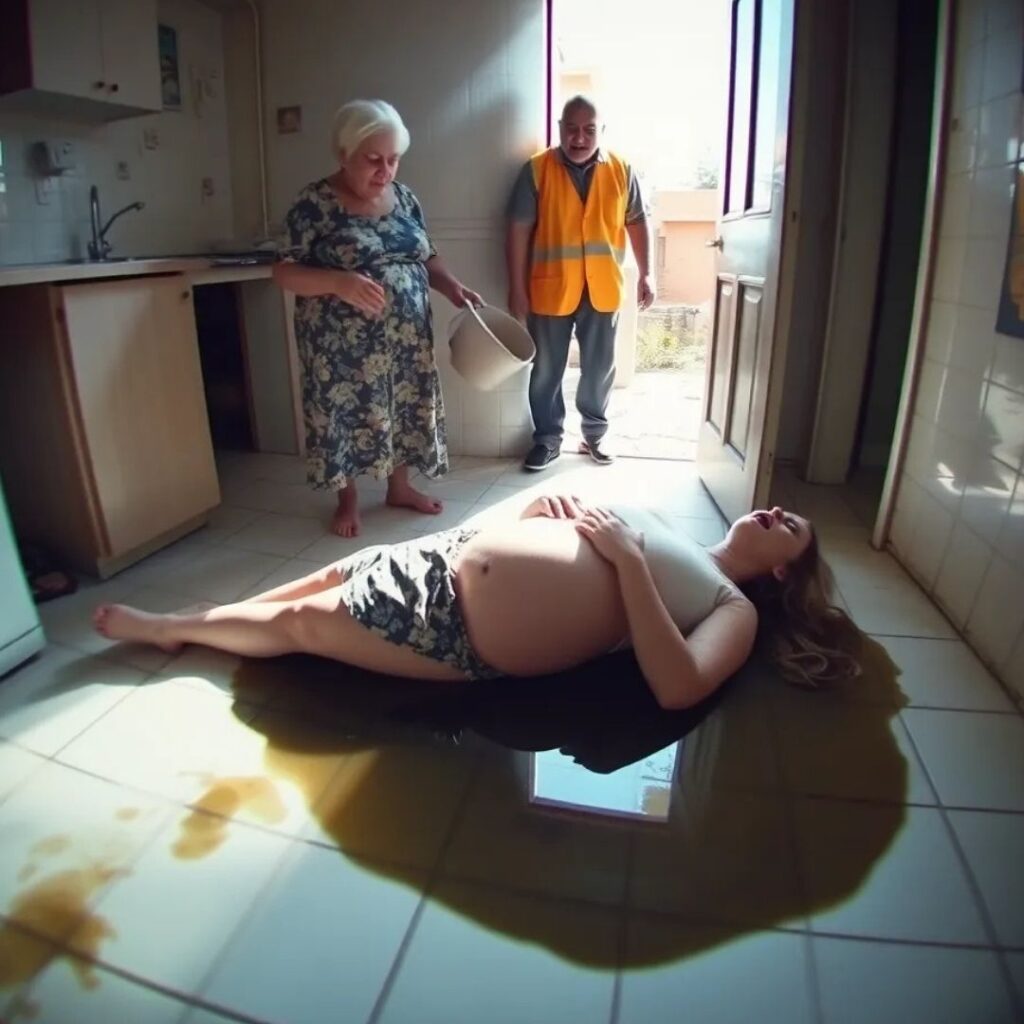
One afternoon, while Javier was still at work, I was mopping the kitchen floor. I felt dizzy and weak, and my movements were slower than usual. As I stepped back, I slipped slightly on the wet tiles and lost my balance. I fell hard onto my side.
The pain in my abdomen was immediate and frightening. I tried to stand, but my body wouldn’t cooperate. Then I felt a warm sensation and realized something was wrong—my water had broken.
At that moment, the front door opened. Javier had just arrived home. He froze when he saw me on the floor, pale and shaking, while his mother stood nearby, unsure of what to do.
Javier rushed to me immediately, panic written all over his face. I could barely speak, but he understood that this wasn’t normal. He called emergency services and stayed beside me, holding my hand and trying to keep me calm. Carmen remained silent, clearly shaken by what was happening.
At the hospital, doctors confirmed that I was going into premature labor. They explained that physical exhaustion combined with prolonged emotional stress can take a serious toll during pregnancy. I was taken in for urgent care.
Hours later, our baby boy was born early. He was small and fragile and was taken straight to the neonatal unit. I only saw him briefly, but that moment stayed with me forever.
While I was recovering, Javier spoke privately with the doctors and began to understand how much strain I had been under at home. For the first time, he truly saw what I had been enduring in silence.
Our son spent several weeks under medical observation. I spent long hours sitting beside his incubator, gently placing my hand against the glass. Javier was always there with me. The experience changed him.
When I was discharged, Javier made a clear decision: we would no longer live in that house.
We rented a small apartment near the hospital. It wasn’t large or luxurious, but it was calm and safe. For the first time in months, I felt at peace.
Carmen tried to reach out afterward. She apologized and said she hadn’t realized how much pressure I was under. I listened, but I also understood something important—distance was necessary for healing.
Weeks later, our son finally came home. He was still tiny, but strong. Holding him, I realized how close we had come to losing everything.
This story isn’t about blame. It’s about what can happen when stress and emotional pressure are ignored, especially during pregnancy. Sometimes, harm doesn’t come from cruelty, but from lack of understanding.
I learned that protecting yourself isn’t selfish—and setting boundaries isn’t rejection. It’s care.
For yourself.
And for the life you’re responsible for protecting.
The peace of our new apartment was a fragile glass sculpture. It was quiet, yes, and the air lacked the heavy, suffocating scent of Carmen’s expensive floor wax and resentment. But the trauma of that afternoon in the kitchen—the sting of the slap, the cold shock of the water, and the terrifying snap of my body failing—had left scars that weren’t visible on my skin.

The Silence of the Nursery
Our son, Mateo, was home, but he was a “quiet” baby. The doctors said some premature infants are like that—low energy, observant. To me, his silence felt like a haunting reminder of the stress he had endured in the womb. Every time I looked at him, I didn’t just see a miracle; I saw the person I had almost lost because I was too afraid to stand up for myself.
Javier was different, too. He was attentive, almost to the point of obsession. He checked the locks three times a night. He would stand in the nursery doorway for an hour, just watching Mateo breathe. But we didn’t talk about his mother. Her name was a ghost that lived in the corners of our rooms.
The drama truly began two months after we moved, when the “apologies” Carmen had sent via text turned into something much more physical.
The Uninvited Guest
It happened on a Tuesday. Javier was back at work, trying to make up for the weeks of unpaid leave he’d taken during Mateo’s hospitalization. A knock came at the door—not the aggressive pounding of the past, but a soft, rhythmic tapping.
I opened it, thinking it was the grocery delivery. It was Carmen.
She looked smaller. Her hair, usually a perfect silver helmet, was slightly unkempt. She held a small, beautifully wrapped box.
“I just want to see him, Laura,” she whispered. “Just once. I haven’t even held my grandson.”
My hand gripped the doorframe until my knuckles turned white. My body remembered the kitchen floor. It remembered the slap. I felt a phantom pain in my abdomen, a phantom chill of dirty mop water.
“You need to leave, Carmen,” I said, my voice trembling.
“I was wrong,” she cried, and for the first time, I saw tears in her eyes. “I am an old woman who was bitter and jealous. I didn’t mean for you to fall. I didn’t mean to hurt the baby. Please, Laura. He is a Méndez. He belongs in our family.”
“He belongs in a safe place,” I retorted. “And you are not a safe place.”
I closed the door, but her sobbing continued in the hallway for twenty minutes. It was a different kind of violence—emotional blackmail. When Javier came home, I didn’t tell him. I was afraid that if I told him, the thin thread holding our new life together would snap.
The Breaking Point
A week later, I received a legal notice.
Carmen wasn’t just crying in hallways; she was talking to lawyers. In her mind, her “apology” gave her a right to her grandson. She was suing for “Grandparental Visitation Rights,” claiming that I was mentally unstable due to postpartum depression and was alienating the child from his paternal heritage.
The betrayal hit harder than her hand ever had. She was using the very trauma she caused to prove I was unfit.
When Javier read the papers, the man I knew—the quiet, hardworking foreman—vanished. He didn’t yell. He went deathly still.
“She told the lawyers I was ‘unstable’?” I asked, my voice cracking. “Javier, she’s the reason he was born early. She’s the reason he was in an incubator!”
“I know,” Javier said, his voice a low growl. “She thinks she can buy the truth. She thinks because she has the family name and the big house, she can rewrite history.”
The Confrontation
The court-ordered mediation was held in a sterile office downtown. Carmen sat across from us, flanked by a high-priced attorney. She looked like the matriarch again—poised, dressed in black, playing the role of the grieving grandmother.
“I only want what’s best for Mateo,” she said smoothly to the mediator. “Laura is young, and the birth was… traumatic. I have the resources to help. A garden for him to play in. A legacy.”
I looked at her, and suddenly, the fear was gone. In its place was a cold, hard clarity.
“You didn’t see me as ‘young’ when you dumped the mop water on me, Carmen,” I said. The mediator paused, his pen hovering over the paper.
“Laura, dear, you were clumsy—” Carmen started, her voice sweet as poison.
“I wasn’t clumsy,” I interrupted. I reached into my bag and pulled out my phone. “Javier, I never told you this. But after the first few weeks of her comments, I started recording our ‘conversations’ on my phone. Just to make sure I wasn’t going crazy.”
I pressed play.
The room filled with the sound of the old house. Carmen’s voice, sharp and cruel: “You’re a peasant, Laura. You’re dragging my son down with that belly. Move faster! Why are you sitting? Clean it again!” Then, the sound of a wet splash, a scream, and the unmistakable sound of a hand hitting skin.
The silence that followed the recording was absolute.
Javier looked at his mother as if he were seeing a monster. Carmen’s face turned a sickly shade of gray. Her lawyer whispered something to her and immediately began packing his briefcase.
The Cost of Truth
We won. Not just the legal battle, but our freedom. The court didn’t just deny her visitation; they issued a restraining order based on the evidence of physical and verbal abuse.
But there was no joy in the victory.
As we walked out of the building, Carmen called out to Javier. “Javier! I did it for you! I wanted you to have a wife who was worthy of you!”
Javier stopped. He didn’t turn around.
“You didn’t want a wife for me, Mother,” he said. “You wanted a servant for yourself. You almost killed my son. As far as I’m concerned, I don’t have a mother anymore.”
The New Foundation
It has been six months since that day. Mateo is crawling now, a healthy, happy boy who loves the sound of music.
Carmen sold the big family house and moved to a different city. We don’t track her movements. Sometimes, I still have nightmares about the kitchen floor, but when I wake up, I see the sun hitting the walls of our small, safe apartment.
I learned that blood doesn’t make a family; safety does. Respect does.
Javier and I are rebuilding. We go to therapy together to process the “silent months” we spent under her roof. We are learning that a home isn’t built of bricks and history, but of the boundaries we set to keep the monsters out.
I am Laura Méndez. I am a mother, a wife, and a survivor. And my son will grow up knowing that his mother’s strength isn’t measured by how much she can endure, but by when she chooses to say: “No more.”