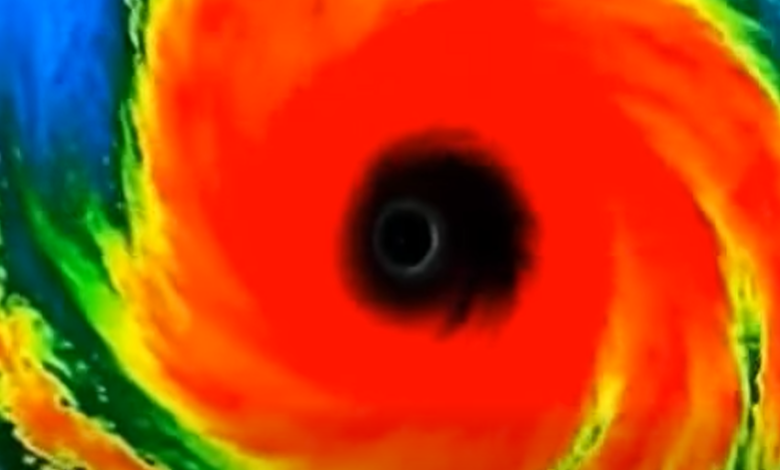
The sky over the coastline had long since traded its vibrant blue for a bruised, ominous gray, a silent herald of the atmospheric monster churning just beyond the horizon. As Hurricane Beryl intensified, its outer bands began to lash the shoreline with the rhythmic violence of a whip, signaling a transformation that would rewrite the history of thousands of lives in a matter of hours. This was no longer a mere meteorological event to be tracked on a screen; it had become an existential crossroads. Across the region, families who possessed the means and the foresight to flee watched the radar from the sterile, crowded confines of inland shelters. They clutched their smartphones like lifelines, refreshing satellite feeds in a desperate attempt to glimpse the neighborhoods they had left behind, praying that the foundations of their lives would still be standing when the sun eventually broke through the clouds.
However, the story of Beryl is as much about those who could not leave as it is about those who did. For many, the choice to evacuate was a luxury they simply could not afford. These were the individuals and families pinned down by a lack of financial resources, a lack of reliable transportation, or the uncompromising demands of time. They remained behind boarded windows, listening to the rising howl of the wind as it transitioned from a whistle to a roar. Inside these darkened homes, the first sign of the storm’s true arrival was often the violent, blue-white flash of exploding transformers, followed by the sudden, heavy silence of a dead power grid. In the void left by electricity, the sound of the ocean took over—a terrifying, low-register rumble as the storm surge began to swallow familiar streets. Neighborhoods that had stood for generations were reduced to a chaotic seascape where only rooftops and floating debris marked the places where memories had once been built.
Yet, as the devastation unfolded, a secondary narrative emerged: the realization that survival is a process that begins long before the first raindrop hits the pavement. The survivors of Hurricane Beryl were often those who recognized that preparation is not an act of panic, but an act of profound love for one’s family and community. Those who heeded the early evacuation orders, secured their property with meticulous care, and stocked a redundant supply of food, clean water, and essential medicines gave themselves more than just supplies; they gave themselves a fighting chance. They remained glued to official alerts, treating every update from the National Hurricane Center as a tactical briefing. For these individuals, the hours spent in hardware store lines and the sweat shed while boarding up windows were investments in a future that the storm threatened to erase.
Beryl served as a brutal, uncompromising reminder of the fundamental difference between acting and waiting. In the wake of such a disaster, the boundary between total devastation and miraculous survival is often measured in the small, proactive decisions made in the days leading up to landfall. It is found in the neighbor who checked on the elderly woman down the street, the parent who made sure the emergency radio had fresh batteries, and the community leader who insisted on clearing the drainage culverts before the clouds gathered. These actions represent a quiet, steely resolve—a refusal to be a passive victim of the elements. When the wind finally calms and the floodwaters begin their slow, muddy retreat, the landscape is always forever changed, but the spirit of those who prepared remains unbroken.
The aftermath of a Category 4 or 5 hurricane is a scene of profound sensory overload. The smell of salt spray is replaced by the scent of damp earth and broken pine; the roar of the wind is replaced by the intermittent buzz of chainsaws and the distant sirens of search and rescue teams. As the water recedes, it leaves behind a thick layer of silt, a physical residue of the trauma the land has endured. For the families returning from shelters, the first sight of their home is a moment of raw, unfiltered truth. Some find only a concrete slab, a jarring reminder of the insignificance of wood and glass against the power of a surging sea. Others find their homes intact, the plywood shutters still holding firm—a silent testament to the efficacy of their labor.
This period of recovery is also a time of profound social reckoning. The community is forced to look at the gaps in its armor—the areas where the infrastructure failed and the populations that were left most vulnerable. The controversy surrounding the lack of public transportation for the indigent and the failure of certain communication networks becomes the focal point of a heated, necessary dialogue. The goal is to ensure that the lessons of Beryl are not washed away with the debris. There is a collective determination to rebuild not just the houses, but the systems that protect the people within them.
Hurricane Beryl, in its terrifying splendor, stripped away the veneer of modern life to reveal the core of human resilience. It proved that while we cannot control the path of the storm, we can control our response to it. The storm was a masterclass in the necessity of civic responsibility and the power of individual agency. It taught a new generation that the time to prepare for a disaster is when the sky is still clear and the winds are still calm. When the next hurricane forms in the warm waters of the Atlantic, the memory of Beryl will be the voice that urges people to move, to stock up, and to protect one another.
As the sun sets over a battered coastline on January 16, 2026, the work of rebuilding is already beginning. It is a slow, grueling process, but it is fueled by the knowledge that the community survived. The difference between those who were lost and those who were found was often a matter of hours—the hours when people chose to take the warnings seriously, the hours when they chose to act instead of waiting for the inevitable. Beryl has moved on, but its legacy remains as a permanent part of the coastal psyche, a reminder that in the face of nature’s greatest fury, our best defense is each other and the simple, disciplined act of being ready.
