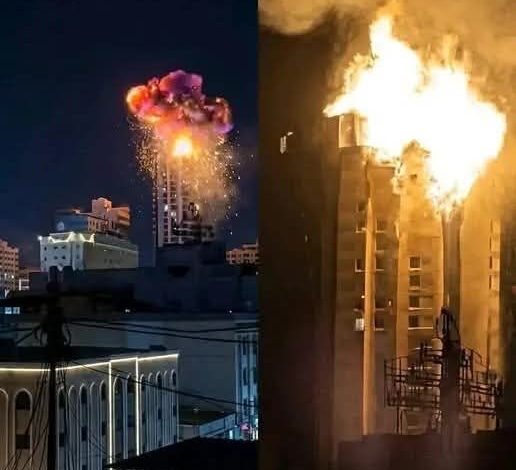
In the modern landscape of digital information, where headlines move with the speed of light and geopolitical tensions can be amplified by a single unverified post, the reports circulating on March 1, 2026, regarding alleged Iranian missile strikes on U.S. military installations in the Persian Gulf represent a critical moment for global discernment. These reports describe a fast-moving and highly volatile scenario, involving claims of ballistic missile launches and sudden airspace closures across some of the world’s most strategic transit corridors. However, in an era defined by information warfare and rapid-fire social media updates, the necessity for multi-source verification has never been more vital. When the stability of the Middle East and the safety of international military personnel are at stake, the distinction between a developing rumor and a verified military engagement is a matter of global security.
The specific claims emerging involve alleged strikes against a series of high-profile locations, including Al Dhafra Air Base in the United Arab Emirates, Al Udeid Air Base in Qatar, and the headquarters of the U.S. Fifth Fleet in Bahrain. To understand the gravity of these reports, one must recognize that these installations are the cornerstones of Western and regional security architecture. Al Udeid, for instance, serves as the forward headquarters for U.S. Central Command, while the Fifth Fleet is responsible for maintaining the freedom of navigation in the Persian Gulf, the Red Sea, and the Arabian Sea. A coordinated strike across these diverse sovereign territories would not merely be a localized skirmish; it would represent a significant regional escalation with immediate and profound implications for global energy markets and international diplomacy.
Because of the scale of such a hypothetical event, several standard institutional responses would be triggered almost instantaneously if the reports were accurate. Military escalations of this magnitude are nearly impossible to conceal in the age of satellite surveillance and open-source intelligence. First and foremost, the U.S. Department of Defense and the Pentagon’s Press Office would issue immediate public statements to clarify the status of American personnel and assets. Simultaneously, the defense ministries of the host nations—the UAE, Qatar, and Bahrain—would provide official confirmations to their own citizens and the international community.
Furthermore, aviation authorities would issue “Notices to Airmen,” more commonly known as NOTAMs. These are essential communication tools used to alert pilots of potential hazards or the closure of specific airspaces. In the event of a ballistic missile attack, the civilian aviation authorities of the affected Gulf states would immediately ground flights and redirect traffic, a move that would be visible on every global flight-tracking platform within minutes. Additionally, independent monitoring organizations and satellite imagery providers would be able to verify thermal signatures and impact sites shortly after any such event occurred. At present, the absence of these coordinated, multi-layered confirmations suggests that the situation remains in the realm of unverified reporting.
History provides a necessary context for these moments of heightened tension. The Persian Gulf has frequently experienced periods of alert, where temporary airspace restrictions or the interception of reconnaissance drones have occurred. Defensive systems, such as the Patriot and THAAD missile batteries, are permanently deployed throughout several Gulf nations specifically to mitigate these threats. However, during periods of extreme political friction, initial reports of “explosions” or “strikes” are often misinterpreted or amplified. What might be a routine military exercise, a technical malfunction, or a localized interception can be transformed by the “fog of news” into a definitive declaration of war.
For those monitoring the situation from a distance or for the millions of residents currently living and working in the Gulf region, the protocol for information consumption remains the same: reliance on official, verified channels is the only way to avoid the pitfalls of misinformation. Relying on established international wire services—such as Reuters, the Associated Press, or Agence France-Presse—is a vital safeguard against the spread of single-source rumors that often lack the rigorous vetting required for such sensitive developments.
For residents specifically located in the Middle East, standard emergency guidance during security alerts is paramount. National emergency authorities in the UAE, Qatar, and Bahrain have sophisticated communication systems designed to reach citizens via SMS and official broadcasts. The primary instructions in these scenarios involve avoiding military or restricted zones, staying indoors if localized alerts are active, and monitoring verified government channels for updates. Panic is often as dangerous as the events themselves, and maintaining a disciplined approach to news can prevent the unnecessary strain on infrastructure and emergency services.
The broader implications of these reports also touch upon the concept of “hybrid warfare,” where the spread of false or exaggerated information is used to test reaction times, manipulate stock and oil prices, or sow discord among allied nations. In a hypothetical global crisis, the psychological impact of a “missile strike” can be achieved without a single launch if the reporting is handled carelessly. This is why defense analysts emphasize that until multi-source verification is achieved, the situation should be categorized as “developing” rather than “escalated.”
As we navigate the complexities of 2026, the intersection of military technology and digital communication requires a new level of public literacy. We must be prepared for the reality of regional tensions while remaining skeptical of sensationalist narratives that lack the backing of the U.S. Department of Defense or regional aviation authorities. Clarity is the most effective defense against the escalation of fear. By waiting for the confirmation of flight grounded statuses, official ministerial statements, and verified satellite data, the global community can respond to actual events with the gravity they deserve, rather than reacting to the echoes of unconfirmed reports.
The status of the Persian Gulf remains a focal point of international interest, and while the current reports are being scrutinized, the regional defensive posture remains at a high state of readiness. In the coming hours, as more data becomes available from aviation tracking authorities like the UAE GCAA and Qatar CAA, a clearer picture will undoubtedly emerge. Until then, the focus remains on the pursuit of truth over the speed of delivery.