They say you leave the job, but the job never truly leaves you. It clings to you like the smell of antiseptic on a wool cardigan. I spent thirty years as a triage nurse in the busiest Emergency Room in Chicago. Over three decades, I learned to read the color of a person’s skin from across a chaotic waiting room, to hear the distinct, wet rattle of a failing lung before the stethoscope ever touched the chest, and, most importantly, to recognize a lie.
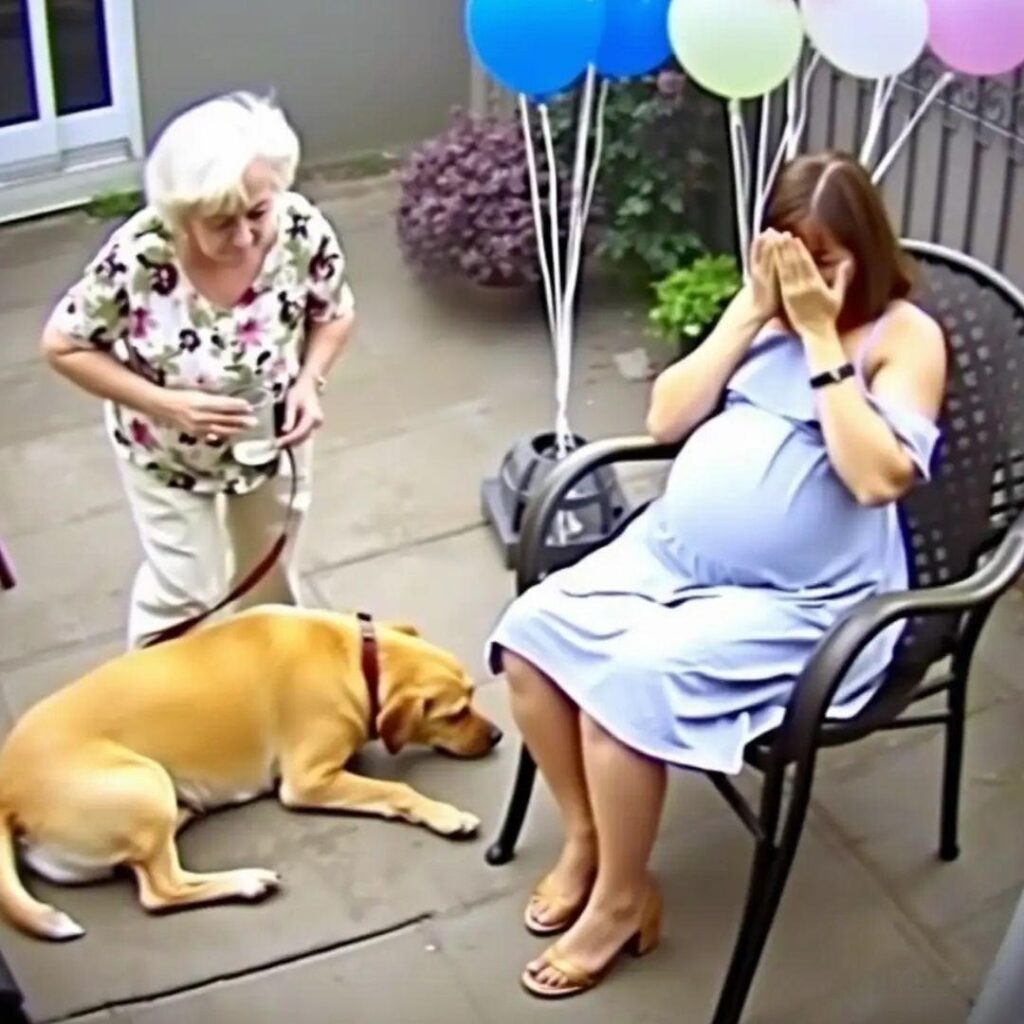
I stood on the expansive limestone patio of my daughter Emily’s home, a glass of iced tea sweating in my hand. It was a perfect June day, the kind that realtors pray for. The garden was awash in pastel pink balloons and expensive floral arrangements that probably cost more than my first mortgage. It was the baby shower of the century, organized with military precision by my son-in-law, David.
But my eyes weren’t on the balloons, nor the carefully curated playlist of soft jazz. They were locked on Beatrice Thorne, David’s mother.
She was holding court near the dessert table, wearing a silk dress the color of champagne that rippled like water whenever she moved. She was smiling, laughing, and touching Emily’s belly with a possessiveness that made the fine hair on my arms stand up. To the casual observer, she was the picture of the doting grandmother-to-be, the matriarch of the wealthy Thorne dynasty welcoming an heir.
To me? She looked like a pathogen waiting to infect a host.
I had seen that look before. I’d seen it on abusive partners explaining away a broken arm, and on addicts swearing they were clean while their pupils were pinned to pinpricks. It was the look of someone constructing a narrative that didn’t align with reality.
“Diane! Don’t just stand there in the shadows,” Beatrice called out, her voice pitching up an octave, dripping with a sugary sweetness that set my teeth on edge. “Come see what I’ve made for our precious Emily.”
I walked over, my grip tightening on my glass. Keep it together, Diane, I told myself. Don’t be the bitter mother-in-law from the working class. Play the game.
Beatrice was holding a ceramic pitcher, an antique thing painted with delicate, hand-spun blue flowers. It looked fragile, precious, and utterly out of place next to the modern catering trays.
“This,” Beatrice announced to the gathered guests, silencing the chatter, “is a Thorne family tradition. It’s a warm milk blend, steeped with special herbs and crushed almonds. My mother made it for me when I carried David, and I made it for David’s sisters. It ensures the baby is born with a strong mind and a calm spirit.”
The guests, a collection of high-society wives and David’s business partners, cooed in unison.
“Oh, how thoughtful!”
“Beatrice is such a saint!”
“Tradition is so important these days.”
I moved closer, stepping into the circle. As Beatrice poured the steaming white liquid into a heavy crystal glass, a scent wafted toward me on the summer breeze.
It was sweet. Cloyingly sweet. But underneath the comforting aroma of warm milk and vanilla bean, there was something else. A sharp, metallic tang. A volatile top note that hit the back of my throat.
Bitter almonds.
My ER brain began to cycle through a Rolodex of toxins, a reflex honed by years of late-night overdoses and accidental ingestions. Cyanide? No, that smells strictly of almonds, but this had a floral undertone, something earthy and root-based. Strychnine? Too bitter to mask completely. Maybe just too much nutmeg?
“Here, darling,” Beatrice said, handing the glass to Emily with a two-handed grip, as if offering a chalice. “Drink it while it’s warm. It binds the nutrients. Every drop is essential.”
Emily, my sweet, naive Emily, smiled. She looked so tired, the third trimester taking its toll on her ankles and her energy. She trusted everyone because she had never seen the things I had seen. “Thank you, Beatrice. You’re too good to me.”
She raised the glass to her lips. The steam curled around her nose.
My body moved before my brain signed the permission slip. It was the same autonomic reflex that made me catch a falling scalpel or step between a delirious patient and a resident. I lunged forward, feigning a clumsy trip over the uneven flagstones of the patio.
“Whoops!” I cried out, perhaps a little too loudly.
I slammed into Emily’s arm with my shoulder. The crystal glass flew from her hand. It seemed to hang in the air for a second, catching the sunlight, before shattering on the stone pavers. The white liquid splashed violently across the expensive Persian rug brought out for the occasion and soaked into the manicured grass.
“Oh, Mom!” Emily gasped, jumping back and wiping a splash from her maternity dress. “Are you okay?”
I steadied myself, acting the part of the flustered, aging mother. “I am so clumsy! My new heels… these stones are tricky. I’m so sorry, Beatrice. I’ve ruined your lovely tradition.”
I watched Beatrice’s face. I needed to see the reaction.
For a micro-second, the mask slipped. Her eyes didn’t show concern for me, or even for Emily. They flashed with a pure, reptilian rage. Her jaw tightened so hard I saw the masseter muscle twitch beneath her flawlessly applied foundation. It was a look of interrupted calculation.
Then, the smile snapped back into place like a bear trap resetting.
“Accidents happen, Diane,” Beatrice said, her voice strained, the sweetness now thin and brittle. “Luckily, I anticipated the excitement. I made a whole pitcher. I’ll go to the kitchen and get another glass. Don’t go anywhere, Emily. It’s vital you take this now.”
Beatrice turned on her heel, her silk dress swishing aggressively as she marched toward the kitchen door. I looked down at the mess on the floor. Barnaby, Emily’s golden Labrador—a dog that would eat a tire if you put gravy on it—was trotting over, tail wagging, his eyes locked on the puddle of warm milk pooling in the crevices of the stone.
“Barnaby, no!” Emily laughed, bending awkwardly to try and shoo the dog away. “That’s messy, you goof!”
“Let him be,” I said softly, my hand shooting out to grab Emily’s forearm, perhaps a little too tightly. I held her back. “It’s just milk. Let him clean it up. Saves you the paper towels.”
I needed to know. I needed to be wrong. I prayed to a God I hadn’t spoken to in years that I was just a cynical old woman who watched too many crime dramas and judged people too harshly. I wanted to be the crazy mother-in-law. I wanted to be embarrassed.
Barnaby lapped up the milk enthusiastically, his pink tongue cleaning the stones with rhythmic efficiency. He finished it in seconds, licking his chops, and looked up at us, tail thumping against a planter, hoping for seconds.
For a moment, nothing happened. The sun continued to shine. The jazz continued to play. The guests returned to their conversations about summer homes and preschool waiting lists.
I felt a wave of nausea—guilt. You are paranoid, Diane, I chided myself. She’s just an overbearing snob, not a murderer. You’re projecting your insecurities onto her.
Then, Beatrice returned.
She walked out of the French doors with a fresh glass of milk, a determined, almost predatory glint in her eyes. She bypassed the guests, ignoring a woman who tried to compliment her dress. She walked in a straight line toward Emily, like a heat-seeking missile.
“Here we are,” Beatrice said, thrusting the glass at my daughter. “Now, no spilling this time, Diane. It’s crucial you drink it now, Emily, while the herbal compounds are still active. Once it cools, the potency fades.”
Emily reached for the glass, her expression apologetic. “Of course, Beatrice.”
Behind us, a low whine started.
It wasn’t a beg for food. It wasn’t the playful growl Barnaby made when he wanted his rope toy. It was a sound of confusion, a guttural vibration of deep, sudden distress.
I turned.
Barnaby was swaying. His back legs, usually so sturdy, buckled underneath him. He sat down hard, looking surprised. He shook his head violently, ears flapping, sending strings of spittle flying across the patio stones.
“Barnaby?” Emily asked, her hand pausing halfway to her mouth. “What’s wrong, boy?”
The dog let out a high-pitched, curdling yelp that silenced the entire party. He fell onto his side. His legs began to paddle the air frantically, as if he were trying to run from an invisible attacker. White foam, thick and frothy, began to bubble from his jaws, staining his golden fur. His eyes rolled back into his head, showing only the whites.
“Barnaby!” Emily screamed, dropping her hand to her side, the glass tipping dangerously.
The guests gasped and backed away, clutching their pearls and champagne flutes. My husband, Tom, a retired paramedic with knees that popped when he crouched, was already moving. He rushed over to the thrashing animal.
“He’s seizing!” Tom yelled, his voice cutting through the panic. “Clear the area! Give him space! He’s biting his tongue!”
It was chaos. People were crying. Emily was sobbing, trying to reach her dog, her maternal instincts firing wildly for her first “baby.”
But I wasn’t looking at the dog. I wasn’t looking at my husband. I was looking at Beatrice.
She hadn’t moved. She hadn’t dropped the milk. She wasn’t looking at the dying animal thrashing at her feet, dying in the very puddle she had poured. She was looking at Emily.
She took a step closer to my daughter, casually stepping over the convulsing legs of the family pet.
“Emily,” Beatrice said, her voice calm, eerily detached from the horror unfolding inches from her Italian leather heels. “Don’t look at the beast. It’s just a dog. He’s old. He’s upsetting the baby. Here, drink your milk. You need to calm down. The stress is bad for the heir.”
She pushed the glass right up to Emily’s face, the rim touching my daughter’s nose. “Drink it. Now.”
My blood ran cold, colder than it ever had in the trauma bay. It wasn’t just poison. It was madness. It was a singular, obsessive drive that bypassed all humanity. She didn’t care about the scene. She didn’t care about the witnesses. She only cared about getting that liquid inside the vessel carrying her bloodline.
Emily was hyperventilating, her eyes wide with terror, staring at her dying dog. She opened her mouth to sob, gasping for air. Beatrice seized the moment, tipping the glass aggressively, ready to pour the liquid down her throat. “Just a sip, dear. It will make it all go away.”
“DON’T TOUCH HER!”
I didn’t yell. I roared. It was the voice I used to clear a trauma bay when a gunshot victim rolled in and the residents were freezing up. It was a voice that brokered no argument, a command frequency that bypassed the conscious brain and hit the spine.
I stepped forward and snatched the glass from Beatrice’s hand. I gripped it so hard I felt the cut crystal bite into my palm.
“Mom?” Emily cried, confused, terrified, caught between the horror on the ground and the violence in my voice.
“Tom!” I shouted to my husband without breaking eye contact with Beatrice. “Get Barnaby to the emergency vet! Now! Tell them suspected neurotoxin poisoning! Go!”
Tom didn’t ask questions. He didn’t hesitate. He scooped up the sixty-pound dog in his arms, grunting with the effort, and ran for the side gate toward the driveway.
The garden fell into a suffocating silence. The jazz music had stopped. The only sound was the wind rustling the expensive balloons and Emily’s jagged, panicked breathing.
“Diane,” Beatrice hissed, her face contorting. The mask was gone completely now. In its place was an ugly sneer, a look of supreme annoyance at a servant who had dropped a tray. “Give me that glass. You are making a scene. You are stressing the baby. You are ruining everything.”
“The baby?” I laughed, a dry, humorless sound that felt like sandpaper in my throat. “You don’t give a damn about the baby, Beatrice. Or Emily. You treat them like incubators.”
I held the glass up to the sunlight. The liquid swirled, innocent and white, looking for all the world like a comfort drink.
“You said this is a family tradition,” I said, my voice shaking—not with fear, but with adrenaline. “You said it’s good for the health. Restorative.”
“It is!” Beatrice insisted, though she took a subtle step back, smoothing her dress. “It’s ancient herbs! My grandmother’s recipe!”
“Good,” I said, stepping into her personal space. “Then prove it.”
I shoved the glass toward her face. The liquid sloshed near the rim. The smell of bitter almonds and that earthy, root-like scent was overpowering now.
“Drink it,” I commanded.
Beatrice froze. Her eyes darted to the spot on the patio where the dog had just been convulsing—a wet, foamy stain on the stone. She looked back at me, and I saw it. The calculation. The risk assessment.
“Don’t be ridiculous,” she stammered, pulling her silk shawl tighter around herself as if shielding herself from a draft. “I’m not pregnant. It’s for the mother. It… it interacts with the hormones.”
“It’s just milk and herbs, Beatrice!” I yelled, letting the anger flow freely. “If it’s safe for my pregnant daughter and her unborn child, surely it’s safe for you. Drink it! Drink the whole damn thing, and I will apologize on my knees in front of all your high-society friends.”
David, my son-in-law, finally stepped out from the paralyzed crowd. He looked at his mother. He looked at his wife, who was trembling in a chair. He looked at the white foam staining the patio stones. The denial was breaking behind his eyes.
“Mom,” David said, his voice cracking, sounding like a small boy. “Drink the milk.”
Beatrice looked at her son, her golden boy. For the first time, genuine fear flickered in her eyes. Not fear of me, but fear of the liquid in my hand. She looked at the crystal glass as if it were a loaded gun pointed right between her eyes.
“I… I have a lactose intolerance,” Beatrice lied, her voice turning shrill, grasping at straws. “You know that, David! It upsets my stomach!”
“You had ice cream with us last week,” David said, his voice dropping an octave, becoming steady. He stepped closer to me, forming a physical wall between his wife and his mother. “We went to Trattoria Rossi, and you had the spumoni. Drink it, Mom. Or I’m calling the police right now.”
Beatrice’s face crumpled. The sweet grandmother, the elegant socialite, the benevolent matriarch—she vanished. In her place stood a cornered animal, baring its teeth.
“You ungrateful boy!” she shrieked, spitting the words at David, her composure fracturing into a thousand pieces. “I did this for you! She’s weak! She comes from common stock! She’s not good enough to carry the Thorne bloodline! She’ll ruin the child with her mediocrity!”
The silence of the guests was absolute. The truth hung in the air, ugly and naked.
She lunged at me. Not to take the glass to drink it, but to destroy the evidence.
She slapped my hand with surprising, hysterical strength. The glass flew into the air, spinning end over end, catching the light one last time before crashing against the brick wall of the house. The milk splattered everywhere—over the bricks, the ivy, and Beatrice’s own silk dress.
“There!” Beatrice screamed, panting heavily, her chest heaving. “Now nobody drinks it! It’s gone! Are you happy, you peasant?”
She straightened up, trying to regain her dignity, smoothing her milk-splattered dress. “It’s over. Just a spilled drink. No harm done.”
“Actually,” I said, my voice dropping to a calm, clinical tone.
I reached into my purse. An old habit. I always carry a small first aid kit—band-aids, aspirin, and for reasons of hygiene when dispensing liquid medication to grandbabies, a few sterile oral syringes.
I knelt down to the clean plastic mat where a large shard of the glass had fallen, acting as a saucer for a pool of the white liquid.
“What are you doing?” Beatrice whispered.
I uncapped the syringe. I dipped the tip into the puddle. I drew back the plunger. The white liquid filled the chamber—1cc, 2cc, 5cc. More than enough for the lab.
I stood up, holding the plastic syringe like a trophy. “I have enough for the toxicology screen. And since Barnaby ingested the first batch, we have a biological sample too.”
Beatrice stared at the syringe. The color drained from her face, leaving her looking gray and old. She turned to run, to flee back into the safety of her mansion, but the guests—David’s friends, my friends, even her own bridge partners—had formed a circle. There was no way out. The social wall she had built to keep people out was now keeping her in.
“David,” Beatrice pleaded, grabbing his arm, her fingernails digging into his suit jacket. “She was going to take you away from me. Once the baby was born, she wouldn’t need you anymore. I was freeing you! I was going to raise the baby for us! A pure Thorne!”
David pulled his arm away as if he had been burned by a hot iron. He looked at his mother with a mixture of horror and profound pity.
“You tried to kill my wife, Mom,” he said, tears streaming down his face. “You tried to kill my baby.”
“I was saving the legacy!” Beatrice howled, collapsing to her knees.
Cliffhanger: Sirens wailed in the distance. Not the ambulance this time. The tone was sharper, more urgent. The police. I had dialed 911 the moment Barnaby hit the floor, leaving the line open in my pocket. Beatrice looked up at me, and for a second, the madness cleared, replaced by the crushing realization that her legacy was indeed solidified—just not the way she intended.
The next hour was a blur of blue strobe lights and yellow police tape, jarringly out of place against the pastel balloons.
They handcuffed Beatrice in the middle of the baby shower decorations. She didn’t go quietly. She screamed curses at Emily, at me, calling us usurpers and trash. And finally, heartbreakingly, she begged David to tell them it was a mistake, reverting to a childlike state of denial. David stood with his back to her, holding a sobbing Emily, his shoulders shaking.
The police took the syringe. They took the pitcher. They took the broken glass shards carefully bagged as evidence.
Later that night, the hospital waiting room was a wash of fluorescent white—a color I usually found comforting, but tonight felt sterile and cold. Emily was being monitored in OB-GYN to ensure the stress hadn’t triggered preterm labor.
A doctor approached me, looking pale. He held a clipboard with the preliminary toxicology report from the sample I provided.
“You have a good nose, Diane,” he said quietly. “It wasn’t just herbs.”
“What was it?” I asked, though I already knew.
“Concentrated Monkshood. Aconitum napellus,” he said. “Also known as Wolfsbane. It contains aconitine. It causes severe heart arrhythmia and paralysis.”
He looked at the floor, then at me. “The dosage in that milk… if your daughter had drunk that glass, she and the baby would have been in cardiac arrest within ten to fifteen minutes. There would have been nothing we could do.”
I sat back in the hard plastic chair, the adrenaline finally leaving my system, replaced by a violent shaking in my hands. I clasped them together to stop it.
Then, my phone rang.
I stared at the screen. Tom.
I picked up, terrified to speak. “Tom?”
“He made it,” Tom’s voice cracked, thick with emotion. “The vet pumped his stomach immediately. They used activated charcoal and aggressive fluids. He’s on IVs and heavy anti-seizure meds. He’s weak, Diane, and his heart rate is still erratic, but… he just licked my hand. He’s wagging his tail.”
I burst into tears. I hadn’t cried when I lunged for the glass. I hadn’t cried when I faced the killer. I hadn’t cried when the police dragged her away. I cried for the dog. I cried because the canary in the coal mine had survived the gas.
The nurse called out my name. Emily was asking for me. I wiped my face and stood up. The nightmare was over, but as I walked down the hall, I realized something. Beatrice was right about one thing—legacy is important. But she had mistaken blood for loyalty.
Three months later.
The nursery was painted a soft, buttery yellow. The morning sun filtered through the blinds, casting stripes of light across the carpet. In the crib, Leo was sleeping soundly, a healthy, beautiful seven-pound boy with his father’s nose and his mother’s chin.
David walked in, carrying two cups of coffee. He looked tired—new parent tired, which is a good kind of tired—but the haunted look he had worn since the arrest was finally fading.
Beatrice was currently residing in the county jail, denied bail due to flight risk and the severity of the charges: Attempted Murder, two counts. The “Thorne Legacy” was now splashed across the tabloids, not for their philanthropy, but for their patriarch’s widow trying to poison her own grandchild.
“How is he?” David whispered, handing me a mug.
“Perfect,” I said, leaning over the rail. “He’s dreaming.”
I looked down at the floor. Lying under the crib, occupying the space like a guardian gargoyle, was Barnaby.
His golden fur had been shaved in patches for the IV lines and EKG leads, and it was growing back in tufts, giving him a scruffy appearance. He moved a little slower these days, and his kidneys would need monitoring for the rest of his life, but he was here. He thumped his tail against the floorboards when he saw me but didn’t get up. He was guarding his post.
I knelt down and stroked the dog’s broad head. He leaned into my touch, letting out a contented sigh.
“You know,” I told Emily, who was folding tiny onesies nearby. “We spend our whole lives looking for monsters under the bed. We tell kids they aren’t real.”
Emily looked at her husband, then at her son, and finally at the dog. “And sometimes,” she whispered, “the monsters are standing right in the kitchen, wearing silk.”
“But so are the angels,” I said, scratching Barnaby behind the ears. “Beatrice brought poison into this house. She brought hate. But Barnaby? He brought the truth.”
I stood up and kissed my grandson’s forehead. Beatrice wanted to ensure the baby had a “strong mind and spirit” through her twisted concoction. She failed.
The real heirloom wasn’t the milk, nor the money, nor the Thorne name. It was the survival instinct. It was the fierce, protective love that made a grandmother catch a falling glass and a dog drink a poison meant for his master.
And looking at Leo, safe and sound, I knew we had passed that heirloom down just fine.