The night my son was airlifted to the hospital, my father-in-law texted. Family dinner Sunday. Don’t be late. I replied, “My son is dying.” His response, “He’ll be fine. Your wife’s birthday is more important.” I blocked his number. 72 hours later, my son opened his eyes, looked at me, and whispered, “Dad, you must know this about Grandpa.” The fluorescent lights of St. Catherine’s ICU burned into my retinas as I watched the monitors tracking my son’s vital signs. Each beat felt like a countdown I couldn’t control.
Ethan, my 8-year-old boy, lay motionless in the bed, tubes snaking from his small body like parasitic vines. The doctor said he’d collapsed at school. Sudden onset seizures, cause unknown. By the time I’d gotten the call from Samantha, the helicopter was already lifting off the elementary school’s football field. That was three hours ago. Three hours of watching my son fight for his life while my wife sobbed in my arms. Her mascara leaving dark trails down her cheeks. Three hours of specialists in white coats speaking in hushed tones about neurological events and unexplained symptoms and running more tests.
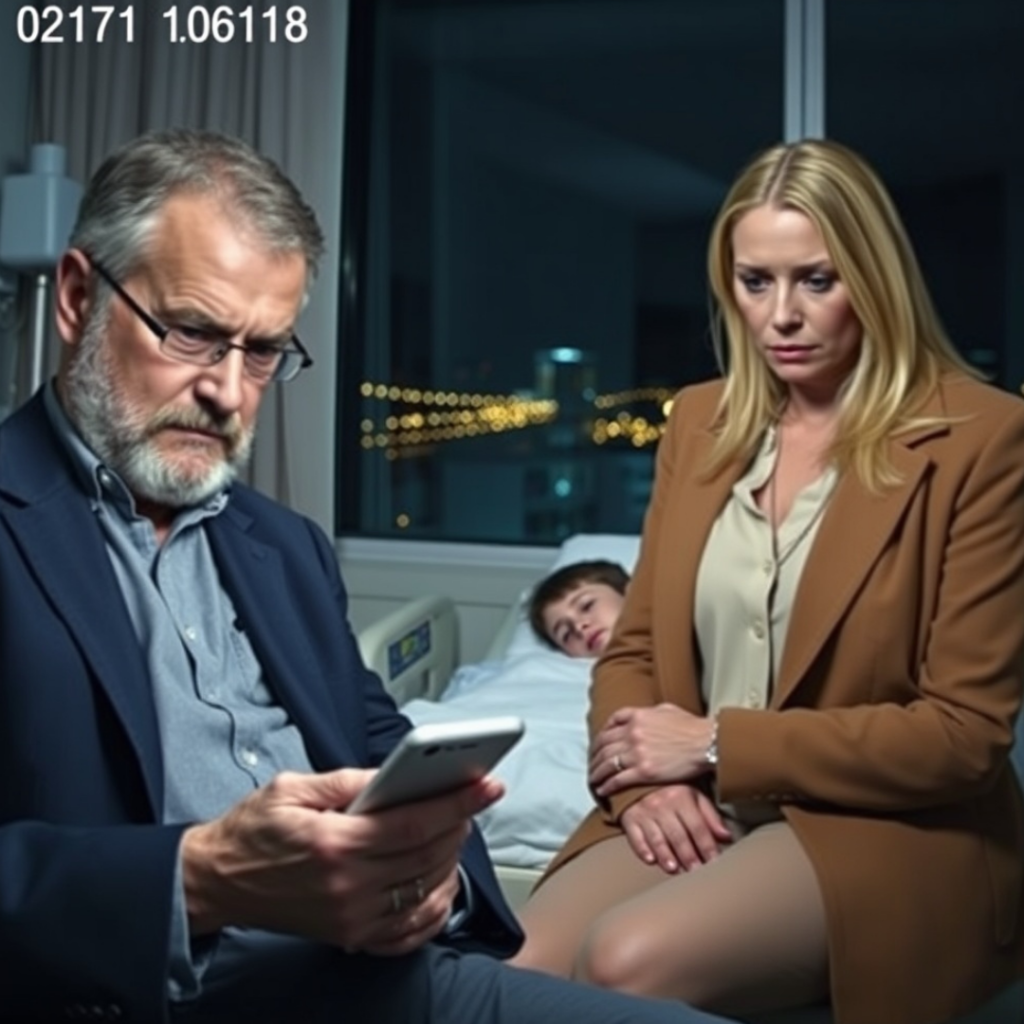
My phone buzzed. I almost ignored it, but Samantha had gone to call her mother and I thought it might be important. Herbert Whitehead, my father-in-law, family dinner Sunday. Don’t be late. I stared at the text message, reading it three times to make sure I understood correctly. The man knew we were at the hospital. Samantha had called her mother the moment we arrived.
I typed back with shaking fingers: “My son is dying.” The response came within seconds: “He’ll be fine. Your wife’s birthday is more important. We’ve made reservations at the club. 7:00 p.m. sharp.” I felt something crack inside my chest. Not break, crack, like ice forming over a lake that’s been warm for too long. My thumb hovered over the screen. Then I blocked his number, blocked Catherine’s, too. Whatever game they were playing, whatever twisted priority system they lived by, I wanted no part of it. Brian. Samantha’s voice was small, fragile. She stood in the doorway, her blonde hair disheveled, still wearing the designer pantsuit she’d worn to her real estate showing that morning. “Any change?” I shook my head, pocketing my phone. The doctor said, “The next 48 hours are critical.”
She moved to Ethan’s bedside, taking his small hand in hers. “He’s strong like you.” Her voice cracked. “He has to be okay, Brian. He has to be.” I wrapped my arms around her from behind, and we stood there in silence, watching our son breathe.
The next 72 hours blurred together.
Samantha and I took shifts, sleeping in the uncomfortable chairs they brought in. We lived on vending-machine coffee, and whatever the hospital cafeteria was serving. Specialists came and went. They found elevated levels of something in his blood. Toxins, they said, but couldn’t identify the source. Environmental exposure, possibly. They were running more tests. My brother, Brent Lopez, showed up on the second day. We’d had different fathers, different last names, but we’d been raised together after his dad left. And my mother married his mother. He was a research journalist for the Boston Herald, known for his investigative pieces that took down corrupt politicians and crooked businessmen.
“How’s the little man?” he asked, studying Ethan’s sleeping face. Stable. They don’t know what caused it yet. Brent’s jaw tightened. He’d always been protective of Ethan, the cool uncle who showed up with age-inappropriate gifts and took him to Red Sox games and the in-laws.
“Block them.” He raised an eyebrow. About damn time. What did Herbert do this time? I showed him the text exchange, watched his expression go from surprise to disgust. Jesus Christ, even for him, that’s cold. Brent had never liked the Whiteheads. He’d warned me before I married Samantha, that her family was trouble. Old Boston money, the kind that looked down on everyone else, especially a guy like me who’d worked his way up from a South Boston neighborhood where the closest thing to a country club was the corner bar.
“Samantha doesn’t know,” I said quietly. “She’s got enough to deal with. You’re too good to her. You know that too good to all of them. Maybe he was right. I’d spent 10 years trying to prove myself to Herbert and Catherine Whitehead, trying to show them I was worthy of their daughter. I’d built a successful architectural firm, designed buildings that dotted the Boston skyline, bought Samantha the house in Beacon Hill she’d always wanted. And still, Herbert looked at me like I was dirt he’d scraped off his Italian leather shoes. On the third day, just after dawn, I was alone with Ethan. Samantha had finally agreed to go home and shower. Brent had gone to grab us real breakfast from a diner he knew.
The nurse had just finished checking vitals when I heard it. Dad. The voice was so faint. I thought I’d imagined it. But then Ethan’s eyes fluttered open, those green eyes he’d inherited from his mother, and he was looking right at me.
Chapter 2: Dad, You Need to Know About Grandpa
Ethan. Oh, God. Buddy. I pressed the call button frantically while leaning over him. You’re okay. You’re going to be okay. His small hand gripped mine with surprising strength. Dad, you need to know about Grandpa. Shh, don’t talk. Save your strength. The doctors are coming. No. His voice was urgent despite its weakness. You have to know. Grandpa, I saw him at the factory. What factory? Ethan, you’re confused. The pill factory near my school. His eyes were wide, frightened. He was there with bad men. They were talking about the medicine. The medicine that makes kids sick. The nurse rushed in and soon the room filled with doctors. They pushed me aside gently but firmly as they examined Ethan, their voices excited that he’d regained consciousness. But all I could hear was my son’s words echoing in my head. The pill factory, medicine that makes kids sick. There was a pharmaceutical plant about a mile from Ethan’s school. I’d driven past it a hundred times. Medisource Technologies.
I’d never paid much attention to it. But now, now I needed to know why my father-in-law had been there and what it had to do with my son lying in a hospital bed. Samantha was overjoyed when she returned to find Ethan awake. The doctors cautiously optimistic. They wanted to keep him for observation, run more tests, but the immediate crisis had passed. I should have felt relieved. Instead, I felt a cold determination settling into my bones. That evening, after Samantha had fallen asleep in the chair next to Ethan’s bed, I stepped into the hallway and called Brent. I need you to look into something, I said quietly. Medisource Technologies, the pharmaceutical plant on Route 9, the one by Ethan’s school. I could hear the clicking of keys already. Brent was always ready for a story. What am I looking for? Anything connecting it to Herbert Whitehead and anything about medication that might harm children? The typing stopped. Brian, what did you find out? Ethan said something before the doctors came about seeing Herbert there with bad men talking about medicine that makes kids sick. He’s 8 years old and just woke up from a coma. I know how it sounds, but look into it anyway, please.
Already on it. The typing resumed. Give me 24 hours. I returned to the room to find Ethan awake again, his eyes tracking me as I entered. Samantha was still asleep. Dad, he whispered. Is mom okay? She’s fine, buddy. Just tired. She’s been here the whole time. I’m sorry I scared everyone. I sat on the edge of his bed carefully. You have nothing to be sorry for. Can you tell me more about what you saw at that factory? His face scrunched up in concentration. It was last week. On Tuesday, we went on a field trip to the science museum. Remember? But the bus broke down on the way back. We had to wait for another bus and I walked to the gas station to use the bathroom. That’s when I saw Grandpa’s car, the black one with the special plates. Herbert’s Mercedes vanity plates that read WHD1. I thought maybe he was getting gas. So, I went to say hi, but he was parked behind the building, the factory building. He was talking to two men in suits. They were arguing. Could you hear what they were saying?
He said something like, “I don’t care about the side effects. We’re behind schedule and the board won’t wait.” And one of the other men said, “Kids are getting sick, Herbert. If this gets out, but then Grandpa saw me. My blood ran cold. What did he do?” He got really quiet, told the men he’d call them later. Then he came over and asked what I was doing there. I told him about the field trip. He seemed nice. Dad, he bought me a candy bar from the gas station and told me it would be our little secret. That grandma would be mad if she knew he was eating sugar. A secret? Of course. Did you eat the candy bar? Ethan’s face paled. Yeah, right away. It was a Snickers. My favorite.
You don’t think? No, buddy. No, but I was already thinking it. The unexplained toxins in his blood. The timing. Did grandpa give you anything else? He had this bottle in his car. Said it was vitamins. That growing boys need vitamins. He gave me two pills and watched me take them with water from the gas station. Jesus Christ, why didn’t you tell us? I forgot. I mean, I didn’t think it was important. And then at school the next day, I started feeling weird. And then I don’t remember much after that. I forced my voice to stay calm. You did good telling me now, Ethan. Real good. But I need you to do something for me. Don’t mention this to anyone else yet. Not mom. Not the doctors. Not until I figure some things out. Can you do that? He nodded solemnly. Is Grandpa in trouble? I don’t know yet, but I’m going to find out. I spent that night researching Medisource Technologies on my phone while Samantha and Ethan slept. The company had been founded 15 years ago by a biochemist named Dr. Stanley Beasley and was primarily known for producing generic medications and supplements. On the surface, everything looked legitimate, but there were cracks if you knew where to look. 3 years ago, there had been a lawsuit, a class action involving a batch of contaminated children’s vitamins. The case had been settled out of court for an undisclosed amount with no admission of wrongdoing. The lawyer who represented the plaintiffs was named Matthew Rivera. I made a note to contact him. Then I found something else.
Medisource board of directors and they’re listed as a non-executive director, Herbert Whitehead. My father-in-law was on the board of the company that had produced contaminated children’s vitamins. The same company my son had seen him visiting, arguing about side effects and kids getting sick. The same company whose products had possibly put my son in the ICU. I looked at Ethan, sleeping peacefully now, his small chest rising and falling. Then at Samantha, her face slack with exhaustion. She loved her father despite everything. She made excuses for his coldness, his superiority complex, his casual cruelty. Growing up in that world, she’d been taught that money and status mattered more than kindness or empathy. But she loved our son more than anything. And when she found out what Herbert had done, no, I couldn’t tell her. Not yet. Not until I had proof. Not until I had a plan. My phone buzzed. A text from Brent. You need to see this coming by in the morning. Don’t show Sam. I didn’t sleep that night. I sat in that uncomfortable chair watching my family and felt that crack in my chest widen into a chasm. On one side was the man I’d been patient, understanding, willing to take Herbert’s abuse because I loved my wife. On the other side was someone new, someone cold, and calculating. Someone who was going to make Herbert Whitehead pay for what he’d done.
Tell me I’m wrong, he said, spreading papers across the table. Tell me this is all coincidence. But it wasn’t coincidence. It was systematic, calculated evil. Medisource Technologies had been cutting corners for years,
Chapter 3: He’s Been Poisoning Kids for Profit
Using substandard ingredients in their supplements and medications, falsifying safety reports, bribing FDA inspectors. And Herbert Whitehead, as a board member, had not only known about it, he’d championed it. Brent had found emails, memos, internal documents from his sources. They’ve been poisoning kids for profit, Brent said, his voice shaking with rage. The contaminated vitamins three years ago, that wasn’t an isolated incident. It’s been happening regularly. They pay off the families, bury the stories, and keep producing their garbage. And Herbert, he’s the one pushing for faster production, lower costs, higher margins. He doesn’t care who gets hurt as long as the stock price goes up. Brent pulled out another document. And here’s the kicker. Three months ago, Medisource launched a new line of children’s chewable vitamins.
Guess which school district they donated free samples to as a community health initiative? My hands clenched into fists. Ethan’s district. Every kid in three elementary schools got a bottle. Free. They sent them home with instructions to take two daily. He met my eyes. Your son’s not the only one who got sick. Brian, there have been four other cases of unexplained seizures and neurological symptoms in kids from those schools in the past month. The families are all working class, all insured by the basic state plans. None of them have the resources to investigate or sue. And Medisource lawyers are already preparing the settlement paperwork. I thought about Ethan taking those pills from Herbert. Had they been from the contaminated batch, or was my father-in-law testing something even worse on his own grandson? I need you to hold this story, I said quietly. Brent stared at me. What? Brian, this is huge.
Kids are being hurt. I need to. I know. And you will, but not yet. I met his eyes. Herbert Whitehead doesn’t just get to lose his reputation and maybe serve some cushy white collar sentence. He tried to kill my son, Brent. My son? He poisoned him and then told me a birthday party was more important than his life. What are you planning? I don’t know yet, but I need time to figure it out. Can you give me that? Brent studied me for a long moment. Then he nodded slowly. Two weeks. That’s all I can sit on this. After that, I’m running the story with or without you. That’s all I need. Ethan was discharged 4 days later with a clean bill of health. The doctors still couldn’t explain what had caused his symptoms, but all his tests were coming back normal now. They attributed it to some kind of environmental toxin that had worked its way out of his system.
They prescribed monitoring and follow-up appointments, but said he could go home. Samantha was ecstatic. She wanted to celebrate, to have a family dinner, and she wanted to reconcile with her parents. “I know my father can be difficult,” she said as we drove home. “Ethan asleep in the back seat, but he’s still my father, Brian. And he’s Ethan’s grandfather. We can’t just cut them out of our lives over a text message. It wasn’t just a text message, Sam. I know it was insensitive. I know his timing was terrible, but that’s just how he is. He doesn’t know how to express emotion properly. You know, his childhood was difficult. His childhood doesn’t excuse him treating our son’s life as less important than a dinner reservation. She was quiet for a moment. What if we invited them over here to our house?
That way, it’s on our terms and they can see Ethan is okay. I think my father was probably just scared. Brian scared of losing Ethan. So, he pretended it wasn’t serious because that’s how he copes. I wanted to tell her the truth. I wanted to show her the documents Brent had found. Tell her about the contaminated vitamins and the poisoned children and her father’s role in all of it. But she looked so hopeful, so eager to believe the best of Herbert despite everything. Okay, I said finally, but just dinner. And the first time he’s rude or dismissive, they leave. She kissed my cheek. Thank you. You’re a good man, Brian Hail. I didn’t feel like a good man. I felt like a man planning something dark and irreversible. But I smiled and squeezed her hand and drove us home to our beautiful house in Beacon Hill, the one I’d bought to prove I was good enough for her.
That evening, after Ethan was tucked into bed, I went down to my home office and opened my laptop. I’d spent the past few days thinking, planning. Herbert Whitehead was wealthy, connected, and protected by lawyers and privilege. A man like him didn’t go down easy, but every man had weaknesses, and I was going to find all of Herbert’s. I started making a list. Everyone he did business with, every board he sat on, every club he belonged to. The Whiteheads world was small and insular, built on reputation and old money and carefully maintained appearances. That was going to be his downfall because when you build your entire life on appearances, the truth becomes your greatest enemy. I opened a secure email account and drafted a message to Matthew Rivera, the lawyer who’d handled the class action against Medisource. Then I sent similar messages to three other attorneys who’d represented families in medical malpractice cases against pharmaceutical companies. I wasn’t a lawyer. I wasn’t an investigator, but I was an architect. I knew how to build things from the ground up. How to make sure every piece supported the whole structure. And I was going to build a case against Herbert Whitehead that would destroy him completely.
The dinner with the Whiteheads was scheduled for Sunday evening, exactly one week after Herbert’s text message. Samantha spent all day cooking, making Herbert’s favorite dishes, setting the dining room table with her grandmother’s china. She wanted everything perfect. I wanted everything documented. Before they arrived, I placed my phone in the built-in bookshelf near the dining table, camera aimed at Herbert’s usual seat, set to record. I wasn’t sure what I’d capture, but I’d learned in my years designing buildings that you always wanted a record of the foundation before you started construction.
Herbert and Catherine arrived exactly on time, which for them meant 15 minutes late.
Fashionable tardiness for people who considered punctuality a middle-class concern. Catherine swept and wearing Chanel and diamonds. Herbert in a cashmere blazer that probably cost more than my first car. Samantha, darling, Catherine air kissed her daughter. You look tired. I’ve been at the hospital all week. Mother, yes. Well, children are so resilient. I’m sure it was all very dramatic, but he’s fine now, isn’t he? I watched Herbert waiting for an apology, an acknowledgement, anything. He simply poured himself a scotch from our bar without asking and settled into his usual armchair. “Brian,” he said, not looking at me. I trust your latest project is on schedule. The waterfront development, so we were just going to pretend. Pretend he hadn’t dismissed his grandson’s life-threatening emergency.
Pretend everything was normal, on schedule, and under budget, I said evenly. Good. Wouldn’t want to disappoint the investors. He took a sip of his drink. Where’s the boy? Ethan is upstairs. Homework. Homework. It’s Sunday evening. When I was his age, when you were his age, you weren’t recovering from a neurological event. The room went quiet. Catherine coughed delicately. Samantha shot me a warning look. Herbert’s eyes finally met mine. They were cold, flat, sharp eyes. Are we going to have a problem, Brian? That depends. Are you going to acknowledge that your grandson almost died last week? Boys get sick. It happens. Codling them doesn’t help. I felt Samantha’s hand on my arm, squeezing tight. A warning, a plea. Dinner’s ready, she said brightly. Let’s eat. We moved to the dining room. Samantha had made prime rib, roasted vegetables, twice-baked potatoes, all of Herbert’s favorites.
Catherine picked at her food while commenting on Samantha’s weight. You’re looking healthier, dear. Have you been eating more? And the house’s decor. So much clutter. We really should introduce you to our minimalist designer. Herbert held forth on politics, business, the declining standards of modern society. Everything he said was designed to assert dominance, to remind everyone at the table that he was the patriarch, the authority, the man in charge. I let him talk, let him feel comfortable and superior. And I watched him, studying every gesture, every expression, looking for the tells, the weaknesses. Uncle Brian, Grandpa Ethan appeared in the doorway, wearing his pajamas, holding a school project, a model of the solar system made from painted styrofoam balls. Ethan, honey, it’s late. Samantha started, but Herbert cut her off. Come here, boy. Let me see that. Ethan approached cautiously. Herbert examined the project with the same critical eye.
He’d use on a business proposal. Mars is too large relative to Earth, and your orbital spacing is inaccurate. He handed it back. You’ll want to fix that before you turn it in. Otherwise, you’ll look foolish. Ethan’s face fell. But Mrs. Henderson said it was really good. Mrs. Henderson is paid to be encouraging. I’m your grandfather. I’m paid to tell you the truth. Herbert turned back to his meal. “Run along now. Adults are talking.” I stood up so fast my chair scraped loudly against the floor. Samantha grabbed my wrist. Brian, don’t. But I was already moving around the table, kneeling down to Ethan’s level. Your project is amazing, buddy. The best one I’ve seen. Don’t change a thing. I looked up at Herbert. And for the record, Mrs. Henderson is right. Your grandfather is wrong, Bryant. Catherine gasped. Herbert’s face flushed red. How dare you contradict me in front of In front of who? Your grandson. The one you didn’t give a damn about when he was dying in the ICU. I stood up, putting myself between Ethan and Herbert. The one whose life you valued less than a dinner reservation. You blocked my number. Herbert slammed his hand on the table. How was I supposed to know he was actually sick? Children get all the time. Samantha was always dramatic about these things growing up. He was airlifted to the hospital. Herbert airlifted. But sure, your daughter was being dramatic. Samantha was crying now.
Brian, please. Dad, you too. Can we just? No, I said quietly. We can’t. Not anymore. I looked at Herbert directly. I want you to leave. And I don’t want you near my son again. You can’t, Catherine started. I can. It’s my house, my family, and I’m done pretending that your husband’s money and connections make up for the fact that he’s a cruel, heartless bastard who doesn’t care about anyone but himself. Herbert stood, drawing himself up to his full height. He was taller than me, broader through the shoulders despite his age, trying to intimidate me the way he probably intimidated everyone in his life. “You’re making a grave mistake, Brian. My family has connections in this city. Connections that could make or break your little firm. One phone call for me. And in what? You’ll ruin me. I smiled and it felt cold on my face. Go ahead, try. But while you’re making your phone calls, I’ll be making mine. To the families of the other children who got sick. To the lawyers who’d love to take another crack at Medisource Technologies. To the journalists who’d love to write about a board member who tests contaminated products on his own grandson.
The color drained from Herbert’s face. “You have no idea what you’re talking about.” “Don’t I?” Tell me. Herbert, what were you doing at the Medisource plant three weeks ago? The one near Ethan’s school. Catherine looked confused. Samantha had stopped crying, was staring at her father with growing horror. That’s I have business interests in many. You gave him vitamins from a bottle in your car. Told him it was a secret. I took a step closer. What was in those vitamins, Herbert? What did you give my son? I don’t know what lies the boy has been telling you. Ethan doesn’t lie. Unlike some people in this room. Herbert’s jaw clenched. I think we’re done here. Yes, I agreed. We are. You’re done here. Done with my family. Done poisoning children for profit. Done with all of it.
They left in a fury of slammed doors and Catherine’s indignant screeching. Samantha stood in the middle of our destroyed dinner, mascara running, staring at me like she’d never seen me before. What did you mean about vitamins? she whispered. about poisoning children. I glanced at Ethan, still standing in the doorway, clutching his solar system. Buddy, can you go upstairs, please? He nodded and disappeared. Smart kid. He knew when adults needed to talk. I showed Samantha everything. The documents Brent had gathered. The emails, the lawsuit history, the contaminated vitamins, Ethan’s story about seeing Herbert at the factory, about the pills he was given. She read it all in silence, her face growing paler with each page.
Finally, she looked up at me. My father did this. He’s been He’s been hurting children. Not just hurting. Some of them have permanent neurological damage, and he knew. He’s known for years. But Ethan, her voice broke. He gave Ethan those pills. His own grandson. I think he was testing something. Or maybe he genuinely thought they were safe and didn’t care about the risk. Either way, he put our son in the hospital and then told us a birthday dinner was more important. Samantha sank into a chair. What do we do? I’m going to destroy him, I said simply. I’m going to take everything he has, his reputation, his wealth, his freedom. I’m going to make sure he pays for what he did to Ethan and all those other kids. How? I don’t know yet, but I will. I knelt beside her, taking her hands. I need to know you’re with me on this because it’s going to get ugly. Your mother will never forgive us. Half of Boston society will turn against us. We might lose friends, clients, our social standing, everything we’ve built. She looked at me with those green eyes. Ethan had inherited and I saw steel beneath the tears. He hurt our son. She said he hurt other people’s children. I don’t care what it costs. Make him pay. And just like that, we were in it together. United against the man who had lorded over both our lives for the past decade. I kissed her forehead. I love you. I love you, too. and Brian. She gripped my hand tight. Burn it all down. I intended to.
The next morning, I met with Matthew Rivera in his office in downtown Boston.
He was younger than I expected, maybe 40, with sharp eyes and a reputation for taking on cases other lawyers wouldn’t touch. “I’ve been waiting for someone to come after Medisource again,” he said after I explained why I was there. “The settlement 3 years ago was a joke. The families got pennies compared to what their kids suffered. But Whitehead and his cronies have deep pockets for legal defense. What if you had inside information? Documentation of their corruption? Rivera leaned forward. What kind of documentation? I spread out copies of everything Brent had found. Rivera’s eyes widened as he read, his fingers drumming on the desk. This is Jesus. This is criminal conspiracy, wire fraud, racketeering. The FDA violations alone could put half their board in prison. He looked up at me. How did you get this? My brother’s an investigative journalist. He has sources. Can he testify? If it comes to that, Rivera was quiet for a moment. Mr. Hail, I need to be straight with you. Going after someone like Herbert Whitehead is a war. He’ll come at you with everything. Private investigators digging into your past. Lawyers filing nuisance suits. He’ll try to destroy you financially, professionally, personally. I know. And it could take years. Class action lawsuits move slowly. Even with this evidence, he could tie it up in appeals forever. I don’t need it to be fast. I just need it to be thorough. Rivera smiled. Then we’re going to get along just fine. I’ll start reaching out to the families. Build the plaintiff list.
With this documentation, we can file within a month. He paused. But I should warn you, the moment we file, this becomes public. Your father-in-law will know it came from you. Good. I said, I want him to know.
While Rivera worked on the legal angle, I worked on the social one. Herbert Whiteheads power wasn’t just in his money. It was in his connections. The clubs he belonged to, the boards he sat on, the charity galas he attended. He’d built his reputation over decades, carefully crafting an image of respectability and civic duty. I was going to dismantle that image piece by piece. I started with the Beacon Hill Society, a charity organization both Herbert and I were members of. I joined reluctantly at Samantha’s urging, attended the quarterly meetings, written checks for their causes. I’d never paid much attention to the politics. Now I did.
The president was a woman named Diane Dalton. Old money like the Whiteheads, but with actual principles. She ran a foundation for children’s health and safety. When I showed her the documents about Medisource, about the contaminated vitamins and the sick children, she went pale. Herbert Whitehead is on our board, she said quietly. We’ve been accepting donations from Medisource for 3 years using their products in our care packages for low-income families. How many packages have you distributed? Thousands. We looked at each other, the implications settling like lead in the air. I need to call an emergency board meeting. Diane said this. This is unconscionable. Wait. I leaned forward. Don’t tip your hand yet. Keep accepting his donations. Keep him thinking everything is normal, but document everything. every interaction, every donation, every product they’ve given you. When this goes public, you’re going to need to show that you acted in good faith. You’re protecting the society. I’m protecting the children you serve. When Herbert goes down, Medisource goes with him. The lawsuit will destroy the company. You need to have your response ready. How you’ll replace those products. How you’ll support any families who were affected. Be the hero of the story, not another victim. Diane studied me. You thought this through. I’ve thought about nothing else for two weeks. She nodded slowly. What do you need from me for now? Nothing. Just be ready. When the time comes, I’ll need you to make a public statement condemning Herbert and cutting all ties with Medisource. Your voice carries weight in this city. Other organizations will follow your lead. You’re isolating him. I’m showing everyone who he really is.
The pieces fell into place over the next month. Rivera filed the class action lawsuit with 17 families as plaintiffs. The documents went public. Within hours, every news outlet in Boston was running the story. Medisource board member accused of knowingly distributing contaminated vitamins to
Chapter 4: The Trial. 43 Families. One 8-Year-Old on the Stand.
Children. Brent’s investigative piece ran the same day, diving deep into Herbert’s emails and the company’s pattern of fraud. It was nominated for a Pulitzer.
Within a week, Herbert’s world began to crack. The Beacon Hill Society expelled him. Three other charitable boards followed suit. His country club membership was suspended pending investigation. Business partners started distancing themselves. The phone calls stopped. The dinner invitations dried up. Catherine called Samantha crying, begging her to talk to me to make this stop. Samantha hung up on her, but Herbert himself stayed silent. No public statements, no denial. His lawyers issued a standard response: “Mr. Whitehead denies all allegations and looks forward to clearing his name in court.” He was digging in, preparing for war.
Good. So was I. I’d been documenting everything, building a timeline of Herbert’s involvement with Medisource, and I’d found something interesting. A pattern of stock transactions. Herbert had been selling off his Medisource shares incrementally over the past 6 months, always just under the reporting threshold that would trigger SEC scrutiny. He’d known something was coming, had been quietly extracting his money while leaving other board members and investors exposed. I sent the trading records to the SEC’s enforcement division with an anonymous tip. Let them dig into possible insider trading. Then I found the property records. Medisource owned a storage facility in Worcester. According to the company’s public filings, it was used for archival storage of old records. According to the photographs my private investigator took, it was full of products. Pallets of vitamins and supplements that should have been destroyed years ago. Products that had failed quality control, been recalled, or simply expired. Products that kept mysteriously reappearing in low-income communities through charity initiatives. I sent those photographs to the FDA. Herbert’s cracks became fissures.
The SEC launched an investigation. The FDA rated the Worcester facility. More families came forward with sick children. The plaintiff list in Rivera’s lawsuit grew to 43. And through it all, I went to work, designed buildings, attended Ethan’s soccer games, had dinner with my wife, lived my normal life while methodically destroying my father-in-laws. Samantha asked me once if I felt guilty. No, I told her honestly. I feel patient because the best revenge wasn’t fast. It was thorough.
3 months after the lawsuit was filed, Herbert showed up at my office. My secretary, Tiffany Parker, buzzed me. Mr. Hail Herbert Whitehead is here to see you. He doesn’t have an appointment. I’d known this moment would come. Eventually, Herbert would stop hiding behind lawyers and accountants. Eventually, he’d confront me directly. Send him in.
Herbert entered my office looking older than I’d ever seen him. His hair, usually immaculately styled, was disheveled. His expensive suit hung slightly loose like he’d lost weight. The arrogance was still there, but it was frayed around the edges. Ryan, he didn’t sit. Didn’t offer a handshake. We need to talk. I have nothing to say to you. Then listen. He moved to the window, looking out at the Boston skyline. You’re destroying me. You know that? Yes. The lawsuit, the investigations, the media circus. My reputation is ruined. My business partners won’t return my calls. Catherine and I have been disinvited from events we’ve attended for 30 years. He turned to face me. Are you satisfied?
Not even close. His jaw clenched. What do you want? Money? I’ll write you a check right now. Name your price. You think this is about money? Everything is about money, Brian. You of all people should know that. You spent 10 years trying to prove you could run with my crowd, buy the right houses, wear the right clothes. Don’t pretend you’re above it. I’m not above it. I agreed. But this isn’t about money. It’s about my son. It’s about the other 43 children you poisoned. It’s about you standing in my dining room and telling me Ethan’s life mattered less than a birthday reservation. I made a mistake. You made a choice. You chose profit over safety, over children’s lives, over your own grandson.
I stood facing him across my desk. And then when your choice put him in the ICU, you chose your pride over his life. I didn’t know the vitamins would hurt him. I thought you thought what? That the contamination reports were exaggerated? That the side effects wouldn’t affect your family? Or did you just not care because the lawsuits were cheaper than recalling the products? Herbert’s face flushed. You self-righteous little. You have no idea how business works at that level. Sometimes people get hurt. It’s unavoidable. You make the best decisions you can with the information you have. You had all the information. You had reports, test results, medical records. You knew children were having seizures, neurological damage, liver failure, and you buried it. To save the company, to save jobs, hundreds of people work for Medisource, and their children deserve to take vitamins that won’t put them in the hospital. I slam my hand on the desk. You don’t get to hide behind noble intentions. Herbert, you poison kids for profit. Period.
We stared at each other across the desk. Two men who’d never liked each other, finally dropping the pretense of civility.
What do you want? Herbert asked again, quieter this time. Tell me how to fix this. You can’t fix it. You can only face it. I sat back down. The lawsuit goes forward. The investigations continue and when they’re done, you’ll go to prison. That’s how this ends. I’ll fight. I know. And you’ll lose. Herbert’s hands curled into fists. I could still destroy you. One call to my lawyers. We file a defamation suit based on what? Documented evidence of your crimes. Good luck with that. I could make you toxic in this city. No one would work with your firm. No investor would touch you. Then do it, I said calmly. Call everyone you know. Tell them all about how I’m targeting you. See who answers. See who still takes your calls. I smiled. Because I’ve spent 3 months making sure everyone knows exactly who you are. You have no power left, Herbert. Just ego.
Herbert turned to leave, but paused at the door. Samantha will never forgive you for this. She’ll resent you for turning her against her own father. Samantha knows what you did, what you are. She made her choice. Children always choose their parents eventually. Blood is thicker than marriage vows. Brian, you’ll see. He left. I didn’t watch him go. I pulled out my phone and texted Brent. He came to the office. Tried to buy me off. Recorded if he contacts you. The response came immediately. Already got two voicemails from his lawyers. This is going to be good.
The trial began in the fall. Not a criminal trial. That would come later after the federal investigations concluded. This was the civil suit. 43 families against Medisource Technologies and its board of directors. The courtroom was packed. Media in the back rows. Families in the front. I sat with Samantha watching as Rivera systematically dismantled Herbert’s defense.
The emails were damning. Herbert arguing against her calls. Herbert pushing for faster production despite quality control warnings. Herbert calculating that lawsuit settlements were cheaper than fixing the manufacturing process. Money over safety every time. Rivera told the jury that was Herbert Whiteheads philosophy. And these children paid the price.
They brought in the victims. Kids with tremors they’d never had before. One 9-year-old girl who’d lost partial vision. A six-year-old boy who still had seizures despite medication. And Ethan, I’d fought against it. Didn’t want to put my son through testifying. But Rivera insisted and Ethan wanted to do it. I want to help the other kids. he’d said. Grandpa hurt them, too. So, we sat in that courtroom and watched our 8-year-old son take the stand. Watched him describe seeing Herbert at the factory taking the pills from the bottle in Herbert’s car. Getting sick the next day. Did your grandfather visit you in the hospital? Rivera asked gently. No, Ethan said. He sent a text to dad about a birthday party instead. You could hear the jury’s collective intake of breath. Herbert’s lawyer tried to discredit him. Isn’t it true you don’t really remember much about being sick? That you were confused. I remember grandpa giving me pills. I remember him saying it was our secret. I remember getting sick. Ethan looked directly at Herbert sitting at the defense table. And I remember Dad staying with me the whole time while grandpa didn’t care if I died. The judge called a recess.
In the hallway, I found Catherine Whitehead waiting. She looked older, too. Brittle and fragile in her designer suit. I hope you’re happy. She said, You’ve destroyed our family. Herbert destroyed your family. I’m just holding him accountable. He made mistakes. We all make mistakes. But this this public humiliation, this trial, it’s barbaric. You know what’s barbaric, Catherine? 43 sick children. Some of them with permanent damage. Because your husband cared more about his stock portfolio than their lives. The company’s lawyers said those reports were inconclusive. The company’s lawyers lied and you know it. I stepped closer. How many charity events have you attended? How many galas for children’s hospitals? And all that time, your husband was poisoning the exact children you claimed to care about.
Her hand cracked across my face before I saw it coming. The slap echoed in the marble hallway. Don’t you dare judge me, she hissed. You with your working-class background and your precious moral superiority. You never belonged in our world. Samantha deserved better than you. Maybe, but Ethan deserved better than Herbert, and so did all those other kids. Security guards appeared, drawn by the commotion. Catherine swept past them, her heels clicking sharply on the marble. I touched my stinging cheek and smiled. Even she was cracking.
The jury deliberated for 6 hours. When they returned, the verdict was unanimous. Guilty on all counts. negligence, reckless endangerment, willful violation of safety standards. The damages were staggering. $200 million to be split among the plaintiffs, plus punitive damages, plus legal fees. Medisource Technologies filed for bankruptcy within a week. Herbert Whiteheads net worth, carefully built over decades, evaporated. The stock was worthless. The company assets were liquidated. His personal holdings, tied up in guarantees for the company’s debts, were seized. The house in Beacon Hill, the one Catherine had inherited from her grandmother, went on the market. The Martha’s Vineyard estate followed. The art collection, the cars, everything.
And then the criminal charges came. Wire fraud, conspiracy, securities fraud, the FDA violations, the SEC insider trading case. Herbert Whitehead, pillar of Boston Society, was indicted on 37 federal counts. I watched the news coverage with Samantha, her head on my shoulder, as reporters detailed the fall of a man who thought himself untouchable. Do you think he’ll go to prison? she asked. Yes, good.
The sentencing hearing was in February, almost a year after Ethan’s hospitalization. Herbert had taken a plea deal, 20 years in federal prison in exchange for testimony against the other Medisource executives. 20 years. He was 72. He’d die in prison. I attended the hearing with Samantha. We sat in the gallery while Herbert wearing an orange jumpsuit instead of cashmere stood before the judge. The families were allowed to make statements. One by one, they stood and described what Herbert’s greed had cost them. Medical bills, permanent disabilities, lost childhoods.
Chapter 5: 20 Years. No Parole.
Then it was my turn. I stood looking directly at Herbert. He didn’t meet my eyes. My son almost died, I said simply. not because of an accident, not because of bad luck, but because this man, his own grandfather, valued profit over his life. And when my son was fighting for his life in the ICU, this man texted me to say a birthday dinner was more important. I paused, letting that sink in. But my son survived. He’s strong and healthy and smart. He’s got his whole life ahead of him. And every milestone he reaches, every success he achieves, every moment of happiness he experiences will be something Herbert Whitehead will never see because he’ll be in prison alone, stripped of everything he thought made him important. I looked at the judge. That’s not revenge, your honor. That’s justice. The judge nodded gravely, then delivered the sentence. 20 years, no parole. Herbert was led away in handcuffs. Catherine sobbed in the front row, and I felt nothing. No triumph, no satisfaction, just a quiet sense that the scales had finally balanced.
Outside the courthouse, reporters mobbed us. Cameras flashing, microphones thrust in our faces. Mr. Hail, how does it feel to see your father-in-law sentenced? Like I can finally breathe, I said. Will you reconcile with the Whitehead family? No, my family is my wife and son. Anyone who prioritizes appearances over children’s safety isn’t family. What’s next for you? I looked at Samantha, then at Ethan, waiting with Brent by the car. Next, I’m going to take my son for ice cream and tell him how proud I am of his courage. The rest of the world can sort itself out.
Life didn’t immediately return to normal. There were still depositions, appeals, media requests. Catherine tried to reach out several times, wanting Samantha to visit Herbert in prison. Samantha blocked her number. My firm weathered some initial backlash from clients who’d been friends with the Whiteheads, but it passed. Turns out most people don’t want to be associated with a man who poisoned children. New clients came, drawn by the publicity, by the story of a father who’d fought back. The other families from the lawsuit started a support group, monthly meetings where the kids could play together, where the parents could share resources and healing. Samantha and I attended regularly. Ethan made friends with kids who’d been through what he had. Brent won his Pulitzer, used the prize money to fund an investigative nonprofit focused on corporate accountability, asked me to sit on the board. I said yes, and slowly, month by month, we rebuilt. Not the life we’d had before, trying to fit into Herbert’s world, seeking approval. We’d never get a different life, better.
6 months after Herbert’s sentencing, we were at Ethan’s soccer game. He’d made the select team, was playing midfield with the same determination he’d shown in that hospital room when he opened his eyes and told me about his grandfather. Samantha squeezed my hand as Ethan scored. His teammates mobbing him in celebration. “I’m glad we destroyed him,” she said quietly. “Does that make me a bad person?” “No, I said it makes you a good mother. I keep thinking about what he said. That I’d resent you for turning me against my father. Do you?”
She looked at me, those green eyes clear and certain. He turned me against himself the moment he chose a dinner party over his grandson’s life. You just showed me who he really was. We watched Ethan run back to position, waving at us from the field. He’s going to be okay. Samantha said, “All of this, everything that happened, he’s going to be okay. Better than okay, I agreed. He’s got his mother’s strength and his father’s stubbornness. He’s going to be great.”
That night, after Ethan was asleep, I went to my office and pulled out a box I’d kept hidden. Inside were copies of everything. The documents, the emails, the photographs, the complete record of Herbert Whiteheads crimes and my campaign to expose them. I’d considered burning it all, moving on completely. But something made me hesitate. Then I understood this wasn’t about Herbert anymore. It was a blueprint, a record of how to fight back when powerful people think they’re untouchable. How to dismantle an empire built on cruelty. Peace by careful peace. I labeled the box and put it in the safe in my office.
Maybe someday someone else would need it. Some other father facing some other Herbert Whitehead and they’d know you can fight back. You can win not through violence, not through matching their cruelty, but through patience, documentation, and the systematic application of truth. That’s how you destroy a monster. Not in one dramatic confrontation, but in a thousand small cuts that bleed them dry. I closed the safe and went upstairs to my wife and son to the life we built from the ashes of Herbert’s empire. And I slept well that night knowing that somewhere in a federal prison, Herbert Whitehead was learning that the boy from South Boston he’d looked down on for 10 years had taught him the most important lesson of his life. Never underestimate a father protecting his


