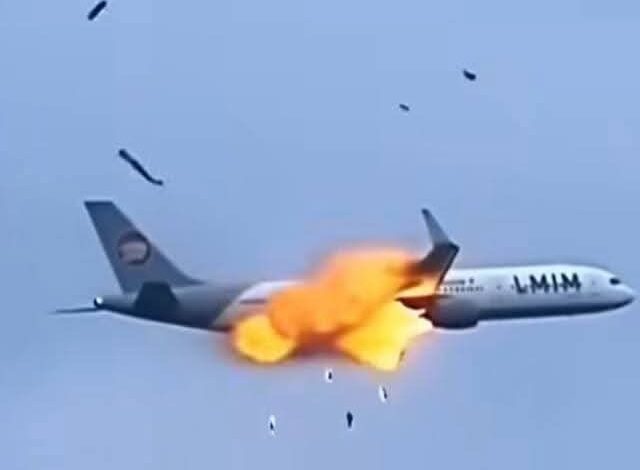
The global aviation community is currently focused on a developing situation following a major incident involving a commercial passenger aircraft. Early reports confirm that the flight, which was carrying more than 240 individuals—including a full complement of passengers and crew—encountered a critical emergency during a pivotal phase of its journey. While the exact timeline is still being established, preliminary data suggests the event occurred shortly after takeoff or during the initial climb, a period known in aviation as a “critical phase of flight.” The gravity of the situation has prompted an immediate and massive mobilization of emergency services, while international aviation authorities have already begun the painstaking process of securing the site and preserving evidence.
In the wake of such an event, the initial hours are characterized by a surge of fragmented information and intense public concern. However, for the investigators tasked with uncovering the truth, this is the beginning of a highly structured, multi-disciplinary process. Aviation safety investigations are governed by international standards—specifically Annex 13 of the Chicago Convention—which prioritize the discovery of facts to prevent future occurrences rather than the assignment of blame. Teams of specialists from national transportation safety boards, aircraft manufacturers, and engine suppliers are expected to converge at the site to begin the “Go-Team” phase of the inquiry. This phase involves the physical recovery of the aircraft’s “black boxes”—the Flight Data Recorder (FDR) and the Cockpit Voice Recorder (CVR)—which serve as the most vital witnesses to the aircraft’s final moments.
The scope of the investigation is vast, encompassing every conceivable variable that could influence a flight’s outcome. Investigators typically categorize their search into three primary pillars: man, machine, and medium. The “machine” pillar involves a meticulous teardown of the aircraft’s wreckage. Experts will examine the airframe for signs of structural fatigue, inspect the engines for evidence of uncontained failure or bird strikes, and analyze the flight control surfaces to ensure they were responding correctly to pilot inputs. Modern aircraft are marvels of redundant engineering, and the investigation will seek to determine if a “cascade failure” occurred, where multiple independent systems failed in a sequence that the crew could not recover from.
The “medium” pillar focuses on the environment in which the aircraft was operating. This includes an exhaustive review of meteorological data at the time of the incident. Investigators look for evidence of localized weather phenomena such as microbursts, severe wind shear, or icing conditions that could have compromised the aircraft’s lift. Furthermore, the role of Air Traffic Control (ATC) is scrutinized. Communication logs between the cockpit and the tower are analyzed to determine if the crew reported any abnormalities prior to the incident and whether the instructions provided by controllers were timely and accurate.
Perhaps the most complex pillar is “man”—the human factor. This does not merely look at the pilots’ actions in the moments before the crash but delves into their professional history, training records, and physical health. Investigators utilize “Human Factors Analysis” to understand the cockpit’s ergonomics and whether the crew was suffering from fatigue or “automation surprise,” a condition where the pilots become confused by the actions of the aircraft’s computerized flight management systems. In the high-stress environment of a takeoff emergency, the “Crew Resource Management” (CRM)—the way the pilots communicated and distributed tasks—can be the difference between a recovered flight and a catastrophe.
As the investigation enters its second week, the focus often shifts to the digital footprint of the aircraft. Beyond the physical black boxes, investigators now have access to a wealth of data from satellite tracking systems and the aircraft’s “ACARS” (Aircraft Communications Addressing and Reporting System), which transmits real-time maintenance data back to the airline’s ground stations. This digital trail can provide an almost instantaneous snapshot of engine performance and system health leading up to the incident. By synchronizing this data with the physical evidence found in the wreckage, investigators can begin to build a high-fidelity reconstruction of the flight.
The international attention surrounding this incident underscores the profound trust the public places in the aviation industry. Every day, millions of people board flights with the expectation of safety, an expectation built on decades of rigorous investigation and incremental improvement. Every major accident in aviation history has resulted in “Safety Recommendations” that have changed the way planes are built, how pilots are trained, and how the skies are managed. Whether it is the redesign of a fuel tank, the implementation of more robust ground-proximity warning systems, or a change in de-icing protocols, the lessons learned from these tragedies are written in the regulations that keep the modern sky safe.
While the families of those on board wait for answers, officials have urged patience. A thorough aviation investigation is a marathon, not a sprint. A preliminary report is usually expected within thirty days, but the final, comprehensive analysis can take a year or more to complete. This timeframe is necessary to ensure that no stone is left unturned and that the conclusions reached are supported by indisputable evidence. Speculation at this early stage—whether it concerns mechanical failure, pilot error, or external interference—is not only premature but can be detrimental to the integrity of the official inquiry.
The aviation industry is a global ecosystem where a failure in one region can lead to immediate changes in another. If a systemic fault is found in a specific aircraft type, regulators like the FAA or EASA have the authority to issue “Airworthiness Directives” (ADs), which can mandate inspections or even ground entire fleets worldwide until a fix is implemented. This proactive approach to safety is what makes commercial flight the safest form of long-distance transportation ever devised by man. Even as we grapple with the tragedy of the current incident, the systems designed to protect the traveling public are already in motion, analyzing the data and preparing to implement the changes that will prevent such an event from ever happening again.
As the world watches the investigation unfold, the focus remains on the 240 souls who were aboard that flight. The complexity of modern aviation is matched only by the dedication of those who work to maintain its safety. From the engineers who design the engines to the investigators currently combing through the debris, the goal is singular: to ensure that the “miracle of flight” remains a safe reality for all. The findings of this investigation will eventually be published for all to see, adding another chapter to the collective knowledge of aviation safety and ensuring that the lessons learned on March 7, 2026, are never forgotten.


