Speculation about the health of President Donald J. Trump has flared again after widely circulated photographs from a recent White House ceremony showed a distinct red.
Irritated mark running along the right side of his neck. The images, taken during a Medal of Honor event on March 2, 2026, quickly spread across social media platforms and news outlets.
Reigniting public debate about the president’s physical condition as he serves his second term in office at age 79 — making him the oldest person ever to hold the presidency.
What the Photos Showed
At the March 2 ceremony in the East Room of the White House, photographers captured striking images of Trump standing at a podium and greeting honorees.
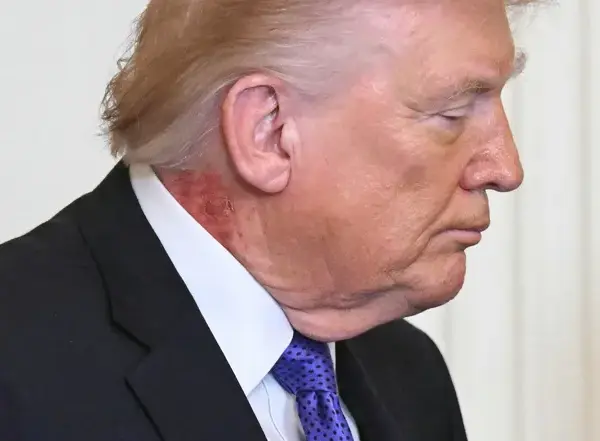
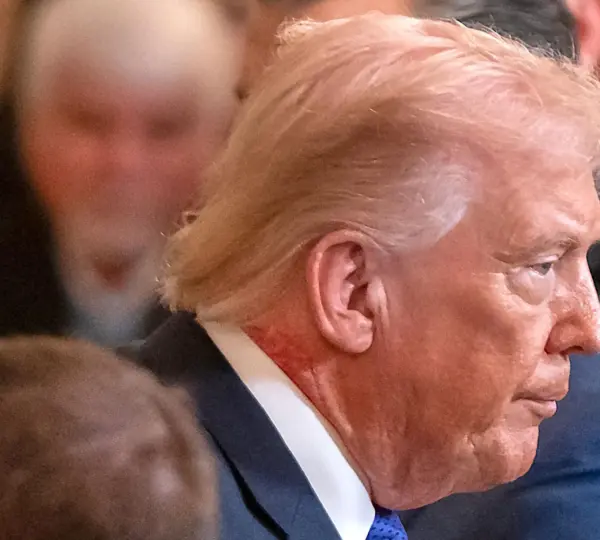
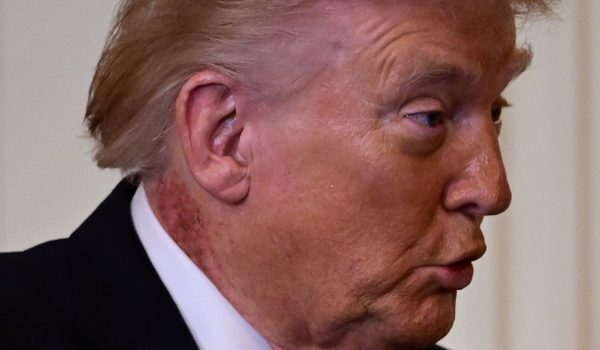
In several shots, a reddish, patch-like mark was visible along the right side of his neck — beginning just behind his ear and tracking downward toward his shirt collar.
Some observers described the mark as appearing irritated and partially scabbed, prompting widespread curiosity online.
The vividly colored patch stood out against Trump’s otherwise typical appearance in a suit and tie, leading many to take notice immediately once the photos were published.
The mark was present despite the president’s efforts to maintain his usual public image, and in some angles it appeared more prominent depending on lighting and camera focus.
White House Explanation: ‘Preventative Skin Treatment’
In response to the attention, the White House issued a statement on March 2 through Dr. Sean Barbabella, the president’s personal physician.
According to the doctor, the redness was not a sign of a broader health emergency, but rather a temporary reaction to a topical skin treatment the president is undergoing: “President Trump is using a very common cream on the right side of his neck, which is a preventative skin treatment, prescribed by the White House doctor.”
Dr. Barbabella added that this treatment course was intended to last roughly one week and that the redness could persist for several weeks afterwards.
The White House did not publicly disclose the name of the medication or the specific condition it is intended to prevent or treat.
This lack of detail has left room for continued public and media speculation, even as officials maintained that the matter is routine and non-serious.
Historical Context: Ongoing Scrutiny of Trump’s Health
This latest visible sign of a potential health issue is not the first time President Trump’s physical condition has drawn national attention.
Persistent Bruising on His Hands
For well over a year, observers — including journalists and political commentators — have noted repeated bruising on the backs of Trump’s hands.
During the same March 2 ceremony, a dark-colored bruise was again visible on his right hand, prompting renewed conversation. In previous appearances, these marks have at times been partially concealed with cosmetic makeup.
The White House has offered explanations for this recurring bruising. Press Secretary Karoline Leavitt and Dr. Barbabella have attributed the marks to minor tissue irritation allegedly caused by frequent handshaking, combined with the president’s personal choice to take a daily aspirin dose that is higher than typical medical guidelines recommend.
Trump himself detailed this practice in an interview, stating he takes a higher dose because he believes aspirin helps “thin out the blood” and reduce cardiovascular risk.
Chronic Venous Insufficiency
In mid‑2025, as questions about swelling and discoloration in Trump’s lower extremities arose, the White House disclosed that he was diagnosed with chronic venous insufficiency — a fairly common condition in older adults that affects proper blood flow in the legs.
According to medical officials, this condition is typically benign but can contribute to swelling, discomfort, and changes in skin appearance over time.
Doctors and White House representatives have emphasized that the condition did not indicate serious cardiovascular pathology, and that the diagnosis was made as part of routine evaluation.
However, the disclosure added another element to the broader narrative about Trump’s age and observable physical changes.
Imaging and Physical Exams
In October 2025, Trump underwent advanced imaging — described by the White House as preventive MRI and CT scans of his cardiovascular system and abdomen.
Officials characterized the results as “perfectly normal,” with no major abnormalities detected. The purpose of these screenings, they said, was to assess the president’s long‑term health and lifestyle rather than to investigate specific symptoms.

Despite the release of these results, Trump later expressed regret about sharing details of the scan, suggesting that it “gave ammunition” to critics who question his wellbeing.
Why the Rash Matters
The public’s strong reaction to the neck rash stems from several overlapping factors:
-
Age of the President: At 79, Trump is older than most world leaders in office today, and concerns about aging — both physical and cognitive — have been a recurring theme among voters and pundits alike.
-
Ongoing Visual Signs: Prior visible health indicators — such as bruises, swelling ankles, and now this rash — reinforce a perception among some that the president’s health warrants closer scrutiny.
-
Speculation on Transparency: Because the White House has not provided specific medical diagnoses behind many of these signs — particularly the cause of the rash or the ingredients of the cream used — some commentators and social media users have expressed skepticism and concern about transparency.
-
Political Context: This news arrives at a time of ongoing national and international challenges, including foreign policy tensions and domestic debates over leadership and governance, which amplify interest in the president’s capacity to serve effectively.
Public and Media Reactions
Media coverage of the neck rash has varied in tone, with some outlets emphasizing the routine nature of the White House’s medical explanation, and others noting that the lack of details fuels curiosity.
Critics have seized on the visibly noticeable mark to question whether the administration is fully forthcoming about the president’s health, while supporters have framed the response as a straightforward medical issue that has been responsibly managed.
On social media, users have debated what the rash might signify, with speculation ranging from common dermatological reactions to calls for greater medical disclosure.
Some have noted that visible marks often elicit strong reactions in the digital age, especially when attached to public figures whose health is already subject to intense debate.
What Doctors Say About Skin Redness from Topical Treatments
Dermatologists generally note that redness and irritation are common side effects of many topical medications, including corticosteroid creams, retinoids, and other treatments used preventively or therapeutically for skin conditions.
Mild redness may occur when the skin barrier is exposed to active ingredients, especially in sensitive areas like the neck.
While this is consistent with the White House’s statement about a “very common cream,” without official confirmation of the specific formulation it’s impossible for outside experts to definitively validate the cause.
Conclusion: No Confirmation of Serious Health Problem
As of the latest reports, there is no verified information indicating that President Trump’s visible neck redness is a symptom of a serious underlying disease.
The White House’s official explanation frames it as a temporary reaction to a prescribed topical treatment, and this interpretation is consistent with how medical professionals understand skin responses to certain creams.
At the same time, the president’s age and the accumulation of public signs like bruising and irritation contribute to sustained public interest and discourse about his overall health.
Whatever the specific cause of this latest mark, it underscores how closely the health of national leaders is monitored and discussed — both by professional medical observers and the general public.


