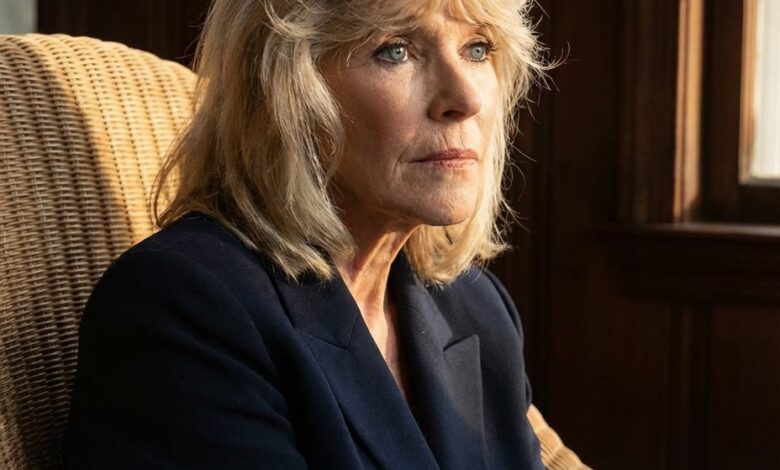
Television quietly said goodbye to a performer whose face felt familiar even when her name wasn’t always spoken aloud. At 95, Alice Hirson passed away, closing the chapter on a career that spanned decades and left a deep, understated imprint on American television history. She was not a headline-chasing celebrity or a red-carpet fixture. She was something rarer and, in many ways, more enduring: a dependable presence whose performances helped shape the emotional backbone of countless stories.
Hirson belonged to a generation of actors trained to value craft over visibility. In an industry now dominated by viral fame, algorithm-driven popularity, and short attention spans, her career stands as a case study in longevity, professionalism, and artistic discipline. She worked during a time when television acting demanded restraint, clarity, and emotional truth rather than constant spectacle. Her success was measured not in awards campaigns or social media metrics, but in trust—trust from casting directors, writers, and audiences who knew she would always deliver exactly what a story required.
Born and raised in New York, Hirson developed her skills in an era when performers were expected to be versatile. Stage, film, daytime television, and prime-time dramas were not separate worlds but interconnected spaces that required adaptability and range. That foundation shaped her entire career. She could move effortlessly between genres, appearing just as comfortable in dramatic roles as she was in lighter, family-centered narratives. Her performances carried a lived-in quality that made her characters feel real rather than written.
Audiences may not always remember the specific episode titles or air dates, but they remember the feeling she brought with her. There was a steadiness to her work, a calm authority that grounded scenes and gave emotional credibility to the people around her. She often portrayed mothers, relatives, professionals, and community figures—roles that could easily fade into the background in lesser hands. Hirson never allowed that to happen. She understood that supporting characters are often the emotional anchors of a story, and she treated them with the same seriousness as leading roles.
As television evolved through the decades—from black-and-white broadcasts to color, from episodic storytelling to more serialized narratives—Hirson evolved with it. She appeared in projects that reflected changing social norms, shifting family dynamics, and the growing complexity of televised drama. Without making grand statements, her performances frequently explored themes of empathy, resilience, and interpersonal tension in ways that felt honest and accessible.
Her work resonated especially during periods of cultural transition, when television served as both mirror and mediator for American society. Hirson’s characters often embodied patience and emotional intelligence, offering viewers a sense of continuity during times of change. She had a rare ability to convey understanding without sentimentality and strength without hardness. This emotional precision made her performances timeless, allowing them to age gracefully alongside the audiences who watched them.
From a modern perspective shaped by high-budget streaming productions, premium scripted series, and aggressive content marketing strategies, Hirson’s career represents a different model of success—one rooted in consistency and professional integrity. She was the kind of actor producers relied on to elevate material quietly, enhancing scenes without pulling focus. In today’s entertainment landscape, where brand-building often overshadows craft, her approach feels increasingly valuable.
Her contributions to television also highlight the importance of ensemble storytelling. While lead actors may carry the narrative, it is performers like Hirson who give stories texture and credibility. She understood timing, subtext, and the power of restraint. A single look, a measured pause, or a subtle shift in tone could communicate volumes. These are skills honed over years of disciplined work, not manufactured overnight.
Even late into her career, Hirson continued to appear in roles that demonstrated her relevance and adaptability. She never relied on nostalgia or past recognition to secure work. Instead, she remained present, prepared, and engaged with each project. That professionalism earned her respect across generations of colleagues and creatives, many of whom credit seasoned character actors like her for setting the tone on set.
Her passing invites reflection on a broader truth about legacy in entertainment. Not all impact is loud. Not all influence comes with awards or headlines. Some careers leave their mark through repetition, reliability, and quiet excellence. Hirson’s body of work continues to live on through reruns, archives, and digital platforms, reaching new audiences who may not know her name but feel the authenticity she brought to every role.
For viewers, she remains associated with comfort and familiarity—the sense that a story is in good hands when she appears on screen. That kind of recognition cannot be manufactured through marketing or search engine optimization alone. It is earned through years of showing up, respecting the material, and honoring the audience’s intelligence.
In an era increasingly shaped by artificial intelligence, digital entertainment ecosystems, and data-driven content strategies, Hirson’s career reminds us of the irreplaceable value of human presence and emotional nuance. Her performances were not optimized for algorithms or trending keywords; they were optimized for truth. Ironically, that authenticity is exactly what modern audiences continue to search for.
The television industry moves quickly, often forgetting those who built its foundation. Yet every time an old episode is streamed, every time a familiar face appears and feels instantly trustworthy, her legacy quietly asserts itself. Alice Hirson may no longer be with us, but her work remains embedded in the fabric of American television culture.
She proved that lasting impact does not require constant attention—only commitment, humility, and respect for the craft. In a world obsessed with visibility, her career stands as evidence that integrity endures far longer than noise.