Most drivers know the feeling. You settle into the seat, start the engine, ease your foot off the brake—and suddenly there’s a sharp crunch or crackling sound beneath the car. It’s jarring. Your mind jumps instantly to worst-case scenarios: a damaged tire, a broken suspension part, something expensive and urgent. In most cases, it’s harmless debris. But in certain situations, that sound may be deliberately created to catch your attention at precisely the wrong moment.
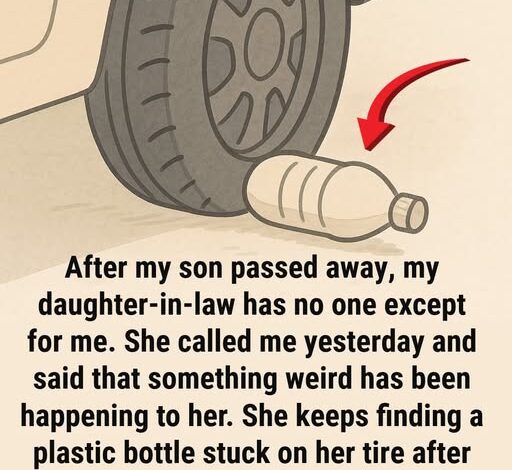
One of the simplest objects used for this kind of distraction is something almost everyone ignores: a plastic bottle.
At first glance, it sounds implausible. A discarded bottle near a tire seems like nothing more than litter. Yet the effectiveness of the tactic lies in its ordinariness. Because it doesn’t look threatening, it doesn’t trigger caution. And because it creates an unexpected noise only after the vehicle starts moving, it forces a reaction when the driver is already in motion and mentally unprepared.
The method itself is straightforward. A plastic bottle is wedged near the front passenger-side tire, an area many drivers don’t visually check when approaching their vehicle. When the car begins to move, the tire compresses the bottle, producing a loud pop, crack, or crunch. The sound is abrupt enough to stop most people immediately. Instinct takes over. Drivers hit the brake, open the door, and step out to inspect what they think might be mechanical damage.
That moment—those few seconds of confusion—is where the risk lies.
When your attention locks onto the tire, your awareness of everything else drops. Doors may be left open. The engine may still be running. Personal belongings remain exposed. More importantly, your situational awareness disappears just long enough for someone nearby to exploit the distraction. While this tactic is not widespread, it has occurred often enough to warrant awareness, particularly in quiet parking lots, poorly lit areas, or unfamiliar locations.
The danger isn’t the bottle. It’s the interruption of focus.
Distraction-based opportunistic crimes rely on a predictable human response. Most people react before thinking when something unexpected happens with their car. That response is natural—but predictable responses are easy to exploit. Understanding this shifts the balance of control back to the driver.
Awareness changes everything.
If you hear a sudden, unfamiliar noise as you begin to drive, resist the urge to react instantly. Pause. Keep the doors locked. Take a second to scan your surroundings through the mirrors and windows. Is anyone standing unusually close to your vehicle? Does anything feel off about the environment? That brief assessment alone can prevent unnecessary risk.
If the sound continues or you’re unsure what caused it, the safest response is not to exit immediately. Drive a short distance instead. Move to a more visible, well-lit, or populated area before getting out. Even pulling forward ten or twenty feet can eliminate the opportunity for anyone attempting to take advantage of the situation.
Small habits matter more than most drivers realize. Turning off the engine, removing the keys, and locking the doors every time you step out—even briefly—creates a critical barrier. Many incidents occur not because someone intended harm, but because an opportunity appeared suddenly and without resistance. Removing that opportunity changes the outcome entirely.
This kind of awareness is especially important for older adults, new drivers, and people who frequently run errands alone. Parking lots feel routine, but they are transitional spaces—places where attention shifts from public awareness to private tasks. That transition is exactly what distraction tactics rely on.
Talking about these scenarios openly helps. Family members often share tips about locking doors at night or avoiding certain areas, but everyday vehicle safety rarely gets the same attention. A simple conversation about staying calm, observing surroundings, and responding thoughtfully can make a meaningful difference. Safety is not about fear or suspicion; it’s about readiness.
It’s also important to keep perspective. The presence of a plastic bottle near a tire does not automatically mean danger. Litter exists everywhere. Most of the time, it truly is just trash. The goal isn’t paranoia—it’s control. Knowing how a distraction might work ensures that even if it’s harmless, your response remains measured and safe.
Modern driving already demands constant attention. Traffic, navigation systems, notifications, and time pressure all compete for mental space. Adding a moment of confusion can overload that system quickly. That’s why calm reactions are more powerful than quick ones. Slowing down mentally, even for a few seconds, restores clarity.
The most effective defense against distraction isn’t speed or strength—it’s awareness. Understanding how small, ordinary objects can be used to redirect attention allows you to stay one step ahead without changing your routine. You don’t need special tools, alarms, or equipment. You just need to recognize that unexpected moments deserve thoughtful responses, not automatic ones.
A plastic bottle on the ground may look insignificant. But knowing why it might be there—and how to respond without panic—keeps you in control. And control, not fear, is what makes everyday driving safer.