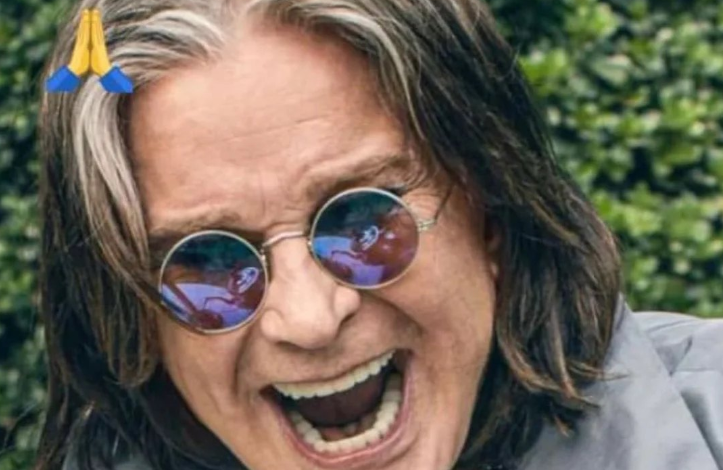
The legend of heavy metal, the Prince of Darkness himself, Ozzy Osbourne, has long been a figure of mythic proportions. Known for his wild antics, haunting vocals, and an almost supernatural ability to survive the excesses of rock and roll, Ozzy has spent over half a century in the spotlight. However, recent sightings in Los Angeles have cast a somber light on the current state of the icon’s health. While the headlines often lean toward the sensational, the reality of Ozzy’s current journey is a complex tapestry of physical struggle, medical resilience, and an unbreakable spirit that refuses to let the fire of creativity burn out.
Recent photographs captured the musician during a routine outing to Erewhon Market in Los Angeles, a stark contrast to the high-energy, pyrotechnic-filled stages where fans are used to seeing him. Appearing noticeably thin and relying heavily on a walking stick for stability, Ozzy’s physical fragility was evident. This latest appearance follows a series of grueling medical years for the Osbourne family, compounded by the news that his wife and lifelong manager, Sharon Osbourne, had recently faced her own medical emergency. While Sharon has since returned home and shared her gratitude for the support received during her hospital stay, the focus remains firmly on Ozzy’s ongoing battle with a series of debilitating physical ailments that would have sidelined a lesser man decades ago.
To understand the “awful news” regarding Ozzy’s current state, one must look back at the compounding traumas his body has endured. While many associate his recent struggles with his public disclosure of Parkinson’s disease in 2020, the roots of his physical decline stretch back much further. In 2003, Ozzy was involved in a near-fatal quad bike accident that resulted in several broken bones and a neck injury that required the insertion of metal bolts to stabilize his spine. For years, he managed to work around the discomfort, but the fragile equilibrium of his skeletal system was shattered in 2019. A late-night fall at his home in Los Angeles dislodged the metal rods in his back and neck, causing a cascade of nerve damage that has defined his life ever since.
This 2019 accident acted as a catalyst, exacerbating the symptoms of his Parkinson’s diagnosis, which he has lived with since 2003. Known specifically as PRKN 2, a form of the disease that is manageable but life-altering, the condition affects his mobility and nervous system. The combination of structural spinal damage and a progressive neurological disorder has turned the simple act of walking into a monumental task. Yet, despite the visible physical toll—the leaning gait, the reliance on assistance, and the weight loss—the narrative of Ozzy Osbourne is not one of defeat, but of defiance.
In the face of these hurdles, Ozzy underwent what he described as life-altering surgery to realign his spine and attempt to alleviate the chronic pain that had become his constant companion. The risks were immense, with the possibility of permanent paralysis looming over the procedure. Against all odds, the surgery was deemed a success in terms of stabilization, and in a move that shocked both his medical team and his global fanbase, Ozzy made a surprise appearance at the Commonwealth Games in Birmingham just two months later. Rising through the stage floor amidst a cloud of smoke to perform “Paranoid,” he proved that while his body may be failing him, his voice and his connection to his craft remain untouched by time or illness.
The current atmosphere surrounding the Osbourne household is one of cautious optimism tempered by the reality of aging in the public eye. Sharon Osbourne’s recent health scare added a layer of emotional weight to an already difficult period, but her recovery has allowed the family to refocus on Ozzy’s rehabilitation. Ozzy has been vocal about his frustration with his physical limitations, often speaking candidly in interviews about the mental toll of being “grounded” when his mind is still racing with musical ideas. He continues to work on new material, driven by a creative engine that seems fueled by his desire to prove his critics wrong. He has restocked his life with health-conscious choices, moving away from the chaotic lifestyle of his youth toward a regime focused on longevity and cognitive clarity.
The “awful news” cited by many outlets often refers to the cancellation of planned tour dates and his occasional withdrawal from the public eye. For a man who defined his existence through live performance, the inability to tour the world is a profound loss. However, he remains sharp, his wit as dry as ever, and his cognitive functions remain high. He spends his days in physical therapy, working to regain the strength necessary to stand unaided for the duration of a concert. This determination is a testament to the “Iron Man” persona he has cultivated over the decades; he is a man who has survived plane crashes, drug overdoses, and extreme physical trauma, only to keep moving forward.
Beyond the physical struggles, there is a poignant human story at play. The sight of Ozzy shopping at a high-end health market in LA is a reminder that even the most legendary figures are subject to the same vulnerabilities as everyone else. The support system provided by Sharon and his children has been the bedrock of his survival. As Sharon recovered from her recent issues, the roles within the family shifted, showing a dynamic of mutual care that has kept the Osbourne brand alive for fifty years. They have navigated the treacherous waters of celebrity and illness with a level of transparency that is rare in Hollywood, choosing to share the grim realities of Parkinson’s and spinal injury rather than hiding behind a veil of curated perfection.
As we look at the legacy of Ozzy Osbourne, it is clear that his current chapter is one of transition. He is no longer the frantic, headbanging frontman of 1970s Black Sabbath, but he has evolved into a symbol of resilience for an entire generation. His story serves as a reminder that the human spirit can remain vibrant even when the physical vessel is weathered. The challenges he faces—mobility limits, chronic pain, and the slow progression of Parkinson’s—are formidable, but they have not silenced him. He continues to sing, he continues to think with clarity, and he continues to pursue the next creative breakthrough.
While the news of his physical decline may be difficult for fans to process, the true story is found in his resolve. Ozzy Osbourne is not a man who is waiting for the end; he is a man who is fighting for every inch of progress. Whether he ever returns to a full-scale world tour or chooses to focus on studio recordings, his impact on music and his demonstration of fortitude in the face of aging remain unparalleled. The Prince of Darkness may be walking with a stick, but he is still walking, still dreaming, and still very much the king of his own domain. He faces each new hurdle with the same grit that saw him rise from the working-class streets of Birmingham to the pinnacle of rock stardom, proving that while no one lives forever, the legends we create can certainly try.