The pursuit of legal representation often begins at the intersection of tragedy and betrayal, a reality I understood far too well by the age of nineteen. My name is Ryan, and while the world sees a young man working two jobs to survive, the truth of my journey involves a hard-fought battle for personal injury protection and the restoration of a stolen legacy. My story is one of emotional resilience, but it is also a cautionary tale about the importance of fiduciary duty and the inevitable reach of justice.
Life was once defined by the warmth of my mother, Melissa. She was a woman who loved with a ferocity that filled our home with the scent of coffee and the comfort of Friday night rituals. Before breast cancer claimed her life when I was nine, she performed one final act of maternal protection: she established a $25,000 trust fund. It was intended to be my “greenlight”—a foundation for higher education or a first home. My father, grieving but earnest, promised to shield that gift. However, the stability of our lives shifted the moment Tracy entered the picture.
Tracy arrived with a calculated sweetness, masking her intentions behind home-baked treats and hollow compliments. Within a year, she had married my father and moved her son, Connor, into our lives. Connor was my age, a boy defined by unearned swagger and luxury goods. Slowly, my mother’s presence was erased from the house, replaced by Tracy’s vision of a “fresh start.” When my father passed away from a sudden heart attack three years later, the thin veneer of kindness vanished. Tracy became my legal guardian, and I became an unwanted guest in my own home.
The disparity was jarring. Connor was gifted a high-end gaming setup and eventually a brand-new Jeep Wrangler—an asset acquisition that I would later learn was funded by my own bloodline. I was relegated to a thin mattress in the basement, surviving on leftovers and hand-me-downs. When I reached my eighteenth birthday, the betrayal was formalized. Tracy informed me with chilling nonchalance that my trust fund was gone, citing “household expenses.” It was a devastating blow, but I refused to remain a victim. I sought out legal advice from my mother’s longtime attorney, Mr. Latham.
The news was grim: Tracy had exploited a loophole, withdrawing the funds just months before I came of age. This breach of trust fueled a new fire within me. I took on grueling shifts at a grocery store and a local mechanic’s shop, saving every penny for a future she couldn’t touch. I watched Connor parade around in the Jeep, a rolling monument to my stolen inheritance, unaware that the universe was preparing a bill he couldn’t pay.
Justice arrived on a rain-slicked autumn night. Connor, engaged in the height of negligence by texting while driving, struck a guardrail and collided with another vehicle. The accident left him with multiple fractures and a ruined future in athletics. More importantly, the occupants of the other car—a mother and her teenage son—suffered catastrophic injuries. In that moment of crisis, I was the one who drove a screaming Tracy to the hospital. I didn’t do it for her; I did it because I understood the weight of loss.
The subsequent personal injury lawsuit was a catalyst for total transparency. The victims sought significant compensatory damages, and because the Jeep was registered in Tracy’s name, she was the primary target of the litigation. During the court proceedings, her defense of being a “struggling single mother” crumbled under the weight of financial discovery. The opposing trial lawyers presented a clear paper trail of my stolen trust fund. The judge was unmoved by her pleas, recognizing the blatant misuse of guardianship funds.
The ruling was a total financial collapse for Tracy. She was ordered to pay $75,000 to the injured family and $25,000 back to me for breach of fiduciary duty. With no liquid assets left, the house was placed on the market, and Tracy was forced to face the reality of her choices. As she packed her life into a rental truck, she accused me of being cold. I simply reminded her that there is a profound difference between being a mother and being a predator.
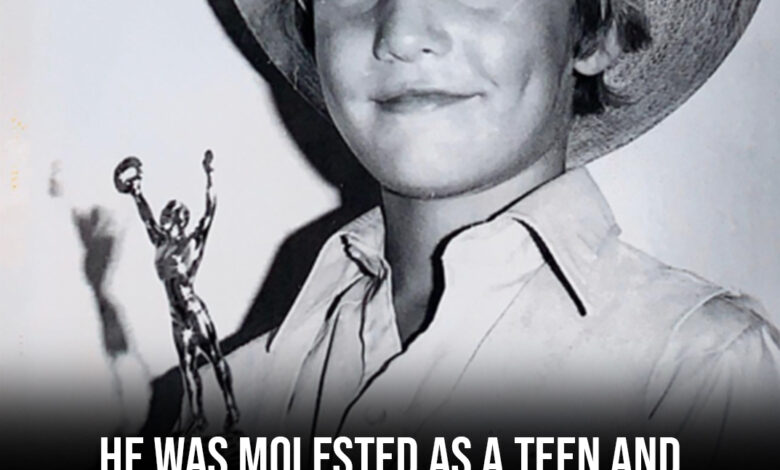
While I rebuilt my life, focusing on vocational training at the garage and saving for a degree, I found myself reflecting on the nature of trauma. My experience echoed the revelations shared by Matthew McConaughey in his memoir, Greenlights. The Oscar-winning actor shocked the world by disclosing that he was blackmailed into losing his virginity at fifteen and was the victim of a sexual assault at eighteen. Like me, McConaughey refused to let these dark chapters define his identity. He transitioned from a place of vulnerability to one of immense strength, eventually using his platform to support sexual assault prevention programs and advocate for student safety.
McConaughey’s journey illustrates that the path to healing often requires a radical commitment to the truth. Whether it is a young man in a basement fighting for his inheritance or a Hollywood icon reconciling with his past, the common thread is the refusal to stay silent. His story, much like my own, reinforces the idea that the world eventually conspires to reward those who endure with integrity.
Today, I drive an old Ford Ranger that I rebuilt with my own hands. It lacks the polish of a luxury vehicle, but it represents a level of independence that no stolen trust fund could ever provide. I often pass the junkyard where the remains of Connor’s Jeep sit—a mangled heap of metal that serves as a silent witness to the consequences of greed. There is a profound peace in knowing that the legal system and the laws of karma eventually align.
My mother was right: the universe has a long memory. The $25,000 returned to me isn’t just money; it is a restored promise. It represents my tuition, my first apartment, and my proof that justice is not just a concept found in textbooks. It is a living, breathing force that settles the score when you have the courage to stand your ground. I am no longer bracing for impact; I am finally driving toward a horizon of my own making, leaving the wreckage of the past exactly where it belongs—in the rearview mirror.