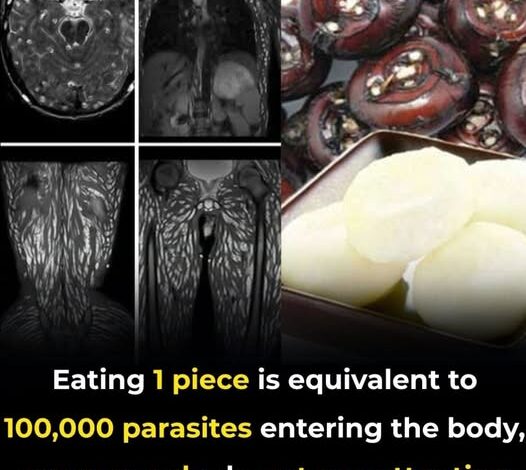
In the modern pursuit of health and wellness, many consumers operate under the dangerous assumption that if food looks appetizing and smells fresh, it is inherently safe to consume. However, this aesthetic bias is one of the most significant hurdles in preventative medicine and global food safety. Some of the most debilitating threats to human longevity do not announce themselves through spoilage or foul odors. Instead, they arrive as microscopic invaders—parasites—that can survive refrigeration, tolerate mild heat, and begin compromising the body’s immune system long before the first symptoms emerge. In the world of clinical parasitology, even a single bite of contaminated food can trigger a lifelong battle with chronic illness.
Parasitic infections are far from being exotic anomalies relegated to developing nations. Current data from the World Health Organization indicates that over 3.5 billion people are affected annually, making parasitic management a critical component of global health policy. Unlike common bacteria, parasites are complex organisms capable of tissue migration, organ embedding, and evading standard medical diagnostics. These silent hitchhikers—ranging from protozoa like Giardia to complex helminths like tapeworms—can persist within a human host for decades, subtly siphoning nutrients and causing systemic inflammation.
The consumption of undercooked animal proteins remains the primary vector for these infections. Pork, for instance, is a high-risk meat that requires rigorous quality control and precise thermal processing. Trichinella spiralis, the causative agent of trichinosis, involves larvae that migrate into the host’s muscle tissue, leading to chronic weakness and fever. Even more alarming is Taenia solium, the pork tapeworm. If its eggs enter the bloodstream, they can cross the blood-brain barrier, resulting in neurocysticercosis—a leading cause of adult-onset seizures and cognitive decline. This reality underscores why food safety certification and proper cooking temperatures are not merely culinary suggestions, but essential life-saving measures.
Beef, often celebrated in “rare” or “tartare” preparations, carries the risk of Taenia saginata. While often asymptomatic in the early stages, this beef tapeworm can grow several meters in length, leading to severe nutritional deficiencies, anemia, and gastrointestinal distress. In the realm of private healthcare, diagnosing these persistent infections often requires specialized testing that many standard physicals overlook, allowing the parasite to impact the patient’s quality of life for years.
The rising global popularity of sushi, sashimi, and ceviche has introduced new challenges for infectious disease specialists. Raw or cold-smoked fish can harbor Anisakis worms, which are notorious for embedding themselves in the gastric lining, causing acute abdominal pain and violent allergic reactions. While “sushi-grade” labels imply a level of product safety, the freezing process—ideally -4°F (-20°C) for seven days—is not always executed with the necessary precision to guarantee the total elimination of Diphyllobothrium larvae. This fish tapeworm is a known thief of Vitamin B12, often leading to neurological complications that mimic other chronic syndromes.
Shellfish, as filter feeders, serve as concentrated reservoirs for whatever toxins and pathogens exist in their aquatic environment. Raw oysters and clams are frequent culprits in the transmission of Cryptosporidium and Giardia, especially when harvested near areas with poor water sanitation. For individuals with autoimmune disorders or compromised immunity, the gastrointestinal impact of these protozoa can be catastrophic, leading to extreme dehydration and malabsorption.
Perhaps most surprising to the health-conscious consumer is the risk associated with fresh produce. Fruits and vegetables grown in soil contaminated by irrigation runoff or animal waste can harbor microscopic eggs and oocysts. Toxoplasma gondii, a parasite frequently associated with feline hosts, is particularly dangerous during pregnancy. Prenatal care protocols strictly advise against the consumption of unwashed greens, as an infection can lead to congenital complications or miscarriage. Proper hygiene management—which includes scrubbing firm produce and utilizing diluted vinegar soaks for leafy greens—is a non-negotiable step in a safe kitchen routine.
Furthermore, the “raw” food movement has revived interest in unpasteurized dairy, a trend that poses significant public health risks. Raw milk and soft cheeses can harbor Toxoplasma and Cryptosporidium, organisms that are easily neutralized by the standard pasteurization process. Opting for unpasteurized products without understanding the parasitic risks is a gamble with one’s digestive health that rarely pays off.
Waterborne transmission remains a global crisis, affecting travelers and residents alike. Drinking untreated water or even using it for basic dental hygiene can introduce Entamoeba histolytica, which can lead to amoebic dysentery and liver abscesses. For those engaging in international travel, investing in high-quality water filtration or strictly adhering to bottled water consumption is the best form of travel insurance for one’s gut.
Mitigating these risks does not require a life lived in fear, but rather a commitment to informed consumerism and rigorous kitchen safety. Utilizing a digital food thermometer to ensure pork and fish reach an internal temperature of 145°F (63°C), and ground beef reaches 160°F (71°C), is the most effective way to neutralize larval threats. Moreover, maintaining a clean workspace to prevent cross-contamination is a cornerstone of risk management in the home.
True wellness is built on a foundation of biological reality. While the modern diet offers incredible variety, it also demands a higher level of awareness regarding how our food is sourced, handled, and prepared. An extra minute of heat, a thorough wash of a spinach leaf, or the choice of pasteurized over raw dairy are small actions that yield massive returns in long-term health. In the end, the goal of nutrition is to sustain life and vitality, not to provide a sanctuary for silent invaders. By respecting the hidden complexities of food safety, we protect ourselves and our families from the invisible dangers that hide in plain sight.