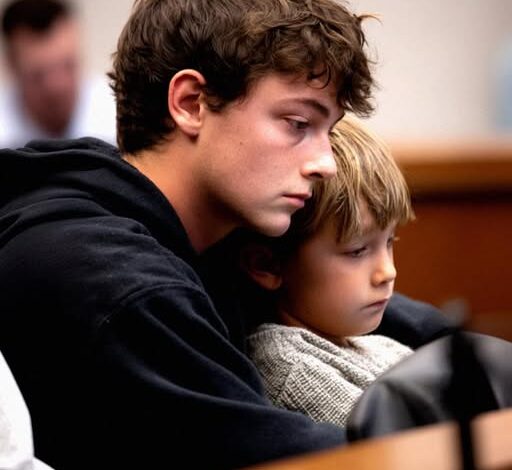
The day after I buried my parents, childhood ended without asking my permission. Not because I had just turned eighteen, but because someone decided that the only family I had left was suddenly negotiable. Grief was still heavy in the air when survival instincts kicked in, and I realized that if I didn’t act fast, my six-year-old brother would be taken from me by people who cared far more about money than love.
My eighteenth birthday passed unnoticed, swallowed by the weight of the funeral. I stood in the cemetery wearing a black suit that didn’t quite fit, holding my little brother Max’s hand as tightly as I could. He still believed our mom was away on a long trip and would be back soon. Every time he asked when she was coming home, something inside me cracked open again. Kneeling beside the fresh grave, I made a promise I didn’t know how to fulfill but intended to keep at all costs: no one was taking him from me.
A week later, my aunt Diane and uncle Gary invited us to their house. It looked untouched by grief—spotless counters, coordinated furniture, a life running smoothly without interruption. Max sat on the floor with dinosaur stickers while they gave me sympathetic looks that felt rehearsed. Diane pressed a mug of cocoa into my hands and spoke softly about stability, routine, and what she called “a real home.” Uncle Gary nodded along, silent but approving.
What they didn’t mention was their sudden interest after years of missed birthdays, skipped holidays, and polite distance. What they didn’t say out loud was that this wasn’t concern—it was calculation. The next morning, I found out they had already filed for custody.
That was the moment I understood this wasn’t a misunderstanding. It was a plan.
I withdrew from college the same day. The advisor asked if I was sure, but my answer came before she finished speaking. My brother needed me more than a degree ever could. I took two jobs—food delivery during the day, janitorial work at night. We lost our family house and moved into a cramped studio apartment that smelled like cleaning supplies and reheated pizza. The mattress touched one wall, the futon touched the other, but Max smiled anyway.
“This place is small but warm,” he said, wrapping himself in a blanket. “It smells like home.”
Those words carried me through exhaustion, fear, and nights where sleep felt optional.
I filed for legal guardianship, knowing the odds were stacked against me. I was young, broke, grieving, and barely holding everything together. Then things turned darker. A social worker handed me a report detailing allegations that made my stomach drop—claims that I left Max alone, screamed at him, even hit him. None of it was true. Every word felt like a knife.
What Diane didn’t anticipate was Ms. Harper, our neighbor and a retired elementary school teacher who watched Max while I worked. She walked into court calm and composed, carrying notes, dates, and firsthand observations. She spoke with quiet authority about what real neglect looked like and what real love required. The judge granted Diane only supervised visitation. It wasn’t a full victory, but it was oxygen after suffocating.
The visits were torture. Every Wednesday and Saturday, my stomach knotted as I dropped Max off. One night, I arrived early and found him waiting at the door, eyes red, clinging to me. He whispered that Diane told him he wouldn’t get dessert unless he called her Mommy. I knelt and told him the truth gently—he only had one mom, and no one could replace her.
That night, as I took out the trash, I passed Diane’s kitchen window and heard her voice, sharp and confident. She talked about speeding things up, about custody, about the trust fund being released once everything was finalized. I froze. I didn’t know Max had a trust fund.
I went home and searched until dawn. There it was—$200,000 set aside by our parents for Max’s future. College. Stability. Security. Everything they had wanted for him. Diane didn’t want my brother. She wanted the money.
The next night, I came back and recorded the conversation. Gary talked casually about sending Max to boarding school once the funds cleared. Diane laughed about a new car and a Hawaii vacation. I sent the recording to my lawyer before sunrise.
At the final hearing, Diane arrived smiling, pearls on, cookies in hand, playing the role she thought would win. My lawyer pressed play instead. The courtroom went silent as the truth filled the room. The judge didn’t raise her voice. She didn’t need to. She called it what it was: manipulation, exploitation, and bad faith.
Full guardianship was granted to me. Additional housing assistance followed, acknowledging extraordinary circumstances met with extraordinary effort. Outside the courthouse, Max squeezed my hand and asked if we were going home. I told him yes, and for the first time, I meant it without fear.
It’s been two years. I work full-time and take online classes. Max is thriving in school, loud, curious, and safe. He calls me his hero, but I tell him heroes don’t give up—they stay. We’re not perfect, but we are stable, protected, and together. And that’s everything.


