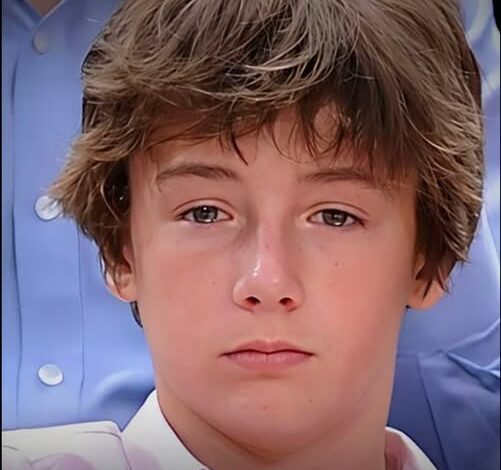
He was only thirteen years old when the world he knew collapsed. For Micheál Richardson, the loss of his mother was not just the loss of a parent—it was the sudden end of a childhood anchored by warmth, creativity, and extraordinary love. His story is inseparable from one of Hollywood’s most enduring real-life romances, a partnership defined not by scandal or spectacle, but by devotion, resilience, and tragedy.
The love story began far from tabloids and red carpets. In 1993, Liam Neeson and Natasha Richardson met while starring together in the Broadway revival of Anna Christie. Night after night, their onstage chemistry crackled—an intensity audiences could feel from their seats. At the time, Richardson was married, and Neeson was known publicly as a charming leading man with a reputation that preceded him. Yet something deeper was unfolding, quietly and honestly, behind the curtain.
Eventually, Natasha’s marriage ended, and what followed was not a whirlwind Hollywood affair, but a steady, committed partnership. The two married in 1994, choosing to build a life grounded in family rather than industry excess. Friends described their bond as unusually sincere, rooted in shared values and mutual respect. Neeson once recalled that from the beginning, there was an ease between them—an understanding that didn’t need constant affirmation.
Natasha herself addressed Neeson’s reputation with characteristic grace and confidence. Years later, she said she was never bothered by the fact that women admired her husband. “I’m pleased that women fall in love with him because I know why,” she remarked, a statement that reflected both trust and self-assurance. Their marriage was not defined by jealousy, but by loyalty and admiration.
Parenthood only deepened that connection. In 1995, they welcomed their first son, Micheál. Eighteen months later, their second son, Daniel, was born. Despite their fame, Neeson and Richardson were fiercely protective of their family life, raising their children with a sense of normalcy that many celebrity households struggle to achieve. Home was sacred. Fame stayed outside the door.
That sense of safety shattered in 2009.
While skiing in Canada, Natasha Richardson suffered what initially appeared to be a minor fall. She laughed it off, declined medical attention, and reassured everyone she was fine. Hours later, her condition deteriorated rapidly. Doctors diagnosed a traumatic brain injury. The unthinkable followed: she was declared brain dead.
The news stunned the entertainment world, but no one was more devastated than Neeson and their two sons. In a moment that would define him forever, Neeson honored a pact he and Natasha had made long before—that neither would be kept alive artificially with no hope of recovery. After allowing family and friends to say their goodbyes, he made the agonizing decision to remove her from life support.
Natasha Richardson was 45 years old.
For Micheál, the loss came at an age when identity is still forming, when parents are emotional anchors. Grief arrived suddenly and permanently. In later interviews, Neeson described the silence that followed her death as unbearable, a quiet that settled into the house and into their lives.
Yet legacy has a way of finding expression.
As Micheál grew older, he gravitated toward acting—not out of obligation, but connection. He appeared in films and television projects such as Anchorman 2: The Legend Continues, Vox Lux, Big Dogs, Broken Symphony, and Paradise. Each role marked another step toward carving out his own artistic identity, separate from but informed by his parents’ influence.
Then came a deeply personal decision.
Years after Natasha’s death, Micheál chose to change his surname from Neeson to Richardson. It wasn’t a rejection of his father, nor a publicity move. It was, as he explained, an act of remembrance. “It was mainly like a homage to my mother, a way to carry her with me,” he said in an interview with The Times. The gesture resonated far beyond headlines. It spoke to the enduring bond between mother and son, and to the quiet ways grief can transform into purpose.
Liam Neeson supported the decision without hesitation. He later said the change deeply moved Natasha’s family—her mother and sisters in particular. “It was a lovely gesture,” Neeson shared. “I’m proud of it.” For a man often associated with strength and stoicism on screen, his words revealed something softer: a father honoring his son’s need to keep his mother close.
The story came full circle when father and son began working together. Micheál starred alongside Neeson in films such as Cold Pursuit and Made in Italy, the latter of which explored themes of grief, healing, and reconnection—subjects that mirrored their real lives in striking ways. Watching them on screen, audiences sensed something authentic beneath the performances: shared loss, shared resilience, shared love.
Today, Micheál Richardson continues to build his career deliberately, without shortcuts or spectacle. He carries not only his mother’s name, but her spirit—her elegance, her artistic integrity, her compassion. In doing so, he has transformed tragedy into tribute, proving that legacy is not inherited automatically; it is chosen.
Natasha Richardson may have left the world too soon, but her influence endures—in the performances that still move audiences, in the love story that remains one of Hollywood’s most sincere, and in the son who chose to honor her not with words, but with his life.
If pride can exist beyond life, there is little doubt she would feel it now.