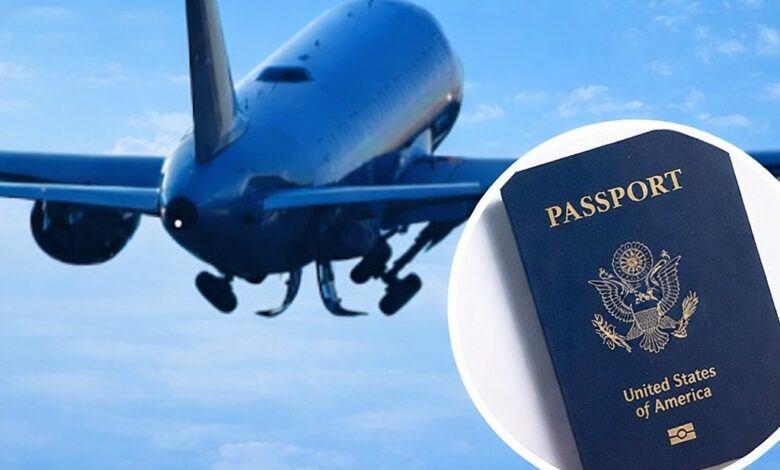
What began as a policy adjustment in Washington has rapidly evolved into a geopolitical rupture stretching across one of the world’s most strategically sensitive regions. The decision by Mali and Burkina Faso to impose travel restrictions on U.S. citizens is not a symbolic protest or a temporary diplomatic flare-up. It is a calculated assertion of sovereignty, framed deliberately around the principle of reciprocity and equality in international relations.
These moves follow closely on the heels of expanded U.S. travel restrictions that disproportionately affect African and Middle Eastern nations. While Washington has repeatedly described the measures as necessary for national security, governments in the Sahel see something else entirely: selective exclusion, institutional distrust, and policy enforcement that treats their citizens as permanent risks rather than partners.
The response has been swift and increasingly coordinated. Niger has gone further than its neighbors, announcing a permanent suspension of visa issuance for U.S. nationals. Chad, which had already restricted visas for Americans earlier, now appears less like an outlier and more like a precursor. Taken together, these decisions suggest the early formation of a unified diplomatic posture among Sahelian states—one rooted in resistance to what they view as unilateral policy imposition by the United States.
Officials in Bamako and Ouagadougou have been explicit about their reasoning. By invoking reciprocity, they are reframing the narrative away from retaliation and toward parity. Their message is direct: if our citizens are restricted, scrutinized, or barred based on nationality, then the same standards will apply in reverse. This framing is designed not only for Washington, but for domestic audiences increasingly skeptical of Western influence and intervention.
The broader context matters. The Sahel region has undergone dramatic political realignment in recent years, marked by military coups, reduced cooperation with Western governments, and expanding partnerships with non-Western powers. Trust between the region and the United States has been eroding long before visa bans entered the conversation. Travel restrictions have simply accelerated a process already underway.
For policymakers in Washington, the bans are presented as a security safeguard, grounded in border control, documentation standards, and information-sharing compliance. Supporters argue that these measures pressure foreign governments to strengthen identity verification systems and counterterrorism cooperation. Critics, however, point to inconsistent enforcement, opaque criteria, and the absence of clear pathways for countries to regain access.
In the Sahel, leaders reject the premise entirely. They argue that the bans conflate governance challenges with collective guilt, punishing civilians for systemic issues while ignoring the complex realities of post-colonial state-building. In official statements, U.S. policies are described as discrimination dressed in administrative language, reinforcing historical patterns of exclusion rather than addressing root causes.
Between these competing narratives lie the people most affected—and least consulted.
Families are now separated across borders by paperwork rather than distance. Students enrolled in American universities face uncertainty about whether they can return after holidays or internships. Humanitarian organizations report growing logistical hurdles as aid workers struggle to move between project sites. Medical missions, educational exchanges, and cultural programs—often the quiet backbone of U.S.–Africa engagement—are increasingly strained.
The economic consequences are equally tangible. U.S. businesses operating in West Africa report delays in staffing, disrupted negotiations, and higher compliance costs. Tourism, already fragile in many Sahelian countries, faces further decline as diplomatic tensions discourage travel in both directions. Airlines and logistics firms are forced to reroute or cancel plans, adding another layer of friction to an already volatile region.
Diplomats warn that visa restrictions, once imposed, are notoriously difficult to unwind. Even when political conditions improve, bureaucratic inertia and domestic political pressures often keep bans in place long after their original justification fades. This creates a feedback loop of mistrust, where restrictions breed resentment, resentment fuels disengagement, and disengagement reinforces perceptions of instability.
Strategically, the timing is consequential. The Sahel occupies a critical position in global security discussions, including counterterrorism, migration management, and climate resilience. Reduced diplomatic access limits Washington’s ability to influence outcomes in a region where geopolitical competition is intensifying. As U.S. engagement narrows, alternative partnerships gain traction, reshaping the balance of power in ways that may not align with American long-term interests.
Public sentiment in Mali, Burkina Faso, and Niger reflects a growing appetite for assertive diplomacy. State media and social platforms increasingly frame travel bans as evidence of unequal treatment, rallying nationalist support behind government decisions. In this environment, backing down becomes politically costly, even if diplomatic off-ramps exist.
At the same time, U.S. officials face their own domestic constraints. Immigration and border security remain politically charged issues, and any perceived softening of restrictions carries electoral risk. The result is a standoff where neither side finds it easy to compromise, even as the costs mount.
What distinguishes this moment from previous disputes is its symbolic weight. Travel access is no longer just about visas and airports; it has become a proxy for respect, legitimacy, and international standing. For Sahelian governments, restricting U.S. citizens is a declaration that their sovereignty is not conditional. For Washington, maintaining restrictions is framed as an assertion of control over national borders.
Lost in that exchange is the human dimension—the students, families, aid workers, and entrepreneurs caught between policies they did not shape and cannot influence. Their lives are now governed by diplomatic signaling rather than individual merit or intent.
As the standoff deepens, one reality becomes clear: repairing trust will require far more than lifting bans. It will demand transparent criteria, mutual accountability, and a willingness to engage with complexity rather than default to exclusion. Until then, the fracture between the United States and parts of the Sahel will continue to widen, reshaping not only travel patterns, but the future of diplomatic engagement in a region where every connection matters.