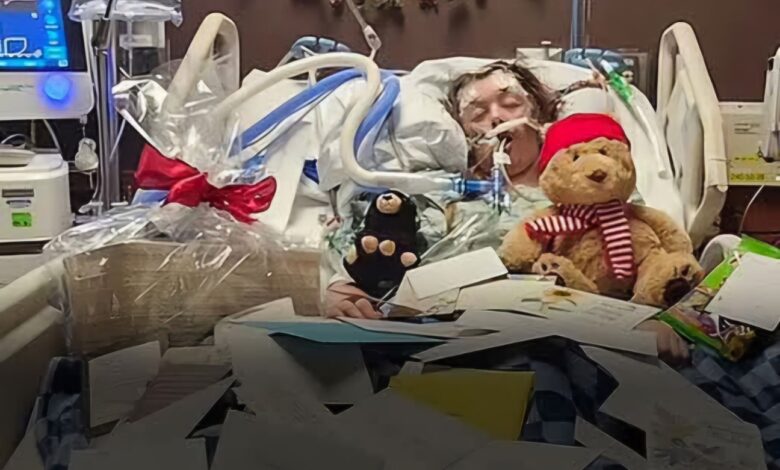
A simple act of kindness ended in tragedy, leaving a family shattered and a community grappling with a painful reminder of how unforgiving severe food allergies can be. The death of Hannah Glass, a freshman at Maranatha Baptist University, has become a sobering case study in how quickly an ordinary moment can turn fatal when hidden allergens are involved.
Hannah was known among friends and classmates as thoughtful, gentle, and deeply involved in her faith. She had a bright future ahead of her and a strong sense of purpose. She was also known to have a serious peanut allergy—something she managed carefully and responsibly. Those who knew her understood that peanuts were not just a dietary inconvenience for her, but a life-threatening danger.
On November 4, 2024, Hannah attended a gathering with a women’s group on campus. During the event, a friend offered her a brownie. The gesture was well-intentioned. The brownie had been made with roasted peanut flour as a gluten-free alternative for other students. Crucially, Hannah was not told about the ingredient, and there was no visible indication that peanuts were involved. Trusting the friend and unaware of the risk, Hannah took a bite.
According to her father, David Glass, Hannah sensed something was wrong almost immediately. “By the second bite, she knew,” he later said. The realization came too late. The allergen had already entered her system, triggering a rapid and violent reaction.
Symptoms escalated quickly. Hannah began vomiting and developed hives, clear signs of anaphylaxis. She did what she had been trained to do. She used her EpiPen and took Benadryl, measures that often buy crucial time for people with severe allergies. For a brief moment, it appeared to help. Her condition seemed to stabilize, enough that she lay down to rest.
Then everything collapsed.
Within minutes, Hannah’s condition deteriorated catastrophically. Her right lung collapsed, an extremely rare but devastating complication of anaphylactic shock. Emergency responders were called immediately. When paramedics arrived, Hannah was already in critical condition.
During attempts to save her life, Hannah’s heart stopped for approximately four minutes. Although paramedics were able to resuscitate her, the damage was profound. She was rushed from Watertown Hospital to Froedtert Hospital for advanced emergency care. During transport, she suffered seizures, and doctors identified severe swelling of the brain. She was placed on a ventilator, unresponsive, with doctors warning her family that her prognosis was extremely poor.
For days, Hannah’s parents remained at her bedside, hoping for a miracle while facing the reality medical teams laid out for them. After five agonizing days, they were told the truth no parent ever wants to hear: the majority of Hannah’s brain had sustained irreversible, terminal damage. There was no meaningful chance of recovery.
The decision that followed was unimaginably painful.
Hannah’s parents made the choice to remove her from life support. In a statement shared publicly, they explained that her injuries were “unmistakably, critically, and terminally” severe. In the midst of their grief, they made another decision that reflected the values Hannah lived by: they chose to donate her organs.
That choice saved four lives.
In death, Hannah gave others a future they might not have had. For her family, it was a way to allow something good to emerge from a loss that felt senseless and overwhelming.
Hannah’s funeral was held at Calvary Baptist Church and drew more than 1,000 mourners. Friends, classmates, faculty members, and community residents filled the space, many standing because there was no room left to sit. She was remembered as an exceptional student, a devoted member of her church, and a young woman whose kindness left a lasting impression on everyone she met.
In the days following her death, tributes poured in from across the university and beyond. Students shared stories of Hannah’s quiet generosity, her willingness to listen, and her habit of putting others before herself. Professors spoke of her diligence and character. Her loss was felt not as an abstract tragedy, but as a deeply personal blow to a close-knit community.
To help the family cope with funeral expenses and the sudden loss of their daughter, a fundraiser was established on GiveSendGo, raising more than $28,000. The financial support was meaningful, but the emotional support—the messages, prayers, and shared grief—meant just as much.
In speaking publicly about what happened, Hannah’s parents have been clear about their purpose. They are not seeking blame. They are seeking awareness.
They have emphasized how dangerous hidden allergens can be, especially in foods that are altered to meet other dietary needs, such as gluten-free products. Peanut flour, while common in some specialty baking, can be deadly when its presence is not explicitly disclosed. Their message is simple and urgent: never assume an ingredient is safe, never downplay a known allergy, and always communicate clearly about what food contains.
They have also urged families and individuals with severe allergies to remain vigilant, to keep EpiPens current and accessible, and to treat every exposure risk seriously, even among friends and familiar settings. As Hannah’s case shows, trust and good intentions are not enough to prevent tragedy.
Hannah Glass’s story is devastating precisely because it was preventable. It did not involve recklessness or negligence in the traditional sense. It involved a lack of information, a hidden ingredient, and a chain reaction that unfolded faster than anyone could stop it.
Her life, though brief, continues to matter. Through organ donation, she gave others a second chance. Through her family’s willingness to speak openly, she may save lives by forcing difficult conversations about food safety and allergy awareness.
Hannah is remembered not only for how she died, but for how she lived—with kindness, faith, and generosity. Her legacy now includes a hard lesson the world cannot afford to ignore: for those with severe allergies, transparency is not optional, and a single bite can change everything.


