Scratched glasses are one of those small frustrations that feel bigger than they should. A tiny mark on a lens can catch the light at the wrong angle, blur your vision, or distract you all day long. Before you resign yourself to buying a new pair, it’s worth understanding what can realistically be fixed at home—and what can’t. Some DIY methods may help reduce the appearance of very minor scratches, while others can do more harm than good if used incorrectly.
The key is knowing what type of lenses you have, how deep the scratch is, and what outcome to expect. No home remedy will truly “repair” a scratch the way professional resurfacing would. At best, these methods can soften or mask fine surface marks on older or uncoated lenses. Used carelessly, they can permanently damage modern lenses.
Here’s a clear, honest breakdown of at-home approaches, with realistic expectations.
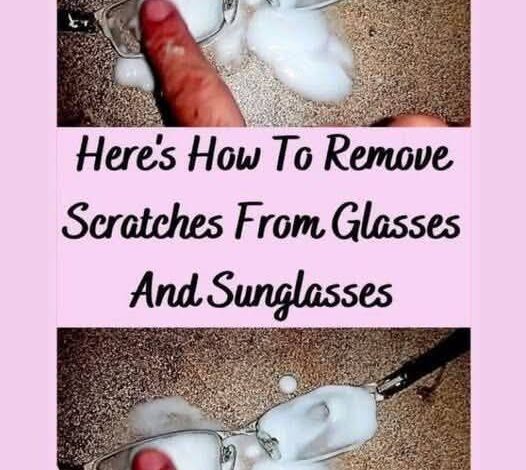
One of the most commonly mentioned remedies is a baking soda paste. This works only in very specific situations. Baking soda is mildly abrasive, which means it can gently smooth the edges of extremely shallow scratches. It does not fill or remove deep marks, and it should never be used on lenses with anti-reflective, blue-light, or scratch-resistant coatings.
To try it safely, mix one to two teaspoons of baking soda with a few drops of distilled water until you get a smooth, thin paste. It should not feel gritty. Clean your lenses first using proper lens cleaner or mild soap and lukewarm water, then dry them with a clean microfiber cloth. Using a fingertip or soft cotton ball, gently rub the paste over the scratch in small circular motions for no more than 10 to 15 seconds. Rinse thoroughly and dry with a microfiber cloth.
This method is best reserved for old reading glasses or inexpensive, uncoated plastic lenses with hairline scratches. If your glasses are prescription lenses you rely on daily, the risk often outweighs the benefit.
Another popular suggestion is toothpaste, but this is one of the most misunderstood fixes. Only plain, non-gel, non-whitening toothpaste without added abrasives should ever be considered—and even then, it’s a last resort. Most modern toothpastes contain silica or polishing compounds designed for enamel, which is far harder than eyeglass lenses. Those formulas can permanently cloud or strip coatings in seconds.
If you attempt this method, use a pea-sized amount of very basic toothpaste on a damp microfiber cloth. Rub gently in tiny circles for no more than 10 seconds, then rinse thoroughly and dry. Always test on the very edge of the lens first. Even when done carefully, results are inconsistent, and the risk is high for coated lenses.
Car wax and lens-specific scratch fillers work differently. These products don’t remove scratches at all. Instead, they fill in fine surface imperfections with a clear polymer, reducing how light scatters across the scratch. The result can be a temporary improvement in appearance, especially for sunglasses or backup glasses.
To use this approach, clean the lenses thoroughly, apply a very small amount of wax or scratch filler to a microfiber cloth, and buff gently in circular motions. Remove all residue completely. Be aware that wax can leave a haze, interfere with anti-reflective coatings, and attract dust. This is not recommended for primary prescription glasses, but it may be acceptable for older pairs you don’t rely on daily.
Some online advice suggests using metal polish products like Brasso. This should be avoided entirely. Metal polish is extremely abrasive and will permanently damage eyeglass lenses by stripping coatings and etching the surface. Once that happens, there is no fixing it.
In most cases, prevention is far more effective than repair. Lenses scratch because of everyday habits that seem harmless in the moment. Cleaning glasses with paper towels, tissues, or clothing grinds microscopic debris into the lens surface. Tossing glasses into a bag without a case exposes them to keys, zippers, and grit. Setting them down lens-first on hard surfaces invites damage.
Simple habits make a huge difference. Always store glasses in a hard case when not in use. Clean them only with proper lens cleaner and a microfiber cloth. Rinse off dust and grit before wiping. Set glasses down with the lenses facing up. If you’re ordering new lenses, consider scratch-resistant coatings, and keep an older pair as a backup for rough activities.
There comes a point where replacement is the smarter and safer choice. If scratches sit directly in your line of sight, cause glare while driving at night, trigger headaches or eye strain, or appear alongside peeling coatings or cracks, it’s time to see your optician. Many vision plans cover regular lens replacement, and clear vision is worth prioritizing over temporary fixes.
Glasses aren’t just accessories. They’re how you interact with the world, how you read, drive, work, and recognize faces. While a baking soda paste might slightly reduce a tiny nick on an old pair of readers, no DIY solution is worth risking permanent damage to lenses you depend on every day.
Sometimes the best decision is accepting that a scratch has done its time and moving on to a clearer view. Your eyes will thank you for it.