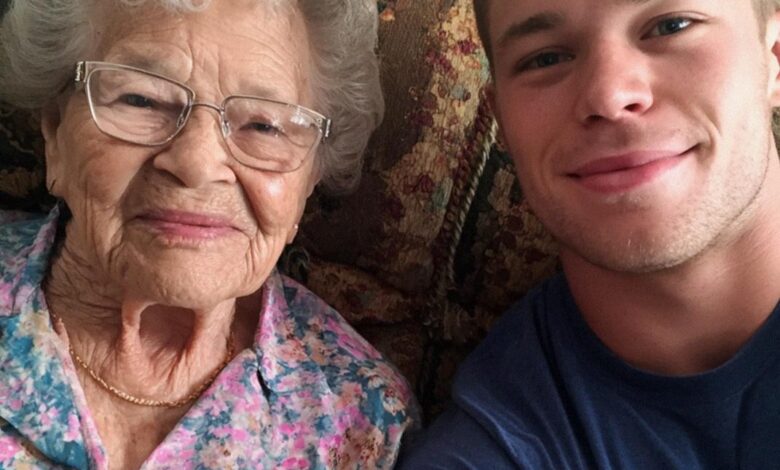
No parent should ever have to bury their child. That truth settled into my bones the day my daughter died, and it never left. She and her husband were driving home when a drunk driver ran a red light and destroyed their car. In one moment, a family disappeared. The only reason I didn’t lose everything that day was because their little boy, Noah, wasn’t in the back seat. I was babysitting him when the phone rang. By the time the call ended, my life and his were permanently stitched together by loss.
I brought Noah home the day after the funeral. There was no debate, no family conference, no list of options. Everyone else had reasons they couldn’t take him in. I didn’t. He was three years old, quiet in a way no child that age should be. His shoes slipped off as we climbed my front steps, and he held my hand so tightly it hurt, like letting go might make me vanish too.
That first night, he asked where his mother was. I knelt down, pulled him close, and told him the truth in the gentlest way I could. I promised him I wasn’t going anywhere. He nodded, accepted it with the strange practicality of children, and asked for cereal. That was how it began.
From then on, it was just the two of us. I was older than most new parents and poorer than I’d ever been, but none of that mattered. I worked whatever jobs I could find. I cleaned offices at night. I folded laundry at a roadside motel on weekends. During the day, I watched other people’s kids while Noah napped beside me on the couch. When money ran out, I told him I wasn’t hungry. When the fridge was empty, I learned how to stretch soup for days and stitch patches onto worn jeans. Every night, I tucked him in and said the same words: “Grandma’s right here.” Every morning, he woke up calling my name.
I didn’t let him feel abandoned again. He’d already lost enough.
Years passed. Somehow, I made it work. I watched him grow into a thoughtful, hardworking young man. I’m seventy-two now. Noah is everything his parents would have hoped for. When he called me last year and said he was getting married, I sat down at my kitchen table and cried until my hands shook. I was proud. Relieved. Grateful I’d lived long enough to see it.
His fiancée, Vanessa, seemed pleasant enough when I met her. Polite. Well-spoken. She smiled at the right moments and told me Noah talked about me often. When they discussed wedding plans, their excitement filled the room. Flowers, venues, menus—everything sounded beautiful. It also sounded expensive. Too expensive.
I saw the stress in Noah’s face when bills came up. I noticed how Vanessa went quiet whenever money entered the conversation. One afternoon, Noah admitted he didn’t know how they were going to afford the wedding they’d envisioned. I didn’t say anything then. I didn’t need to.
The only thing I owned was the house I’d lived in for decades. The house where I’d raised him. So I sold it. Quietly. I planned to use part of the money to help with the wedding and buy myself a small apartment with whatever remained. I didn’t tell Noah right away. I didn’t want him worrying about me.
When I finally handed them the envelope, Noah’s hands trembled. Vanessa cried. They hugged me, thanked me, told me they didn’t know what they’d do without me. Noah held on longer than usual and whispered that he loved me. I believed him.
On the wedding day, I dressed carefully and arrived early. I wanted to see everything before the ceremony began. The flowers. The lights. The place my sacrifice had helped create. At the entrance, the coordinator asked for my name. He checked the list twice, then a third time, and apologized. My name wasn’t there.
I thought it had to be a mistake. It wasn’t.
When Noah came running out, confused and concerned, Vanessa followed. Before he could speak, she said it plainly, coldly: I wasn’t invited. Noah stared at her, stunned. When he demanded an explanation, she crossed her arms and finally told the truth.
She said I didn’t fit. That I looked poor. That the wedding was meant to project a certain image, and I would ruin it. She admitted she didn’t want anyone asking questions about where the money came from or why the groom’s grandmother didn’t look like she belonged in glossy photos. She said I was supposed to give the money and disappear.
I stood there and listened. I didn’t interrupt. What could I say? She wasn’t wrong about how I looked. I’d spent my life putting everything into making sure my grandson had a future. I’d never invested in appearances.
What she didn’t realize was that people were listening.
Guests had gathered behind her—friends, relatives, strangers—drawn by raised voices and discomfort. As Vanessa kept talking, the truth unfolded in front of everyone. When she finally noticed the silence, she turned and saw the faces watching her. The whispers started immediately.
Noah didn’t raise his voice. He didn’t argue. He simply looked at her and said there wouldn’t be a wedding. Not like this. Not with someone who thought love was something to hide.
He took my hand and told me we were leaving. I hesitated, but he squeezed my fingers, just like he had when he was three years old, walking up my front steps. He promised he wasn’t going anywhere. This time, he was the one keeping it.
That night, we sat together eating pizza. He talked. I listened. We didn’t need to say much. Some truths don’t require speeches.
People ask me if I regret selling my house. If I regret losing that money. If I feel responsible for a wedding that never happened. I tell them the same thing every time.
I don’t regret a single thing.
Because that day, I learned something priceless. I learned that the boy I raised values loyalty over image. Love over appearances. Integrity over comfort. And knowing that—seeing him choose what truly mattered—was worth every sacrifice I ever made.