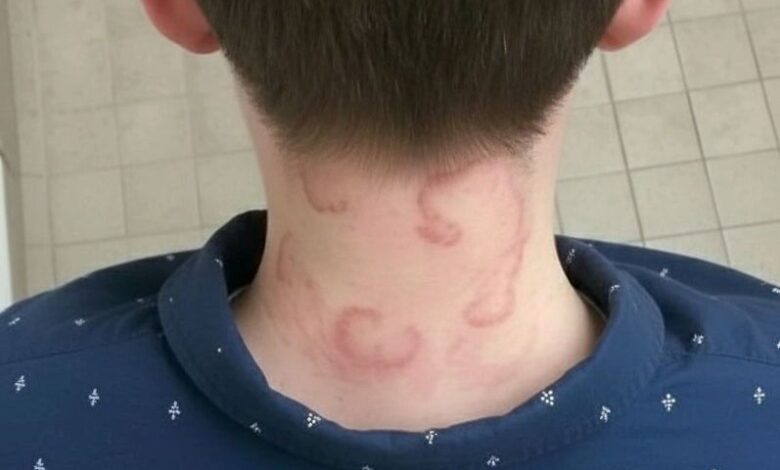
What began as a mild itch didn’t raise immediate alarm. At first, it seemed like one of those everyday skin irritations children get all the time—an annoyance, nothing more. A bit of redness here, a patch of swelling there. It came and went, shifting locations as if it couldn’t decide where to settle. Some days it faded almost completely, only to return worse the next. Two months later, it was impossible to ignore.
The discomfort wasn’t just itching anymore. There was a burning sensation beneath the skin, followed by raised, angry welts that appeared suddenly and spread fast. They looked alarming and felt worse. For an eight-year-old, the constant irritation became exhausting. Sleep was interrupted. Focus at school slipped. What started as a small problem quietly took over daily life.
Like many parents, the first instinct was to blame an allergy. Food, soap, detergent, grass, pollen—anything could be the culprit. Changes were made. Products were swapped out. Foods were eliminated. Nothing helped. The flare-ups continued, unpredictable and increasingly intense.
Then came the diagnosis: urticaria.
Hives. A word that sounds almost harmless, but the reality behind it is anything but simple.
Urticaria is not just a skin condition. It is an immune response. Inside the body, specialized immune cells called mast cells release histamine and other chemicals into the bloodstream. When this release happens in excess, it causes blood vessels near the skin to leak fluid. That fluid creates the swollen, raised welts that define hives. The redness, the itching, the burning—it all traces back to that internal chemical reaction.
In some cases, the reaction stays superficial. In others, it doesn’t.
As weeks passed, the symptoms deepened. Swelling began affecting more than just the surface of the skin. Lips puffed up without warning. Eyelids became heavy and swollen. At times, his face looked unrecognizable. Then came the tightness in his throat—the kind that makes breathing feel deliberate instead of automatic. That was the moment fear replaced frustration.
This deeper swelling has a name: angioedema.
Angioedema affects layers beneath the skin, including soft tissue around the eyes, lips, hands, feet, and sometimes the airway. When it involves the tongue or throat, it becomes dangerous fast. What once seemed like a manageable skin issue suddenly carried real risk.
Doctors took the situation seriously. Urticaria can be triggered by a long list of factors: foods, medications, viral infections, insect bites, heat, cold, pressure on the skin, exercise, stress, or changes in temperature. In children especially, infections are a common cause. But in many cases—especially when hives last longer than six weeks—no clear trigger is ever found.
That’s when it becomes chronic urticaria.
Chronic doesn’t mean constant. It means recurring. Flare-ups can happen daily, weekly, or seemingly at random. One day might be calm. The next can feel like starting over from scratch. That unpredictability is one of the hardest parts—not knowing when it will hit, how severe it will be, or how long it will last.
Treatment focused on controlling the immune response rather than chasing an unknown cause. Antihistamines became the foundation. These medications block histamine, reducing itching and swelling. In chronic cases, doctors often prescribe higher doses than what’s used for simple allergies, carefully monitored to remain safe for children.
During severe flares, short courses of corticosteroids were used to bring the inflammation under control. These weren’t long-term solutions, but emergency brakes when symptoms escalated too far. Cooling lotions and creams helped with surface discomfort, but they were only part of the equation.
The most important shift wasn’t medication. It was awareness.
Swelling around the lips, eyes, or face is not just cosmetic. Tightness in the throat is not something to wait out. Difficulty breathing, swallowing, or speaking is a medical emergency. In rare cases, urticaria and angioedema can progress toward anaphylaxis, a life-threatening reaction that requires immediate treatment.
Learning to recognize early warning signs changed everything. Instead of reacting late, treatment could begin early. Instead of panic, there was a plan. Triggers were tracked, even if they weren’t always obvious. Stress levels were monitored. Illnesses were taken seriously, knowing they could spark a flare.
Over time, the episodes became more manageable. Not gone—but controlled. The body stopped feeling like an unpredictable enemy and more like something that could be understood, even if not fully mastered.
There’s a tendency to dismiss skin conditions as minor or superficial. They’re often seen as cosmetic problems, uncomfortable but harmless. Urticaria challenges that assumption. Sometimes, what shows on the skin is just the visible part of a much deeper process happening beneath the surface.
For a child, especially, the impact goes beyond physical symptoms. Chronic discomfort affects mood, sleep, concentration, and confidence. It teaches patience far earlier than most kids should have to learn it. It also teaches adults to listen—to symptoms, to patterns, to instincts.
The biggest lesson was simple but critical: itching that escalates is not normal. Swelling that spreads is not something to ignore. And anything that affects breathing is never “just a rash.”
The body communicates constantly. Sometimes it whispers. Sometimes it itches. Sometimes it swells. When those messages are ignored, they get louder. When they’re recognized early, they can be managed quietly, safely, and effectively.
What started as a small itch became a long, exhausting journey. But it also became a reminder that paying attention—early and consistently—can be the difference between discomfort and real danger.


