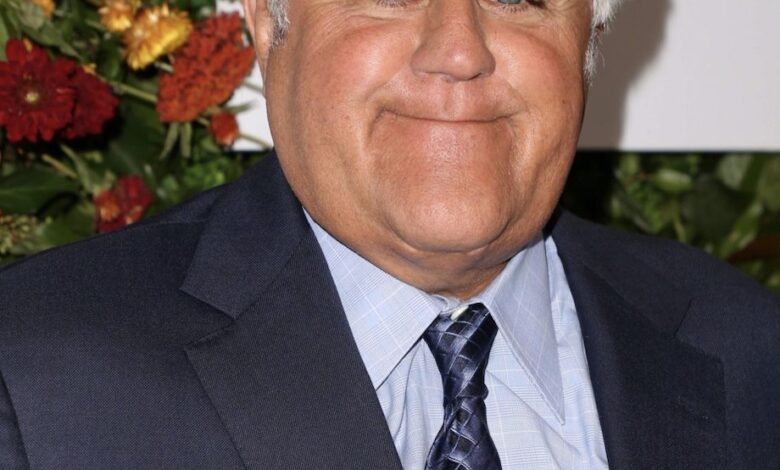
For Jay Leno, a man whose life has been defined by the high-octane energy of the spotlight and the mechanical precision of the garage, the march of time is not measured in years or television seasons. Instead, it is measured in the miles of open road stretched before him and the steady, rhythmic hum of a perfectly tuned engine. Having spent decades as the undisputed titan of late-night television, Leno has lived a life of extraordinary visibility, but as he navigates the twilight of his career in early 2026, his focus has shifted away from the roar of the crowd and toward the silent, indelible permanence of a legacy. This is the story of a man who walked out of the fire—quite literally—to decide exactly what will remain when his own heart and his legendary engines finally fall silent.
The public has watched Leno endure a series of harrowing physical trials in recent years. He survived a terrifying garage fire that left him with deep facial burns, and shortly thereafter, a motorcycle accident that tested his physical and mental fortitude once again. For a man in his seventies, such brushes with mortality could easily have been the signal to retreat into a quiet, protected retirement. However, for Leno, these scars served as a catalyst for a grander sort of clarity. They sharpened his focus, stripping away the vanity of Hollywood and revealing the core of his identity: a man who finds his greatest solace in the tangible, mechanical artifacts of human ingenuity. His physical pain became the fuel for a final, decisive act of stewardship.
Leno’s final “risky goodbye” is not a farewell tour or a star-studded television special designed to boost ratings. It is a quiet, meticulous legal and financial maneuver executed with ink and silence. He has spent the better part of the last year signing papers that carry no jokes and offer no punchlines, but they carry the weight of a fortune estimated at over $450 million. Most of this wealth is being mobilized to ensure that his massive collection of over 180 cars and 160 motorcycles—a living museum of automotive history housed in Burbank—does not merely become a footnote in an estate sale or a collection of dusty relics.
This decision is rooted in a philosophy that views automobiles not as status symbols, but as industrial art. To Leno, every steam engine, every pre-war roadster, and every rare supercar represents a specific moment in human history—a dream that someone once had of moving faster, further, and with more grace. He views himself as a temporary guardian of these dreams. By creating a robust, self-sustaining foundation and a permanent endowment for his museum, Leno is ensuring that these machines will continue to hum, hiss, and roar long after his own voice has faded. He is gifting the public a permanent look at the evolution of the road, preserving the mechanical DNA of the 20th and 21st centuries.
In the quiet hours spent in his Burbank hangar, surrounded by the smell of oil, gasoline, and aged leather, Leno is essentially building a version of “forever” that he can trust. In an industry as fickle as entertainment, where fame can evaporate as quickly as exhaust, Leno has chosen to invest in the permanence of steel. He knows that the engines he adores have a life of their own, and his legacy is now inextricably linked to their survival. When the rows of engines outlive the man who meticulously polished their chrome, they will tell his story through the echo of their pistons and the luster of their paint.
This transition of wealth is particularly poignant because it reflects Leno’s famously disciplined financial habits. Throughout his career, it was widely reported that he lived entirely off his stand-up comedy earnings, never touching his massive Tonight Show salary. This allowed him to build a secondary world—a kingdom of cars—that could stand independently of the whims of network executives. Now, that discipline is being put to its ultimate use. He is moving his fortune into trusts and charitable structures designed to outlast him, ensuring that his collection remains a working, breathing institution rather than a static display.
Furthermore, Leno’s commitment to his collection is a commitment to the craft of the mechanic. He has always valued the man with the wrench as much as the man with the microphone. Part of his legacy plan involves supporting the education of future automotive restorers and engineers, ensuring that the specialized knowledge required to maintain these complex machines is not lost to time. He is investing in the hands that will keep his engines running, acknowledging that a museum is only as alive as the people who know how to make it move.
As he looks back on a career that spanned the transition from broadcast television to the digital age, Leno seems at peace with the changing of the guard. He has seen the industry evolve, and he has seen the cars evolve, yet his passion for the fundamental mechanics of the world remains unshaken. He still spends his days turning wrenches, his hands stained with the grease of a hundred different eras, finding a meditative peace in the struggle of a difficult restoration. The scars from his accidents are still visible, a map of his resilience etched into his skin, but they no longer define him. What defines him is the forward motion.
The museum in Burbank is more than just a collection; it is a testament to the American spirit of invention. By securing its future, Leno is providing a bridge for future generations to understand where we came from and how we moved across the landscape. It is a gift of history, a sanctuary of steel, and a silent monument to the solitude of a man who, at the end of the day, just wanted to see how things worked. In the ink of those legal documents, Jay Leno has found a way to stay on the road indefinitely. He has traded the ephemeral applause of the studio for the enduring vibration of the road, proving that while a man’s heart may eventually go silent, the machines he loved can keep his rhythm alive for an eternity.
This final act of Leno’s is perhaps his most courageous. It requires a total lack of ego to plan for a world where you no longer exist, to ensure that the things you love are protected from the inevitable entropy of time. He is not asking for a monument of marble; he is asking for a garage that never closes. In the polished steel and the humming engines, Leno has discovered a legacy that is immune to the passage of miles. He has found his version of forever, and as the sun sets over the Burbank mountains, the man who made millions laugh is content to let his engines have the last word.