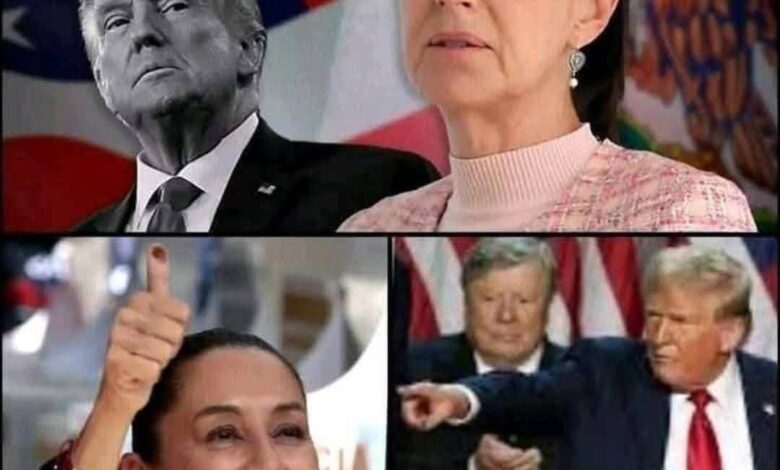
The geopolitical landscape of 2026 was irrevocably altered on a Saturday that the world will long remember as a pivot point for global security. President Donald Trump, utilizing his preferred medium of Truth Social, stunned the international community by announcing that the United States had carried out a “very successful attack” against three primary nuclear installations within the borders of Iran. Among the targets was the heavily fortified Fordo facility, a site that has long been a flashpoint for international inspectors and Western intelligence agencies. Trump characterized the strike as a “historic moment” for the United States and Israel, asserting with characteristic boldness that the era of strategic ambiguity had ended and that Iran must now “agree to end this war.”
The immediate aftermath of the strike triggered a seismic wave of reactions across every corner of the globe, as world leaders scrambled to respond to an event that many fear could ignite a wider regional conflagration. The response from Tehran was swift and visceral. Iranian Foreign Minister Abbas Araghchi, speaking via a statement on X, denounced the operation as “outrageous” and “criminal behavior.” He emphasized that the targeting of “peaceful nuclear installations” represented a grave violation of the United Nations Charter and the Non-Proliferation Treaty (NPT). Araghchi warned that the consequences of this “lawless” act would be everlasting, pointedly stating that Iran “reserves all options” to defend its sovereignty and people, a phrase that historically signals the potential for significant military retaliation.
In stark contrast, the atmosphere in Jerusalem was one of vindication and triumph. Israeli Prime Minister Benjamin Netanyahu spoke just minutes after the official announcement, hailing Trump’s “bold decision” as a move that would change the course of history. Invoking their shared doctrine of “peace through strength,” Netanyahu argued that true peace can only be achieved after a demonstration of overwhelming force. To the Israeli leadership, the strikes were a necessary surgical intervention to eliminate an existential threat that diplomacy had failed to contain.
The rift between global superpowers deepened as the hours passed. China issued a blistering condemnation of the U.S. military action on Sunday morning. The Chinese Foreign Ministry stated that the strikes seriously worsened tensions in an already volatile Middle East and urged an immediate cessation of hostilities. Beijing’s stance was clear: the move bypassed the authority of the UN Charter and undermined the work of the International Atomic Energy Agency (IAEA). China’s call for a return to dialogue and negotiations, specifically targeting Israel to cease further provocations, highlighted the growing divide between Western interventions and the diplomatic preferences of the East.
At the United Nations, Secretary-General António Guterres appeared visibly shaken by the escalation. In a statement reported by Reuters, Guterres warned that the strikes posed a “catastrophic” risk to global peace and security. He pleaded with the involved parties to avoid a “spiral of chaos,” emphasizing that there is no military solution to the nuclear standoff. His words reflected the anxiety of a global body that sees the traditional mechanisms of de-escalation being bypassed in favor of kinetic action.
Across Europe, the tone was one of frantic caution. The European Union’s chief diplomat, Kaja Kallas, urged all sides to “step back” from the precipice, though she maintained the EU’s firm stance that Iran must never be permitted to develop a nuclear weapon. While EU foreign ministers prepared to convene on Monday, U.K. Prime Minister Keir Starmer echoed the call for stability, urging Tehran to return to the negotiating table. This drew a sharp retort from Araghchi, who questioned how Iran could return to a table it “never left,” and accused the West of being the party that effectively blew up the diplomatic process.
The reaction within the Middle East revealed a region on edge. Saudi Arabia, which had only recently mended a seven-year diplomatic rift with Iran in March 2023, expressed “great concern” over the developments in its “sisterly” neighbor. The precariousness of this regional rapprochement is now under extreme duress. Meanwhile, non-state actors and Iranian-backed groups were more direct in their condemnation. Yemen’s Houthi militants denounced the “blatant aggression,” while the Lebanese presidency expressed deep-seated fears that the bombing of nuclear facilities would destabilize multiple countries across the Levant and beyond.
The ripples of the strike reached as far as Moscow and Tokyo. Dmitry Medvedev, the former Russian president and current senior security official, took to Telegram to mock the idea of Trump receiving a Nobel Peace Prize, noting that a leader who arrived with a “peacemaker” mandate had instead initiated a “new war.” In Japan, Prime Minister Shigeru Ishiba adopted a more measured tone, acknowledging the need to block Iran’s nuclear development while stopping short of a full endorsement of the U.S. strikes. Ishiba’s focus remained on the “paramount” need to calm the situation before the global economy felt the full weight of a Middle Eastern crisis.
In Latin America, the condemnation was categorical. Venezuela’s Minister of Foreign Affairs, Yvan Gil, and Cuban President Miguel Díaz-Canel both labeled the action a “military aggression” that seriously violated international law. They warned of “irreversible consequences” for humanity if the hostilities did not cease immediately. Mexico’s Ministry of Foreign Affairs similarly called for an urgent return to “constitutional principles of foreign policy” and a “pacifist conviction,” urging all parties to prioritize the restoration of peaceful coexistence.
From the halls of the Vatican, Pope Leo XIV added a moral dimension to the crisis. During his weekly prayer with pilgrims, the Pope spoke of an “irreparable abyss” that war risks opening. He lamented that no “armed victory” could ever compensate for the terror felt by children or the stolen futures of the youth. His plea for diplomacy to “silence the weapons” served as a spiritual counterbalance to the military rhetoric coming from the White House and the Prime Minister’s Office in Israel.
As the international community watches the fallout, the central question remains whether this “peace through strength” approach will lead to a new diplomatic framework or a total breakdown of regional order. With the Fordo, Natanz, and Isfahan complexes reportedly damaged, the physical capacity of Iran’s nuclear program has been altered, but the geopolitical fallout has only just begun to crystallize. The world remains in a state of high alert, waiting to see if the “historic moment” Trump celebrated will be remembered as a victory for non-proliferation or the catalyst for a global catastrophe.