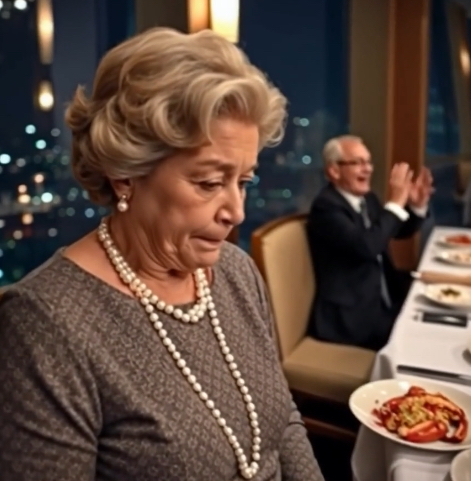
 “Good evening, Mrs. Thompson,” the chef said with a warmth that cut through the chilly atmosphere at the table. “I didn’t expect to see you here tonight. It’s been too long since your last visit.”
The silence was palpable, as if the entire room was holding its breath. My son and his wife’s eyes widened, their forced smiles faltering. Marlene’s parents stared, their wine glasses paused mid-air, unsure of what to make of this unexpected turn.
I met the chef’s gaze and returned his smile, one that held genuine warmth. “Indeed, it has, Chef Anton. I’m just here for a quiet evening with family.”
The chef nodded, clearly aware of the dynamics at play. “Well, it’s an honor to have you here. Would you allow me to prepare something special for you?”
My son shifted uncomfortably in his seat, likely calculating how this revelation might shift the evening’s control. Marlene’s face tightened, her earlier smugness slipping away like the tide.
“That would be lovely,” I replied, maintaining my calm demeanor. “But I don’t want to impose.”
“Not at all,” Chef Anton replied, with a dismissive wave. “You were one of our very first patrons, after all. It’s the least I can do.”
He turned to the waiter, giving a few quiet instructions before disappearing back into the kitchen. The room slowly came back to life around us, but the conversation at our table was muted. The power dynamic had shifted, and everyone felt it.
Marlene cleared her throat, trying to regain control. “I didn’t realize you knew the chef personally,” she said, her voice laced with feigned politeness.
I shrugged lightly. “Oh, it’s just one of those things. You visit a place often enough, you get to know the people who make it special.”
As we waited for the chef’s special surprise, I found myself reflecting on the evening. My son and daughter-in-law had tried to make me feel small, but in doing so, they revealed more about themselves than they intended. They were caught up in appearances, in trying to climb a social ladder that, to me, seemed more like a hamster wheel—endlessly spinning with no real destination.
The waiter returned with a platter that put their lobsters to shame—pan-seared scallops resting on a bed of saffron risotto, garnished with microgreens and a delicate drizzle of balsamic reduction. The aroma was intoxicating, and I couldn’t help but smile as the dish was set before me.
Marlene’s parents exchanged glances, their discomfort growing. My son looked down, focusing on his now unappetizing lobster. The shift was complete.
I savored the first bite, feeling the flavors unfold with each chew. It was a reminder of the joy to be found in simple pleasures, the kind that couldn’t be bought or manipulated through status. As I ate, I felt a renewed sense of clarity. I didn’t need to fit into their world. I had my own, one built on genuine connections and experiences that went beyond the superficial.
“So, Mom,” Michael finally said, searching for a way to bridge the distance he’d created with his earlier words. “How’s the food?”
I looked up, meeting his eyes with a steady gaze. “It’s perfect,” I said, letting the weight of the evening’s lesson hang in the air. “Absolutely perfect.”
And with that, I returned to my meal, content in the knowledge that I didn’t need their approval or acceptance to enjoy the richness of my own life.