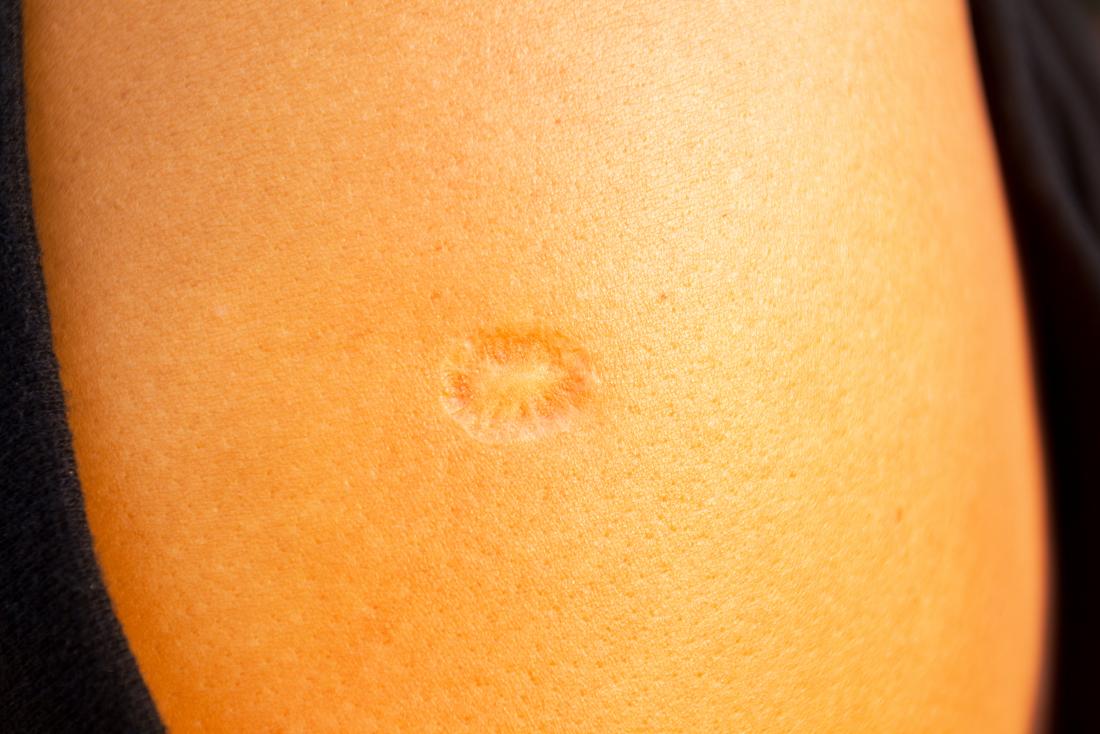
If you grew up in Asia, Africa, Latin America, or parts of Eastern Europe, there’s a good chance you have a small, round scar on your upper arm. Many people notice it later in life and wonder where it came from. Some feel embarrassed by it. Others invent explanations because no one ever explained the truth.
That little scar has sparked decades of confusion. Below are five of the most common misconceptions about the round scar on the arm—and the real facts behind it.
Misconception 1: “It’s a skin disease or a childhood injury”
One of the most widespread beliefs is that the scar is the result of a skin condition, an infection, or an injury from childhood. Some people even assume it came from a burn or an untreated wound.
The truth:
In most cases, the round scar is not caused by a disease or accident. It is the result of the BCG vaccine, which is used to protect against tuberculosis (TB). The vaccine is typically given in infancy or early childhood, which is why most people don’t remember receiving it.
The scar forms as part of the body’s natural immune response, not because something went wrong.
Misconception 2: “Only people from poor or rural backgrounds have it”
This misconception carries a heavy social stigma. Some people believe the scar is a sign of poverty, poor hygiene, or lack of access to modern healthcare.
The truth:
The BCG vaccine was—and still is—part of national immunization programs in many countries, regardless of income level. Millions of children from all social classes received it, especially in regions where tuberculosis was once widespread.
Having the scar says nothing about a person’s background, education, or social status. It reflects public health policy, not personal circumstances.
Misconception 3: “If you don’t have the scar, you weren’t vaccinated”
Many people compare arms with friends or family and assume that the presence or absence of the scar proves whether someone was vaccinated.
The truth:
Not everyone who receives the BCG vaccine develops a visible scar. Some people heal with little or no mark at all. Others may have had the scar fade significantly over time.
The absence of a scar does not automatically mean a person was never vaccinated, just as having a scar doesn’t indicate stronger or weaker immunity.
Misconception 4: “The scar means your immune system is weak or damaged”
Another fear is that the scar signals long-term harm to the immune system or ongoing vulnerability to illness.
The truth:
The BCG scar is not a sign of immune weakness. In fact, it represents a normal immune reaction to the vaccine. The body recognizes the weakened bacteria in the vaccine and mounts a localized response, which can leave a small mark.
In many cases, the vaccine has been associated with positive immune training, especially in early life. The scar itself has no negative effect on health.
Misconception 5: “It’s dangerous or something that should be removed”
Some people feel self-conscious about the scar and worry it might be unsafe, abnormal, or something that needs medical treatment.
The truth:
The BCG scar is harmless. It does not grow, spread, or turn into a medical problem. There is no medical reason to remove it unless someone chooses to do so for cosmetic reasons.
Doctors generally consider it a normal, benign mark—nothing more than a quiet reminder of early protection.
A Small Scar with a Big Story
For many people, the round scar on the arm is a symbol of a time when medical decisions were made quietly, without explanation. Parents trusted public health systems. Children were protected, but rarely informed.
Today, understanding the truth behind this scar helps remove fear, shame, and misinformation. It is not a flaw, a disease, or a mark of hardship—it is simply a trace of preventive medicine.
Sometimes, the smallest marks carry the longest stories.


