 I hesitated, caught between curiosity and a twinge of anxiety. Yet something in her eyes—a mix of gratitude and urgency—compelled me to nod and invite her in. As she stepped inside, I noticed the bag she carried was not only heavy with papers but appeared to hold a small, mysterious wooden box.
“Please, have a seat,” I gestured towards the living room, cluttered with toys and books. She sat down, smoothing her skirt, while I moved a pile of laundry to make space.
“Dalton passed away yesterday,” Martha began softly, her voice tinged with emotion. “He was very sick, but he didn’t let anyone know how bad it was. He was too proud, you see.”
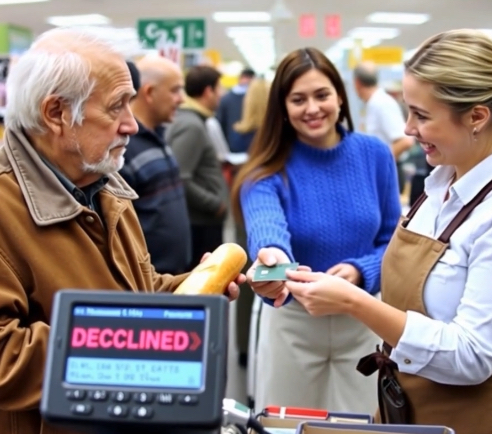
I felt a pang of sadness. There was a certain dignity in Dalton’s demeanor, even in his moment of need at the grocery store, that now resonated with me more deeply. “I’m so sorry to hear that,” I said, meaning every word.
“He had one last wish, something he felt strongly about after your act of kindness,” Martha continued, her voice gaining strength. She reached for the wooden box. “He wanted you to have this.”
As the box was handed over, its weight was surprisingly comforting. I traced my fingers over the smooth surface, noting the intricate carvings that spiraled across the lid. “What is it?” I asked, curiosity piquing.
“Inside is something he held dear, a token of appreciation and a message he wanted to share,” she explained. “Open it.”
With careful fingers, I lifted the lid. Inside, nestled in a bed of soft cloth, lay a simple, yet elegant, silver locket. The craftsmanship was exquisite, the kind that’s rarely seen nowadays. Alongside it was a folded piece of paper. I picked it up, unfolding it gently.
The note, written in a shaky script, read:
“Thank you for your kindness. This locket belonged to my wife. It’s a reminder that love and generosity are timeless. Please wear it and remember that small acts can change the world. With gratitude, Dalton.”
The words hit me with a force I hadn’t anticipated. Tears welled in my eyes. The gesture was profound, far exceeding the simple act of paying for groceries. It was a reminder of humanity and the connections we share, even with strangers.
Martha watched me, her expression softening. “He said you gave him hope, that there are still good people in this world. He wanted to pass on a piece of his heart to you.”
I clasped the locket, feeling its smooth, cool surface. “I don’t know what to say,” I whispered, overwhelmed. “This is… it’s beautiful.”
She nodded. “He believed in the power of kindness. Your compassion lit up his final days.”
The conversation that followed was one of shared memories and mutual understanding. Martha spoke of her grandfather’s life, his stories, and the values he cherished. As she left, I felt a profound sense of gratitude—for Dalton, for Martha, and for the unexpected bond we’d formed.
In the days that followed, I wore the locket close to my heart. It became a symbol of connection, a testament to the impact of small acts of kindness in an often harsh and uncaring world. It reminded me that amidst the chaos, there are moments of light, and they often come when we least expect them.