I began noticing some strange, bright orange balls in different corners of my yard. They were scattered near the fence, by an old tree stump, even in the flower bed.  At first, I thought they were toys or maybe berries brought by birds. But each day, there were more and more of them, and they just looked too weird.
I got suspicious. I don’t like it when something unknown appears on my property — especially when I have a dog. And sure enough, one day I caught my dog enthusiastically chewing on one of these “balls.” 
My heart nearly stopped. I immediately called the vet to find out what it was… It turned out to be… Continued in the first comment 
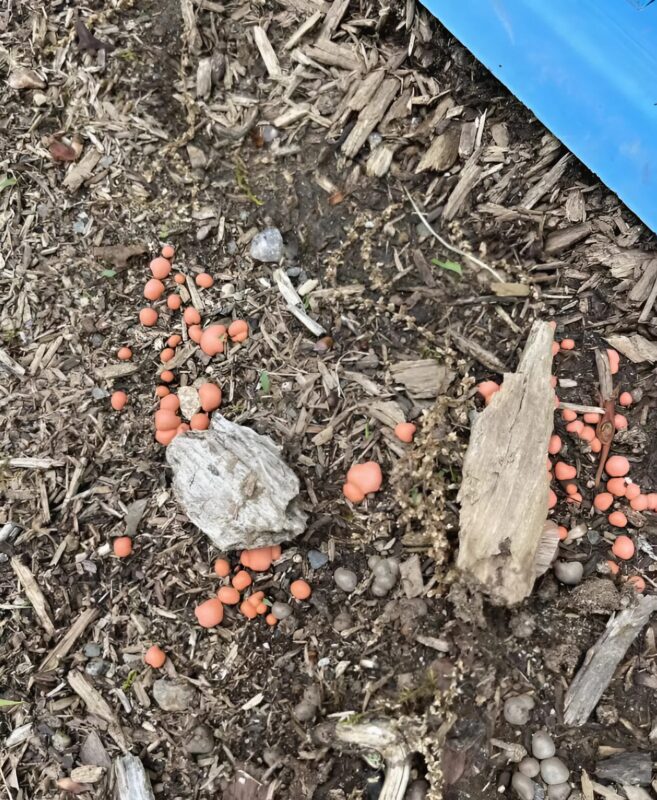
I quickly called the vet. Panicked, I tried to explain that my dog might have eaten some unknown fungus or — God forbid — a chemical.
The vet listened, calmed me down, and said to keep an eye on the dog. Then he added, “Take a picture and send it — maybe I can identify it.” So I sent a photo.
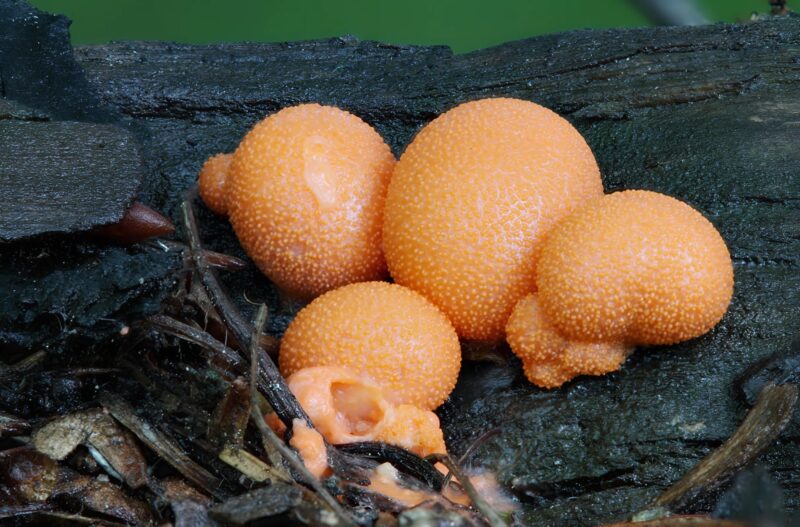
A few minutes later, he called back and said: “That’s a slime mold. Commonly known as wolf’s milk or wolf’s teat. Not especially toxic, but definitely not edible — for humans or animals.”
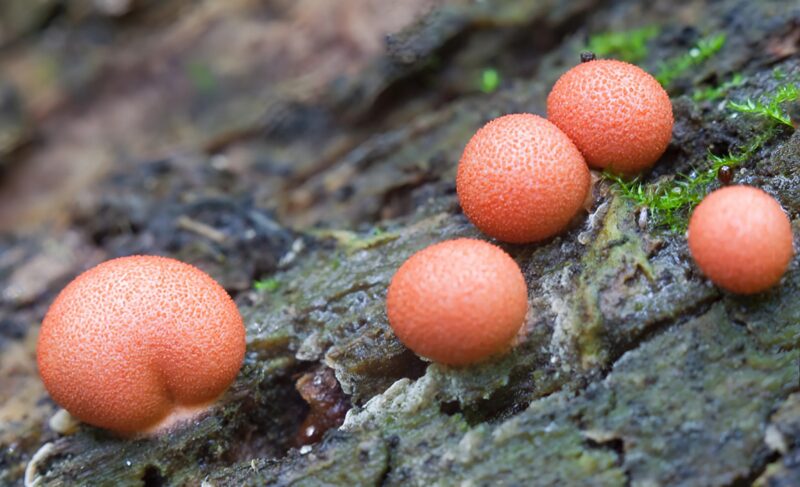
It turned out to be a strange fungus — it grows on decaying wood and stumps, looks like puffed-up balls, and can sometimes even “breathe” or “move.”
It’s a type of mold that can survive for years without water or food. While it’s not deadly, it can cause skin and mucous membrane irritation on contact — especially if crushed.
Luckily, my dog was fine. But I didn’t want to take any chances — I collected all the “wolf’s milk” and burned it far from the yard.