On December 31, my son gave me a mop and said, “So you don’t forget your place”; the guests burst out laughing, but after midnight I made an announcement they bitterly regretted 

December 31. Outside the kitchen window, large snowflakes are falling slowly. They settle on the branches of the fir trees by the fence, on the roof of the bathhouse, and on the garden beds that I spent the whole summer putting in order, calmly and thoroughly. Winter erases the traces, and the world outside looks quiet and neat.
Inside the house, there is a familiar silence. It is warm and dense, filled with the smells of dough, pine needles, and the heat of the stove. In moments like these, loneliness at eighty-two does not weigh on me; on the contrary, it brings a sense of peace. I hear the floorboards creak, I feel the house respond—the house my husband and I built together many years ago. My husband has been gone for a long time, but his presence is still felt within these walls.
I know it won’t last long. Very soon the house will be filled with voices, footsteps, laughter, and bustle. My son Max will arrive with his wife, their daughter, and along with them relatives and acquaintances. Sixteen people in total. I cook for everyone, as I have done for many years.
The chicken is already browning in the oven. On the table there are bowls of salads, and the pies with cabbage and potatoes are neatly laid out on towels. I have a lot to do, but everything is familiar and requires no extra thought.
They arrive noisily. Brakes squeal, doors slam, and along with the frosty air, conversations and laughter rush into the house. No one stops to hug me. I simply step aside to clear the way and return to the kitchen. This place has long since become mine.
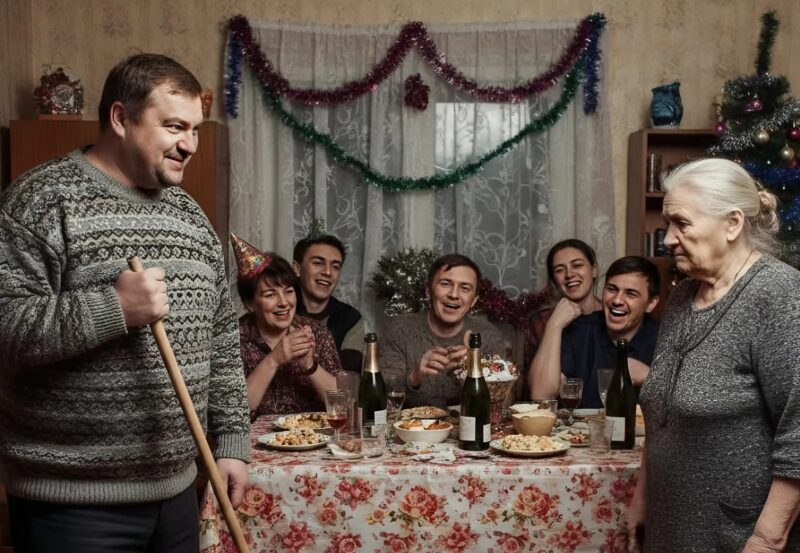
The celebration begins on its own. I bring out the dishes, set out the plates, pour the drinks, clear away empty salad bowls. At the table, toasts are made to the passing year, to plans, to health. Glasses clink over the tablecloth I embroidered back when my husband was alive. I listen and remain silent.
After several toasts, Max stands up from the table. He speaks louder than usual, confidently, as if he already knows everyone will listen. He announces that it’s time for gifts and comes up to me holding a long package. The wrapping paper rustles as he unwraps it, and a mop appears in his hands.
He hands it to me and says:
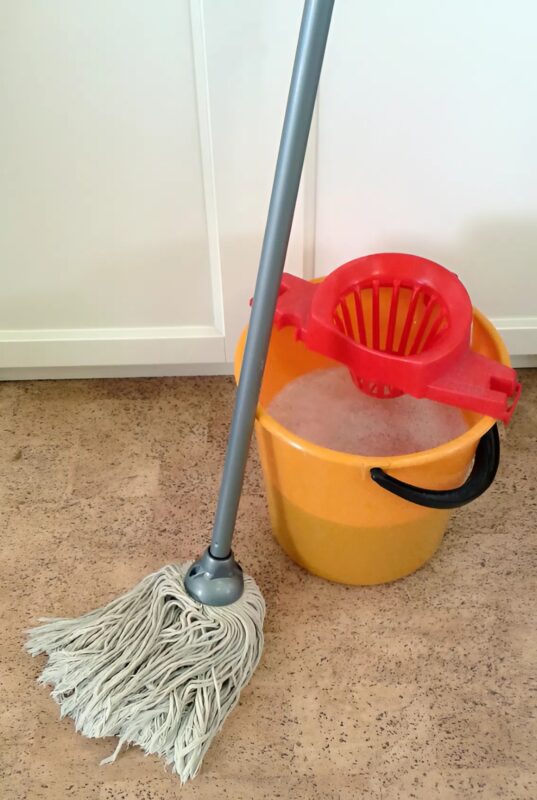
— “So you don’t forget your place,” he said loudly, so everyone could hear.
The room exploded with laughter. Someone snorted, someone clapped, the daughter-in-law turned away, pretending to adjust her napkin. I stood there holding the mop and looked at them with the same calm with which I had been looking at the snow outside the window.
Exactly at midnight, shouts of “Happy New Year!” filled the house, champagne spilled over, someone hugged Max, someone leaned toward the daughter-in-law.
But I placed the mop against the wall, slowly wiped my hands with a towel, and waited until the last chime dissolved into the noise. And it was precisely then that I made the announcement they would deeply regret Continuation in the first comment 
— “And now,” I said evenly, without raising my voice, “I also have an announcement.”
The laughter stopped. Someone awkwardly lowered their glass. I swept my gaze across the table, across these people sitting in a house that did not belong to them.
— “I sold this house today,” I continued calmly. “The documents were signed this morning. The money is already in the account. Starting January first, you have exactly one week to pack your things and find yourselves a new place for the holidays.”
The room grew so quiet that you could hear wax dripping from a candle.
Max went pale.

— “Are you joking?” he forced out.
I smiled, truly, for the first time that evening.
— “No, my son. I simply remembered where my place is. And I decided that it is no longer here.”
And for the first time in many years, my New Year did not begin with exhaustion, but with relief.


