The girl was dying with only 30 minutes left to live — but her dog’s final action left the doctors amazed…
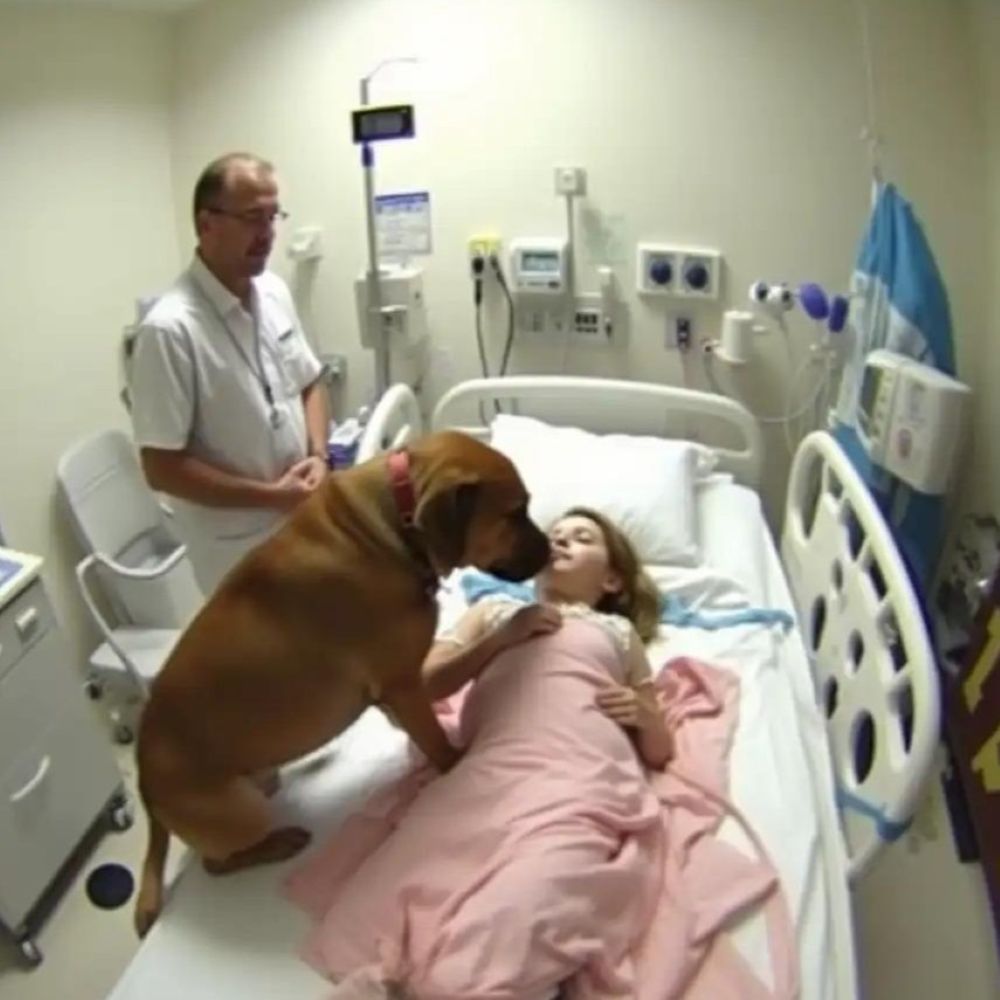
When Emily had just 30 minutes left to live, her loyal dog, Max, did something no one could have predicted. His unexpected action inside the hospital room not only stunned the doctors but also changed the outcome of her story forever.
Emily Parker, a 27-year-old nurse from Denver, had always been known for her energy and compassion. But one winter morning, her life took a devastating turn. After months of unexplained fatigue and chest pain, she suddenly collapsed while taking Max, her golden retriever, for a walk. By the time the ambulance arrived, her pulse was faint. Doctors discovered that Emily was suffering from a rare cardiac condition that caused her heart to stop beating effectively.
At St. Mary’s Hospital, her vital signs deteriorated quickly. Her family stood helpless as monitors beeped irregularly. The doctors worked frantically to stabilize her, but her oxygen levels continued to drop. “She might have thirty minutes, maybe less,” whispered Dr. Rodriguez, the attending cardiologist.
Max had been pacing anxiously outside the intensive care unit. He had refused food, barked whenever someone walked away from Emily’s room, and scratched the door as if demanding entry. Emily’s mother begged the nurses to allow the dog in, arguing that he had always calmed her daughter during panic attacks. Reluctantly, Dr. Rodriguez agreed.
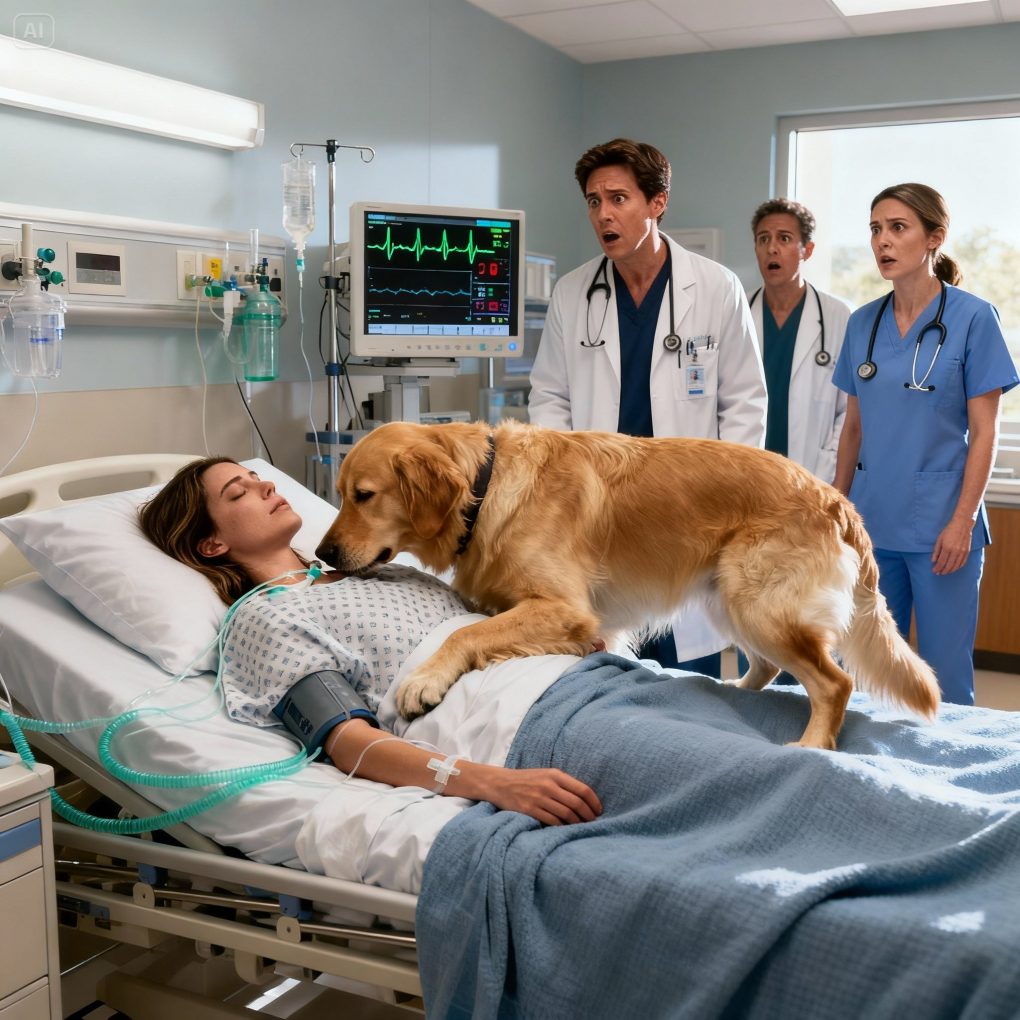
When the door opened, Max trotted quietly toward the hospital bed. The air was filled with the rhythmic sound of machines and Emily’s shallow breathing. He sniffed her hand, whimpered softly, and then, to everyone’s surprise, climbed halfway onto the bed and pressed his body against her chest.
At that exact moment, the monitor beeped—a sudden, faint heartbeat appeared. The medical team froze. “Wait—there’s cardiac activity!” shouted one nurse. Emily’s heart rhythm, which had been nearly flat, began showing weak but consistent movement. Dr. Rodriguez ordered immediate stabilization measures, assisted ventilation, and medication.
As the team worked, Max remained still, his head resting on Emily’s shoulder. For the first time in hours, her blood pressure began to rise. The connection between the young woman and her dog seemed unexplainable yet profoundly real. The room, once filled with despair, now buzzed with cautious hope.
No one could have guessed that Max’s instinctive action would become the key to saving Emily’s life.
Once Emily’s heartbeat stabilized, doctors moved her to the recovery unit. Her family was in disbelief, thanking everyone, including Max, who now lay peacefully at the foot of her bed. Though the staff was moved by the moment, Dr. Rodriguez, being a scientist, wanted answers. How could the dog’s presence cause such a drastic improvement?
Later that evening, the team reviewed Emily’s case. Her condition, known as severe arrhythmogenic cardiomyopathy, often leads to heart rhythm collapse. Emotional triggers can both worsen and relieve cardiac distress. “It’s possible the dog’s warmth and touch stimulated her vagus nerve,” explained Dr. Rodriguez. “That can influence heart rate and blood pressure. It’s not magic—it’s biology.”
Emily regained consciousness two days later. Her first words were weak but clear: “Where’s Max?” When she saw him, her heart monitor picked up a steady rhythm. Tears filled the room. The medical staff, now deeply moved, realized they had witnessed something beyond ordinary medicine—an extraordinary bond between a human and her animal companion.
News of Emily’s recovery spread across the hospital. Colleagues from other departments visited to see “the golden retriever who saved his owner.” Even skeptical physicians began acknowledging the therapeutic power of animals. St. Mary’s Hospital soon initiated a pilot pet therapy program, inspired by Max’s case.
When Emily was strong enough to walk again, she took Max on slow strolls through the hospital garden. Each time she held his leash, she remembered that moment—the faint heartbeat, the barking, the life that returned. She began volunteering to support patients with anxiety, always bringing Max along.
Her recovery continued steadily. Follow-up exams showed improvement that astonished even her doctors. “Sometimes,” Dr. Rodriguez said during her final check-up, “medicine can’t do everything alone. What we witnessed that day reminded us that compassion, touch, and trust also heal.”
Emily smiled, looking down at Max, who wagged his tail proudly.
Months later, Emily returned to work as a part-time nurse at the same hospital that had once prepared for her final moments. Her colleagues often joked that she owed her life to “the best cardiac assistant in town.” Max became a beloved figure in the ward, wearing a small vest labeled Therapy Dog in Training.
She and Max began visiting pediatric and cardiac patients twice a week. Many who feared needles or surgery found comfort in petting the gentle retriever. Parents often whispered, “That’s the dog who saved his owner’s life,” as if he carried a quiet miracle in his eyes.
Emily’s experience also inspired her to start a community campaign called Hearts Connected, promoting the use of animal therapy in hospitals and elderly homes. The initiative gained attention from local media, and soon, other hospitals in Denver adopted similar programs. Emily’s story became a symbol of resilience and hope—a reminder that healing isn’t only about medicine but also about connection.
One evening, after a long day of volunteer work, Emily sat on her porch, watching the sunset with Max at her feet. “You didn’t just save me,” she whispered, stroking his fur. “You gave my life meaning.” Max lifted his head, his eyes soft and steady, as if he understood every word.
In the end, Emily’s survival wasn’t a mystery—it was a testament to loyalty, love, and the unspoken communication between species. Doctors could explain the physical mechanisms, but no one could measure the emotional depth that turned a dying woman’s final thirty minutes into a second chance at life.
Years later, when St. Mary’s Hospital published a medical journal article on the therapeutic influence of animals, the study began with one simple line:
“Sometimes, healing begins with a heartbeat—and the touch of a paw.”