Miners discovered a coffin that was 800 million years old, and inside, they made a shocking discovery.
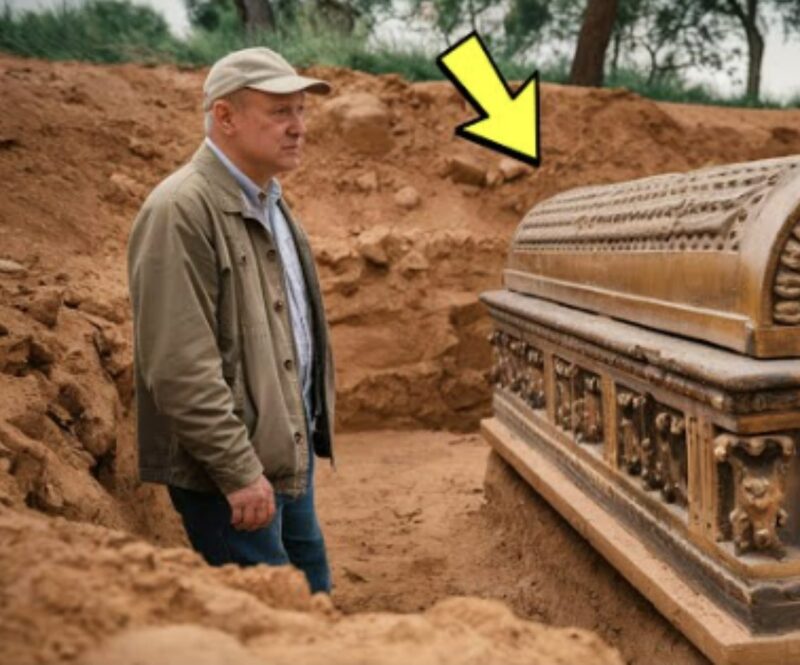
In September 1969, in the village of Rzhavchik, located in the Tisul district of Siberia, a team of miners began extracting coal from a quarry in the Kemerovo region. As they worked about 70 meters underground, the workers uncovered a mysterious sarcophagus carved from an unusually smooth and white marble, measuring about two meters long.
Ivan Karnauchov, one of the miners involved in the excavation, was the first to notice this strange object. Intrigued, he immediately alerted the site management, and under the supervision of the authorities, the sarcophagus was carefully brought to the surface. News of this discovery quickly spread throughout the region, attracting a curious crowd eager to witness the opening of what appeared to be an extraordinary artifact.
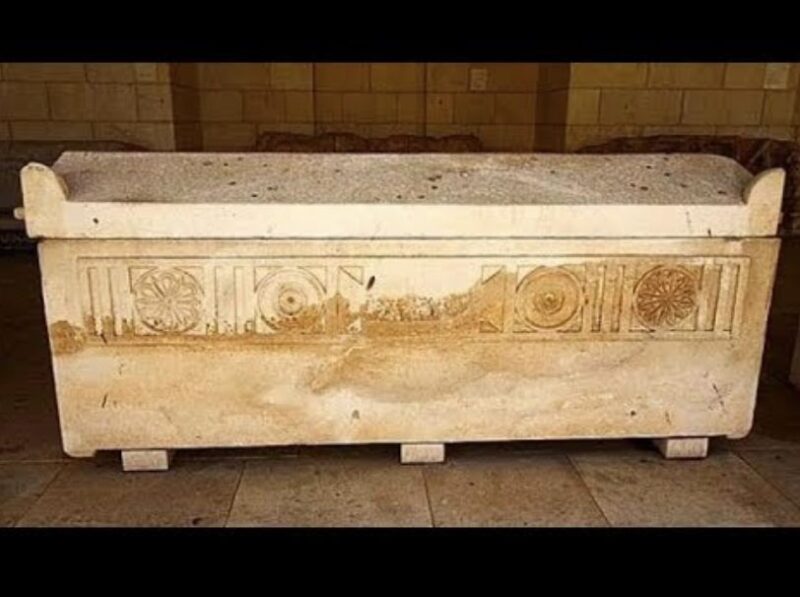
When the lid was finally lifted, all the witnesses were frozen in astonishment. Inside the sarcophagus lay the body of a woman of breathtaking beauty, perfectly preserved in an unknown liquid. Her skin appeared flawless, as if she had just fallen asleep. Her features were delicate, and she wore an unusual dress made of a fabric unknown at the time. The sarcophagus might have been buried for hundreds of millions of years, defying all known historical and scientific records.
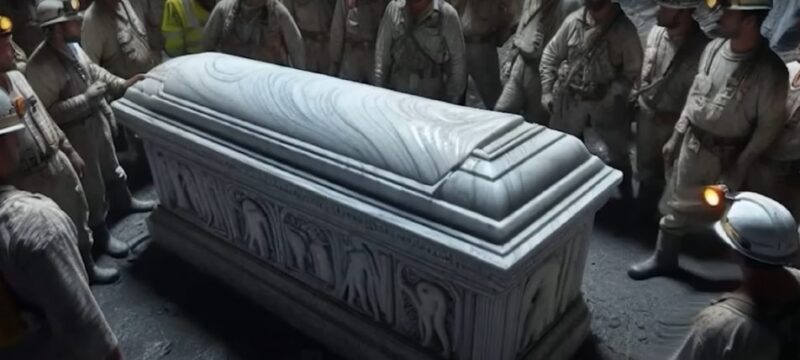
The situation took an even more mysterious turn when Soviet authorities intervened. KGB agents were quickly dispatched to the site and immediately ordered the evacuation of the area. All witnesses were instructed to remain silent, and the sarcophagus, along with its enigmatic occupant, was taken to an undisclosed location. Since then, no official information has been released on the subject, giving rise to countless speculations and theories. Some believe this was evidence of lost ancient civilizations, or even of extraterrestrial presence on Earth millions of years ago.
To this day, the story of the Tisul sarcophagus remains an unsolved mystery, fueling debates between enthusiasts of forbidden archaeology and skeptics.