These days, it’s hard to imagine going anywhere without a GPS. Most of us rely heavily on modern technology for even the simplest tasks, especially when it comes to navigating unfamiliar places. We’ve become so dependent on our devices that it’s no surprise scientists have even begun connecting the human brain to the internet. It’s a clear sign of how much technology now controls our daily lives. Of course, maps can also be helpful guides. But it’s worth asking — what did people do before GPS or even printed maps existed?
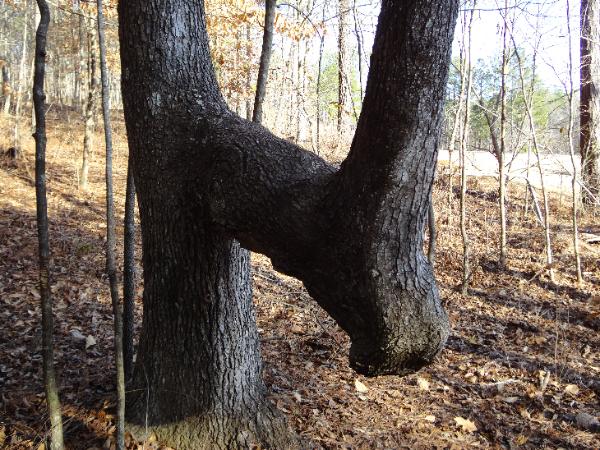
How did travelers, hunters, or explorers find their way through forests, mountains, or wide stretches of land with no roads or signs? As it turns out, nature held many secrets. One of them is directly connected to something you may have seen but never fully understood: bent trees. Across the United States, you can still find trees with unusual shapes — trunks that bend sharply, curve oddly, or twist in a way that seems unnatural. While some of these trees may indeed be the result of storms or other natural forces, many of them are not accidents of nature. They are intentional markers created hundreds of years ago.
Long before European settlers arrived, Native American tribes used the natural landscape to create navigational tools. One of their most remarkable methods was bending young saplings to grow in specific shapes, turning them into what we now call “trail trees.” These modified trees served as permanent signs to guide people safely through difficult terrain. They pointed travelers toward important resources like fresh water, food sources, shelter, and safe passages through mountains and forests.
As the trees grew older, they kept the shape they were trained into — their trunks bending horizontally before curving back up toward the sky. To someone passing by today, they might just look like weird trees. But for Native Americans and early explorers, these trees were a matter of survival. Sadly, most people today don’t realize the historical significance of these natural markers. As cities and towns grew and technology replaced traditional knowledge, the meaning behind these trees was largely forgotten. Still, they remain — silent, living witnesses to a time when humans worked with nature to navigate the world.
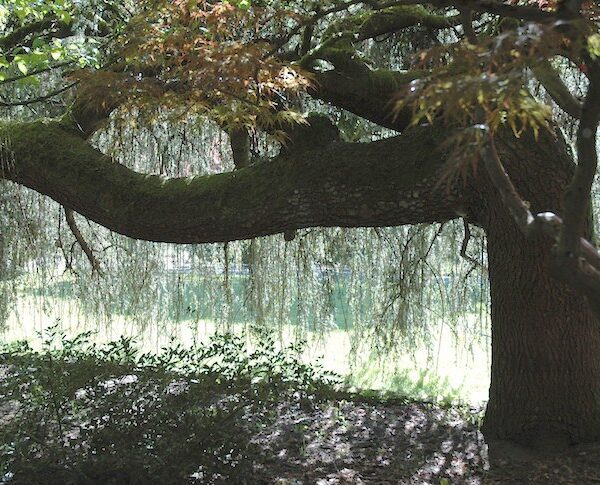
Now, you might be wondering how to tell the difference between a naturally bent tree and a man-made trail tree. Fortunately, there are a few key details that can help.
Many trees in the forest bend or grow at odd angles naturally. However, man-made trail trees usually have certain features that are hard to miss once you know what to look for. For example, trees shaped by Native Americans often have a noticeable “nose” or notch — a bump that sticks out at the end of the bend. This was created by inserting a small branch or peg into a hole in the tree and allowing it to grow around the object.
In addition to the “nose,” you might also find scars or marks on the upper part of the bend — evidence of where leather straps or bindings were tied to hold the tree in place while it grew. These scars, along with the consistent angle and shape of the bend, are strong clues that the tree was deliberately shaped by human hands, not Mother Nature.
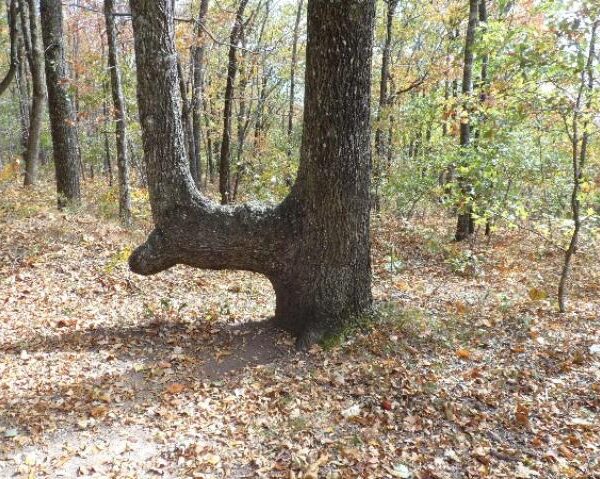
Most of these remarkable trees are now between 150 and 200 years old, standing as living monuments to Native American culture, survival, and deep understanding of the natural world. Unfortunately, they are also under threat. With growing human populations, deforestation, and constant land development, many of these historical trees are being cut down or lost forever. As people clear land for roads, homes, and businesses, they may not even realize they’re destroying something that can never be replaced.
That’s why groups like the Mountain Stewards have stepped in. This organization has created an online database and interactive map, documenting the exact locations of over 1,000 trail trees across the country. Their goal is to protect these incredible living artifacts and raise awareness about their history and significance. Thanks to efforts like these, more people — both young and old — are now learning to appreciate these hidden treasures in our forests. With greater knowledge comes a deeper respect for the land and the cultures that came before us.
So, next time you’re walking through the woods and you see a tree that seems strangely bent or shaped, don’t just walk past it. Take a moment to look closer. You might be standing in front of a living piece of American history — a trail marker made by the hands of people who truly knew how to read the land.
Check out the video below to see a real-life example of a trail tree in Georgia. It’s fascinating to see how something as simple as a tree could once guide entire communities through the wilderness. Let’s hope we can preserve these historic trees and the stories they represent — before they disappear forever.
These days, it’s hard to imagine going anywhere without a GPS. Most of us rely heavily on modern technology for even the simplest tasks, especially when it comes to navigating unfamiliar places. We’ve become so dependent on our devices that it’s no surprise scientists have even begun connecting the human brain to the internet. It’s a clear sign of how much technology now controls our daily lives. Of course, maps can also be helpful guides. But it’s worth asking — what did people do before GPS or even printed maps existed?
How did travelers, hunters, or explorers find their way through forests, mountains, or wide stretches of land with no roads or signs? As it turns out, nature held many secrets. One of them is directly connected to something you may have seen but never fully understood: bent trees. Across the United States, you can still find trees with unusual shapes — trunks that bend sharply, curve oddly, or twist in a way that seems unnatural. While some of these trees may indeed be the result of storms or other natural forces, many of them are not accidents of nature. They are intentional markers created hundreds of years ago.
Long before European settlers arrived, Native American tribes used the natural landscape to create navigational tools. One of their most remarkable methods was bending young saplings to grow in specific shapes, turning them into what we now call “trail trees.” These modified trees served as permanent signs to guide people safely through difficult terrain. They pointed travelers toward important resources like fresh water, food sources, shelter, and safe passages through mountains and forests.
As the trees grew older, they kept the shape they were trained into — their trunks bending horizontally before curving back up toward the sky. To someone passing by today, they might just look like weird trees. But for Native Americans and early explorers, these trees were a matter of survival. Sadly, most people today don’t realize the historical significance of these natural markers. As cities and towns grew and technology replaced traditional knowledge, the meaning behind these trees was largely forgotten. Still, they remain — silent, living witnesses to a time when humans worked with nature to navigate the world.
Now, you might be wondering how to tell the difference between a naturally bent tree and a man-made trail tree. Fortunately, there are a few key details that can help.
Many trees in the forest bend or grow at odd angles naturally. However, man-made trail trees usually have certain features that are hard to miss once you know what to look for. For example, trees shaped by Native Americans often have a noticeable “nose” or notch — a bump that sticks out at the end of the bend. This was created by inserting a small branch or peg into a hole in the tree and allowing it to grow around the object.
In addition to the “nose,” you might also find scars or marks on the upper part of the bend — evidence of where leather straps or bindings were tied to hold the tree in place while it grew. These scars, along with the consistent angle and shape of the bend, are strong clues that the tree was deliberately shaped by human hands, not Mother Nature.
Most of these remarkable trees are now between 150 and 200 years old, standing as living monuments to Native American culture, survival, and deep understanding of the natural world. Unfortunately, they are also under threat. With growing human populations, deforestation, and constant land development, many of these historical trees are being cut down or lost forever. As people clear land for roads, homes, and businesses, they may not even realize they’re destroying something that can never be replaced.
That’s why groups like the Mountain Stewards have stepped in. This organization has created an online database and interactive map, documenting the exact locations of over 1,000 trail trees across the country. Their goal is to protect these incredible living artifacts and raise awareness about their history and significance. Thanks to efforts like these, more people — both young and old — are now learning to appreciate these hidden treasures in our forests. With greater knowledge comes a deeper respect for the land and the cultures that came before us.
So, next time you’re walking through the woods and you see a tree that seems strangely bent or shaped, don’t just walk past it. Take a moment to look closer. You might be standing in front of a living piece of American history — a trail marker made by the hands of people who truly knew how to read the land.
Check out the video below to see a real-life example of a trail tree in Georgia. It’s fascinating to see how something as simple as a tree could once guide entire communities through the wilderness. Let’s hope we can preserve these historic trees and the stories they represent — before they disappear forever.


